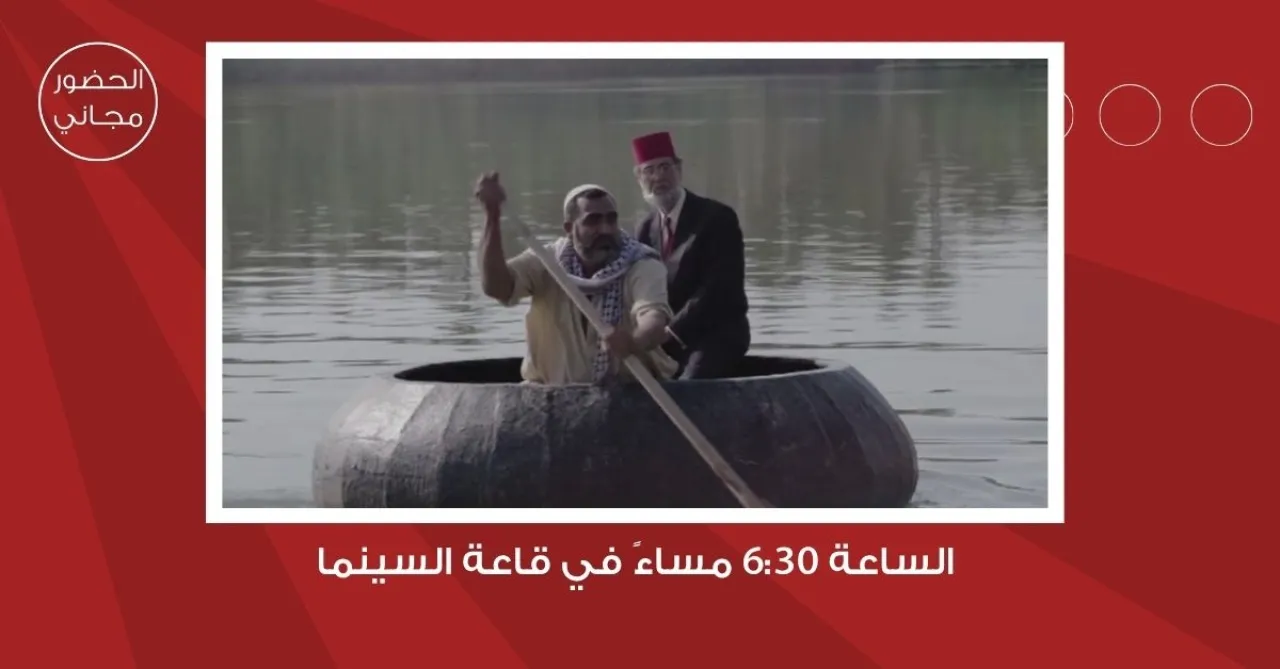
Khaberni - The Cinema Committee at the Abdul Hameed Shoman Foundation presents the Iraqi film "Baghdad Outside Baghdad" directed by Qasim Hawal, tomorrow, Tuesday, at six-thirty PM in the cinema hall at the foundation's headquarters in Jabal Amman.
In his film "Baghdad Outside Baghdad," Iraqi director Qasim Hawal enters Iraq through a new gate that opens up a memory of the past—a nation that, since its formation as a modern state, has embraced the achievements of contemporary civilization during the British Mandate in the twentieth century. From that time, many creatives in various literary and artistic fields have emerged, some of whom the film focuses on and builds its varied stories through them: the poet Jamil Sidqi al-Zahawi, poet Ma'ruf al-Rusafi, and singer Masood al-Amartli, or more precisely, the female singer Massouda who disguised herself as a man to pursue her passion for singing and became famous under her male name, and finally, the poet Badr Shakir al-Sayyab.
By presenting the stories of these creatives, which each ends with their death and burial, the director aims to make each story a lament for a creator who has passed away, their only consolation being buried in the soil of Iraq. This consolation reflects the painful reality faced by contemporary Iraqi creatives who are forced to die in exile. To express this idea, the director presents one of the most beautiful and impactful scenes: the burial scene of Badr Shakir al-Sayyab. In the first scene, we see al-Sayyab in a taxi heading to Kuwait looking for work accompanied by a driver who doesn't know who al-Sayyab is. In the second scene, we see the same driver years later returning accompanied by a Kuwaiti friend of al-Sayyab, bringing the late poet's body. In the third scene, heavy rain falls, and the driver stops the car wanting to cover the body of al-Sayyab on the car roof; the Kuwaiti friend then says, "al-Sayyab loves the rain" (a clever reference to al-Sayyab’s famous poem "Rain Song"). In the fourth scene, both bury al-Sayyab by the roadside, but in the soil of Iraq. This scene, and the film as a whole, can be considered a cinematic poem.
Before presenting the stories of these creatives, the director opens his film with the tale of Gilgamesh, the mythical Iraqi figure in search of immortality and fearful of his inevitable fate after the death of his friend Enkidu, as if the director seeks to find the connective thread between the phases of Iraqi sorrow through history, thus we understand the significance of the film ending with a shocking statement said by a cemetery guard to a friend as they walk among the graves: "History has departed, and I fear that geography will depart too."
Despite all the sorrow that permeates the film, the director does not skimp on presenting many scenes with a comedic touch. The film is also credited for the outstanding performance of all actors and actresses without exception, most of whom are experienced Iraqi artists with a long history in theater and cinema.
Among the enjoyable scenes in the film, there are two notable scenes; the first portrays how people react to the first cinema show and the second depicts the initial spread of the gramophone among the people.
The director does not follow a traditional narrative dramatic structure, but rather presents separate scenes that share a common sense and theme, such that the general structure of the film belongs to poetry, making it possible to consider the film a special cinematic elegy, especially considering the director's exceptional attention to the aesthetics of filming.