Khaberni - If you are looking for a quiet and reliable partner for today's prayer times that operates without complex settings, then QuranTime is a simple starting point. It helps you know the prayer times, confirm the Qibla direction, and stay updated on Hijri dates in a focused and respectful manner.
Daily prayer depends on regularity, but modern life doesn't always go as planned. Meetings may run long, lectures may overlap, commuting times may change, and travel can disrupt even the most organized schedules. In those moments, most Muslims don't suffer from a lack of intention, but from practical questions that keep repeating: “When is the next prayer?” “How much time is left?” “Where is the Qibla direction in this room?” A good daily prayer tool doesn't add noise. It quietly removes friction so that worship remains at the center.
Here is a realistic look at what Muslims typically need around daily prayer, where these needs show up most, and how QuranTime aligns with the daily routine—especially for those who prefer a clean and easy web experience across different devices.
1) Common practical needs around daily prayer
For many Muslims, the first and most frequent need is reliability of timing. Prayer times vary by location, season, and calculation method, and even slight differences can cause confusion when trying to maintain a regular schedule. Most people don't want to discuss calculation methods every day—they want a clear schedule that matches their current location and is displayed in an easily understandable manner at a glance. Clarity is as important as accuracy, because the goal is to streamline the planning of prayers, not complicate it.
The second common need is simple awareness of time. It's not always enough to know “when is Dhuhr time.” What people often need is: “How much time until the next prayer?” This small piece of information can change your entire day. It helps you decide whether you can start a task, finish a meeting, step out for Wudu, or find a quiet place for prayer. When your schedule is busy, having a countdown or an indicator of the “next prayer” feels more like a quiet guide than a strict alarm.
Qibla direction is another daily need that becomes urgent as soon as you enter an unfamiliar place. Hotels, new apartments, office corners, university buildings, and even visits to relatives can create the same scenario: you want to pray, but you're unsure of the direction. Many people don't want to ask, and sometimes there is no one to ask. A clear and reliable Qibla tool removes doubt and helps you pray with confidence—especially when you have limited time and space.
Lastly, planning for dates matters more than people expect. Hijri dates affect daily life through fasting days, religious reminders, family planning, and seasonal events. Many Muslims need to confirm the Hijri date regularly, understand its relationship with the Gregorian calendar, and plan ahead without switching between different sources. When a tool supports this in the same place that displays prayer times and Qibla direction, it becomes more useful as a daily companion rather than just a temporary verification tool.
2) Where daily prayer tools become more important in real life
A prayer tool is as useful as the moments it supports. At home, daily prayer tools often serve as a stable reference. You might check Fajr after waking up, then look again later to know the next prayer, and rely on the schedule as the day progresses. In this context, the calm interface makes a difference. When the tool looks respectful—simple, easy to read, and uncluttered—it naturally integrates into daily worship rather than appearing as another app competing for your attention.
Work and study bring a different kind of pressure: time constraints and limited privacy. A student might need to perform prayer between lectures or before a long class. An employee might need to plan around meetings and commuting times, and possibly check the times quickly without drawing attention. In these cases, speed matters. You want a tool that opens quickly, displays information clearly, and closes easily. If the tool forces you to navigate through multiple screens or pop-up messages or distracting features, you'll be less inclined to use it regularly.
Travel is the scenario where prayer tools become a real necessity. Travel brings unfamiliar places, changing time zones, unexpected schedules, and sometimes limited internet connectivity. You might arrive at a new destination and need the prayer times for that location immediately. You might be praying in a hotel room without any visual cues for the direction. You might rely on weak connectivity and need something that still looks reliable. A good tool reduces stress by giving you quick confirmation so the prayer remains consistent even when everything else around you changes.
Even without long-distance travel, daily movement matters. Many people move between neighborhoods during the week—home, work, family visits, and daily errands—and each has its own rhythm. The best daily prayer tools are those you don't need to “fight against.” They adapt smoothly, remain easy to use, and support your routine without making you feel like you're learning the interface anew each time.
3) How QuranTime practically supports daily worship
QuranTime works well for daily prayer because it focuses on the basics and maintains a low-complexity experience. Being a web-based tool is a practical advantage: you can open it on a phone, tablet, or computer without installing anything or creating an account to get online Qibla direction. This is important when you have limited time. If you are entering a cafe, arriving at a hotel, sitting in a library, or taking a short break at work, you can access QuranTime quickly and get what you need without delay.
In daily use, displaying prayer times becomes the main point of interaction. QuranTime displays the five daily times in a clean design that is easy to scan visually. The experience is designed for quick understanding—what time it is now, what the next prayer is, and how much time is left. This kind of clarity supports better habits because it helps you plan for prayer calmly rather than reacting at the last minute. When you see the time for the next prayer early, you can finish your task, find a quiet place, and prepare without haste.
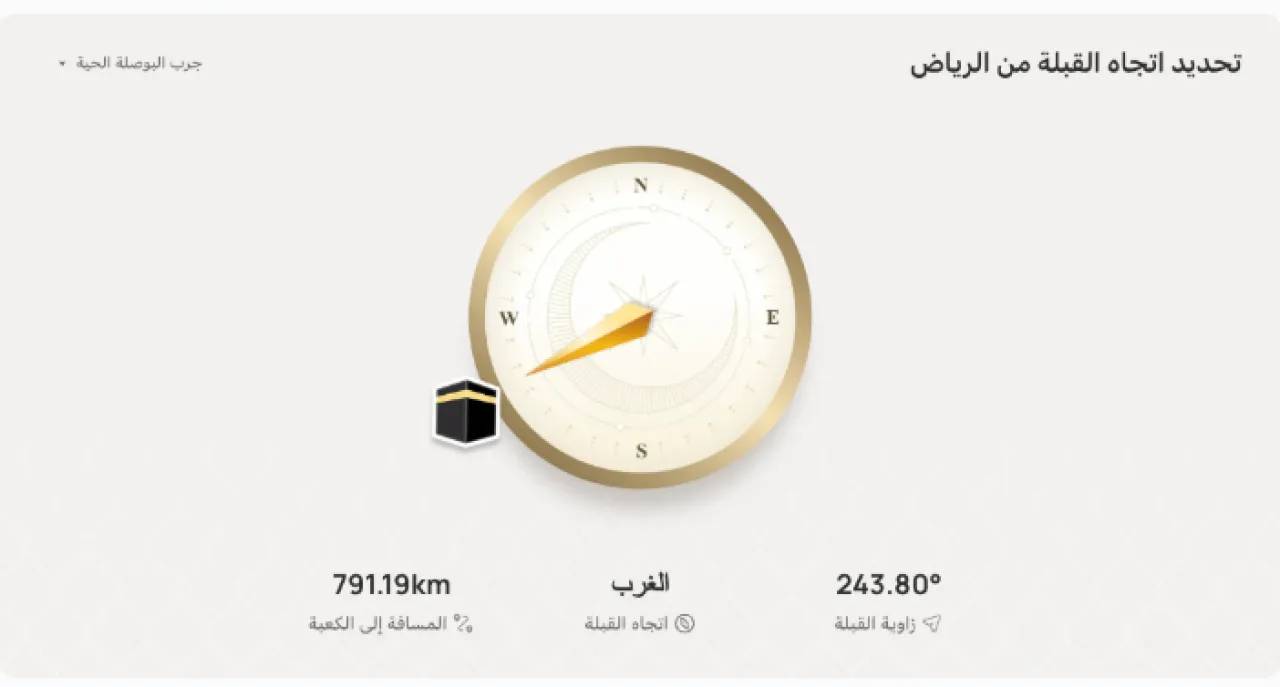
Qibla direction often becomes the second reason people return to a tool like QuranTime. When you're in a new place, usually you don't want additional complication. You want a clear direction you can trust. The Qibla feature in QuranTime is designed for quick confirmation and smooth adaptation to device movement. The importance of this response appears in real places—tight rooms, shared spaces, or outdoor locations—where you might need to adjust your position slightly. The goal is not to present a "stunning" screen, but to remove doubt and allow you to pray with confidence.
The date conversion feature between Hijri and Gregorian calendars in QuranTime adds another level of daily utility. While most people don't use it every hour, it becomes important over weeks and months. You might want to confirm the Hijri date for a personal reminder, coordinate a family plan, or prepare for an important period in the Islamic calendar. Combining date planning with prayer tools reduces the need to navigate between sites and helps organize the routine.
A subtle but important point in promotion is the overall feel of the experience. QuranTime's interface is calm and focused, helping it blend into worship without seeming like it's competing for attention. Many people prefer daily prayer tools that don't overwhelm them with visual noise. When the tool looks respectful and is easy to return to, it becomes part of the routine rather than being a last-minute solution.
4) Why QuranTime suits both new Muslims and long-time users
New Muslims often need confidence more than features. Building a regular prayer routine takes time, and the initial stages may be accompanied by some doubts—such as verifying prayer times, understanding the structure of the day, and feeling reassured towards compass direction for Qibla. Tools that require complex setups or contain many menus can be frustrating. Simple access and clear display in QuranTime help reduce this stress. You open it, confirm what you need, and continue with your day. This direct flow supports habit-building because it makes organizing daily prayer seem achievable.
On the other hand, Muslims who have been praying for a long time often have different needs. Many of them already know the rhythm of the day, but they still rely on precise confirmation—especially while traveling, commuting, or praying in unfamiliar places. Experienced users often appreciate tools that respect their attention. They want quick answers, less distraction, and a reliable experience. QuranTime meets this preference by focusing on basic needs and avoiding the clutter that can make some tools tiring to use.
QuranTime also works well in shared households and family environments. One person might check prayer times on a computer at home, another on a phone while commuting, and a third on a tablet. Since QuranTime is web-based, it adapts to different device habits without imposing a uniform setup on everyone. This flexibility makes it easy to recommend and share—especially when comfort levels with apps vary among family members.
In short, QuranTime supports both ends of the user journey. For new Muslims, it helps build confidence through clarity and simplicity. For long-time users, it supports continuity through speed, quiet design, and reliable daily utility.
5) Conclusion: The Role of QuranTime in the Daily Life of Muslims
A daily prayer tool should make maintaining prayers easier, not more complicated. It should reduce mental load, remove guesswork, and integrate naturally into the way people actually live—busy workdays, study schedules, commutes, travel, and family routine. QuranTime fulfills this role by combining the essentials in one place: accurate prayer times, clear Qibla guidance, and practical date planning—without creating an annoying or distracting experience.
In daily life, QuranTime acts as a quiet companion. It helps you know the next prayer time between meetings, confirm the direction in a new room, and stay aligned with Islamic dates without navigating between multiple sources. This consistency is what makes the tool "daily." When access to it is easy and using it feels comfortable, you naturally return to it—and the routine becomes more stable.
If you are promoting a prayer tool that fits the modern lives of Muslims, QuranTime stands out because it is simple, focused, and designed to align with real routines across different devices. It doesn't try to draw attention away from worship but supports it—with quietness, clarity, and reliability.