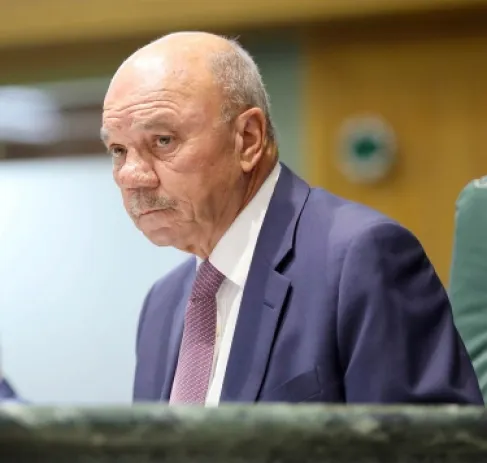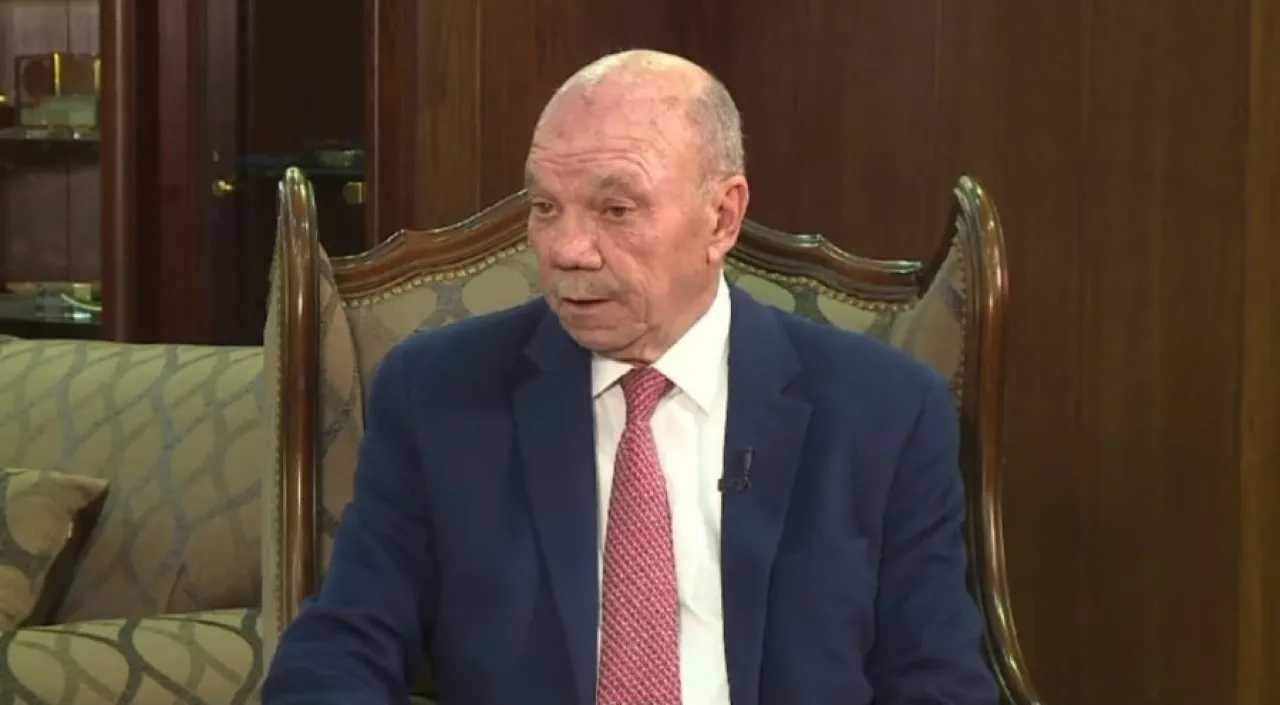
Khaberni - Faisal Al-Fayez, the president of the Senate, said that the principles and values of freedom, justice, and international cooperation have become marginal in a world where survival is for the strongest, after the United Nations and international institutions seeking global peace lost their role and ability to resolve conflicts and disputes.
He added, "Today we live in an era characterized by rapid transformations, where environmental, economic, social, and technological challenges intertwine to create a complex reality that requires a forward-looking vision from parliaments and parliamentarians, as well as international cooperation, and innovative solutions to the various challenges facing the world."
This was stated by Al-Fayez in his speech delivered on Thursday at the opening session of the 16th Bosphorus Summit which commenced its activities in Istanbul under the theme "Global Challenges - Adapting to the New Realities," with the participation of various heads of state and ministers, as well as ministers, politicians, economic experts, businessmen, thinkers, writers, and media representatives from around the world.
Al-Fayez pointed out that the challenges facing the world, the critical conditions it is undergoing, and the widespread conflicts not limited to any specific region, have created a firm belief in the importance of collaboration and international cooperation, and the necessity for all involved to engage in intensive and responsible dialogues to come up with permanent and realistic solutions. He noted that today's summit aims to address the challenges our world is facing, how to adapt and overcome them, and to promote global peace and envision a better future for humanity. This peace, sought by everyone in a troubled world where conflicts are expanding, international crises are intensifying, and chaos and racism prevail.
He said, "The worst thing the world is experiencing today is the destruction and killing of innocents caused by conflicts, the increasing numbers of refugees, internally displaced persons and forcibly displaced people, and the threat these conflicts pose to international stability and peace. He added that while we reject the continuation of the aggressive and expansionist policies of the Israeli occupation state, we welcome the signing of the ceasefire agreement in Gaza as an important step towards stability and security in the Middle East. The time has come for the Palestinian people to enjoy security and stability, for the occupation to end, and for sufficient humanitarian aid to reach the Gaza Strip without restrictions."
Al-Fayez added, "The failure to implement the terms of the ceasefire agreement and to reach a peace process that leads to the establishment of an independent Palestinian state means that the Middle East will remain doomed to peril. It has been 80 years since the Palestinian-Israeli conflict began, and it's time for us all to say, as His Majesty King Abdullah II said, enough is enough."
Al-Fayez questioned in his speech the role of parliaments and international parliamentary organizations in working to stop conflicts and wars. He stated that parliamentary cooperation could play a more effective role in enhancing global peace, through activating parliamentary diplomacy as a tool to achieve peace, engaging in constructive dialogues between conflicting parties, and creating legislation that supports peaceful resolution of conflicts and helps reduce tensions.
He also urged parliaments, parliamentarians, and international parliamentary organizations to work towards improving education and health, achieve digital justice between the north and south, and ensure the optimal use of modern technology tools.
He called for support of political pluralism, addressing the challenges of poverty, hunger, and homelessness, combating the challenges of asylum and displacement caused by conflicts, in addition to supporting and protecting international institutions and organizations involved in conflict resolution and justice enforcement, and pushing for everyone's commitment to international legitimacy resolutions, emphasizing that building a secure and stable future for humanity requires addressing the root causes of disturbances and conflicts, enhancing dialogue between civilizations and religions, and spreading a culture of tolerance and love.
He said that parliaments have a serious responsibility to build systems that support justice and political stability, enhance shared values among peoples, and respect diversity and minority rights, hence their role needs greater flexibility, through developing and nurturing the role of parliamentary institutions, and seeking to resolve conflicts by peaceful means and responsible dialogue in cooperation with governments, which are mostly formed from parliamentarians.
Al-Fayez decried the rising cost of the arms trade and said, "The question posed today, how can peace be achieved and wars stopped, at a time when arms sales have reached $2.2 trillion."
He mentioned that the Secretary-General of the United Nations Antonio Guterres stated that there are 700 million citizens living in extreme poverty, while hundreds of millions live below the poverty line around the world, what an irony.
He addressed the audience saying, "Let us remember that global challenges are not an inevitable fate, but an opportunity to rethink our priorities, and direct our energies towards building a better future. Let's work together with determination and optimism to transform challenges into opportunities, and new realities into new hope."
In concluding his speech, he thanked Turkey for hosting the conference and for the warm reception, while also appreciating the great efforts made to ensure the success of the 16th Bosphorus Summit by all those involved in the conference and its participants.
Al-Fayez