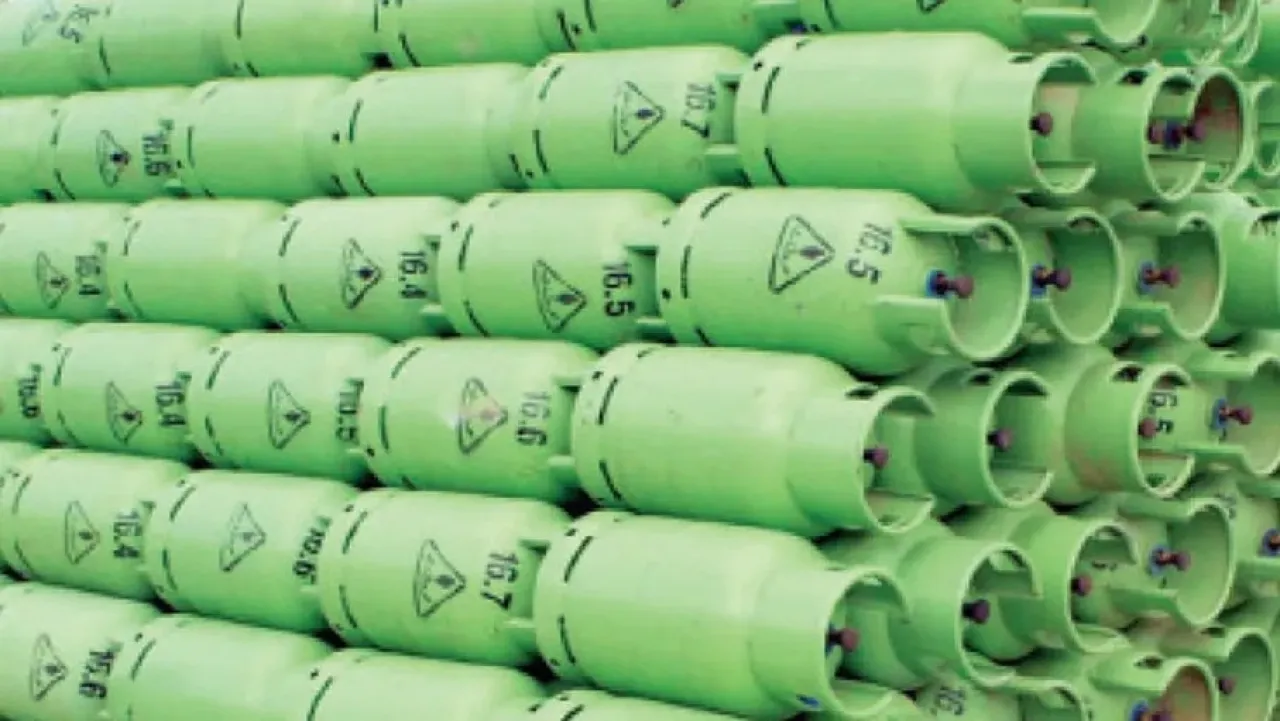
Khaberni - Haider Al-Bashaireh, the spokesperson for the Jordanian Petroleum Refinery Company, announced on Wednesday that a tender for the supply of 200,000 new cylinders with a capacity of (12.5 kg) was issued to a Turkish company, equipped with valves from an Italian company, in preparation for their upcoming release in the market, along with another tender to supply 600,000 new valves from the same Italian company.
Al-Bashaireh's statements came during a media tour at the gas filling station in Amman - Abu Alanda, aiming to provide insight into the technical and production efforts and work mechanisms inside the station.
During the tour, journalists observed the gas cylinder filling stages, starting with the inspection of the cylinder body and valve and cleaning, through the automatic filling stage that ensures filling (12.5 kg) of gas in each cylinder, and ending with the application of a shrink seal that prevents tampering with the cylinder before it reaches the consumer. Additionally, the cylinders undergo a final inspection to ensure their safety and the functionality of their valves before being delivered to gas warehouses in the local market.
Company officials confirmed that the Jordanian Company for Manufacturing and Filling Liquefied Gas—wholly owned by the Jordanian Petroleum Refinery Company—operates three gas filling stations in Amman, Irbid, and Zarqa, with a total production capacity of up to 240,000 cylinders per day during peak periods, with the possibility of increasing production as needed, especially during weather lows.
The Amman - Abu Alanda gas station operates through 8 filling lines with a production capacity of 8,000 cylinders per hour, and a daily filling capacity of up to 120,000 cylinders on peak days. Meanwhile, the Salahuddin gas station in Irbid includes 4 filling lines with a capacity of 4,000 cylinders per hour, with a daily capacity of 60,000 cylinders. The Zarqa gas station also includes 4 filling lines with the same capacity, bringing the total capacity of the three stations to 240,000 cylinders per day.
In terms of cylinder quality and cleanliness, the Jordanian Petroleum Refinery Company has given special importance to this aspect as part of the development plan for the filling stations. New, locally manufactured cleaning machines with a production capacity of 1200 cylinders per hour per machine have been installed and are currently operating across the three stations, totaling 10,800 cylinders per hour overall.
Al-Bashaireh said that during the year 2025, the company continued to execute development and modernization programs at the three filling stations, contributing to enhanced operational efficiency and reduced operating costs while maintaining high production levels.
He explained that since the beginning of the year until the end of October, about 27.3 million household gas cylinders with a capacity of (12.5 kg) were refilled, compared to 34.9 million cylinders during the year 2024. Additionally, about 2285 cylinders with a capacity of (50 kg) were refilled this year, while the number of cylinders that were repaired and painted in the company’s workshops reached approximately 160.9 thousand cylinders. Since the beginning of the year, 446.3 thousand new valves have been installed.
Al-Bashaireh noted that any cylinder showing defects during the inspection is immediately scrapped, where it is replaced with a new cylinder, and the number of scrapped cylinders since the beginning of the scrapping process in 1998 until the end of last April reached 1.6 million cylinders, while the number of replaced valves over the past five years exceeded 2.26 million valves.
He pointed out that the company's staff implemented several high-quality developmental projects at the three filling stations this year, notably designing and manufacturing nine new cleaning machines locally with a production capacity of 1200 cylinders per hour per machine, out of a planned installation of 15 machines.
Also, the engineering teams at the Amman station designed a new automatic machine for applying the shrink seal on cylinder valves with a production capacity of 1200 cylinders per hour, after modifying the technical specifications of the seal to make it more durable and safer according to international safety standards.
Al-Bashaireh affirmed that the Jordanian Petroleum Refinery and its subsidiaries continue to develop their operational and technological infrastructure, supported by their qualified human resources, enhancing their operational efficiency and contributing to the security of energy supply in the kingdom.