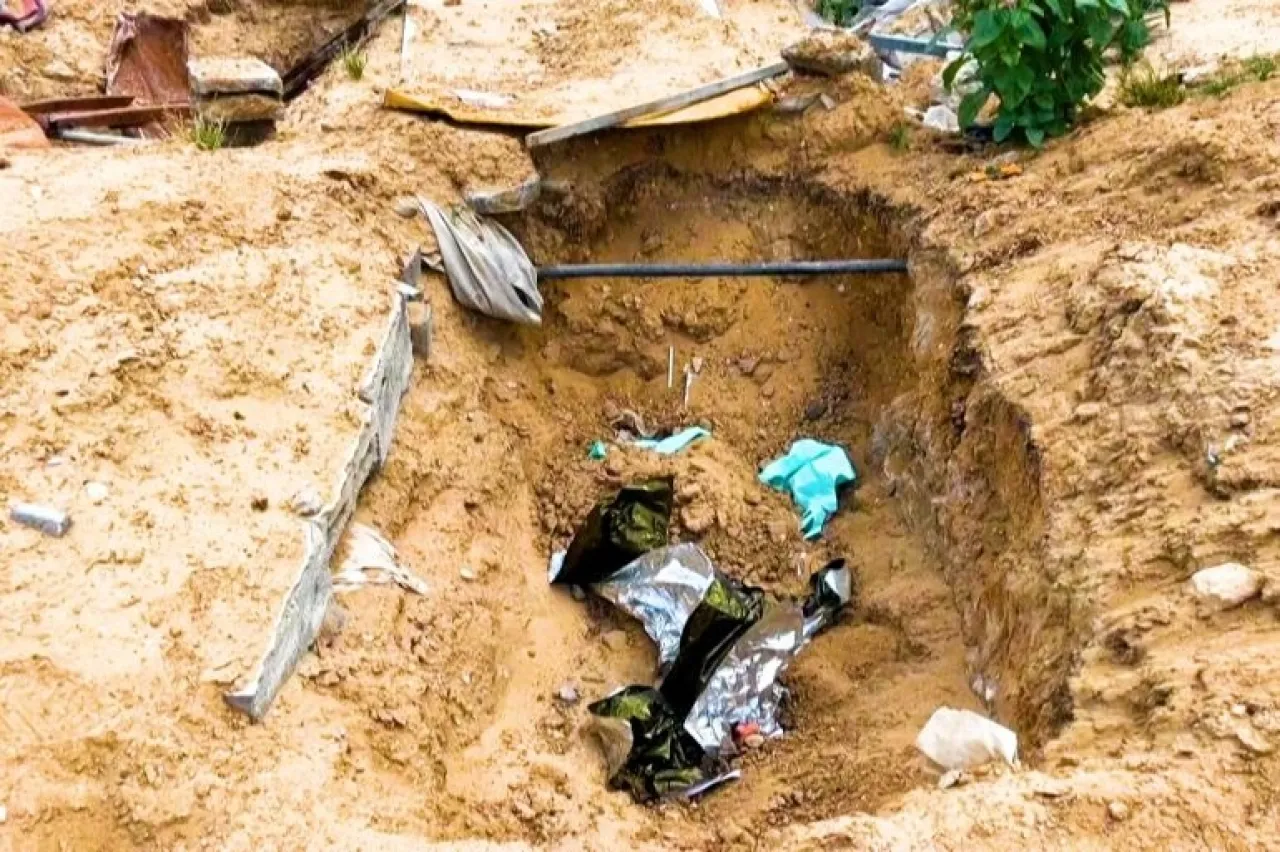
Khaberni - The Guardian published an extensive report reflecting the immense efforts Palestinians are making to retrieve bodies buried under the rubble of the buildings across the Gaza Strip.
The newspaper described the task in its report, accompanied by photos and diagrams, as the most arduous in the history of modern warfare.
Primitive tools
According to the Guardian, the rescue teams still rely on primitive tools such as shovels, picks, wheelbarrows, sickles, and their bare hands. Civil defense officials say their requests to bring in bulldozers and heavy machinery have received no response from the Israeli side.
Even with available equipment, the process is expected to take about 9 months, as efforts are currently limited to smaller buildings, while completely destroyed high-rises remain inaccessible to manual digging, according to the news report.
The British newspaper reported that data indicates only 472 bodies were retrieved during the first 16 days of the ceasefire, while 195 Palestinian bodies were returned from Israel in exchange for the remains of hostages.
Hundreds search for their loved ones
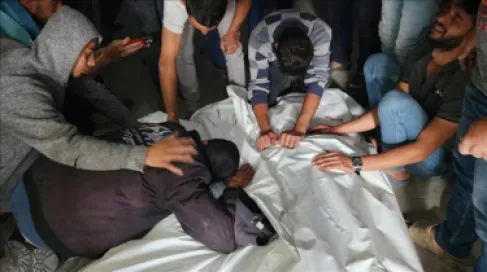
The press report depicted what is happening in the Gaza Strip, where hundreds of families line up daily in front of hospitals and civil defense headquarters searching for their loved ones.
The stories of the missing are repeated in every city. In Beit Lahia, Aya Abu Nasr lost more than 100 family members in a single raid, and 50 of them remain under the rubble after a year.
Aya (26 years old) explained that she repeatedly tried to recover the bodies, "but their remains are scattered between the ground and first floors, and cannot be extracted without heavy equipment."
In Gaza City, Hadeel Shaheber was only able to bury some family members after more than a year since their deaths, while others remain buried in the Sabra neighborhood.
Open wounds
According to the newspaper, the tragedy in Gaza makes identifying bodies more difficult due to the lack of DNA analysis equipment, which Israel prevents from entering, making the forensic doctors' job nearly impossible as the bodies decompose. Psychologists describe this unknown loss as an "open wound" causing collective psychological disorders among the residents of the strip.
However, the Guardian believes that identifying the bodies is not only a matter of dignity but also a necessity for the psychological health of the survivors; psychologists describe the grief of relatives of the missing, whose bodies have not been identified, as a "mysterious loss" leading to depression, trauma, and identity disorder, a condition widespread in the Gaza Strip.
Despite the partial ceasefire, Gaza still resembles a demolished city without features. According to the United Nations, complete debris removal could take 7 years, with 77% of the road network damaged and large amounts of unexploded ordnance causing 147 incidents since October 2023, resulting in the deaths of 52 people.