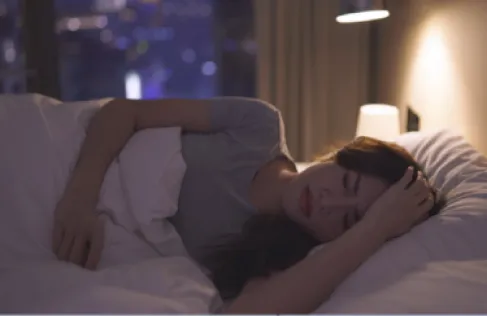
Khaberni - A recent study revealed a link between high levels of artificial light at night and increased brain activity associated with arterial inflammation and an increased risk of heart disease.
This preliminary study, published during the American Heart Association's 2025 Scientific Sessions, is the first of its kind to follow the biological pathway linking nighttime light exposure to heart disease.
Dr. Shadi Abu Hashem, head of cardiac imaging trials at Massachusetts General Hospital and a professor at Harvard Medical School, explained: "We know that environmental factors such as air pollution and noise can lead to heart disease by affecting our nerves and blood vessels through psychological stress. Light pollution is very common, yet we know little about its impact on the heart."
The study included 450 adults who were free from heart disease or cancer, all of whom underwent advanced PET/CT scans that measure brain stress activity and inflammation in the arteries. The results revealed:
• A nearly linear relationship between nighttime light exposure and increased risk of heart disease.
• Each increase in the standard deviation of light exposure was associated with a 35% increased risk of heart disease over 5 years and 22% over 10 years.
• These associations persisted even after accounting for traditional risk factors and other environmental factors.
Dr. Abu Hashem explains the biological mechanism behind this, saying: "When the brain perceives stress, it activates signals that can lead to an immune response and inflammation of the blood vessels. Over time, this process can contribute to the hardening of the arteries and increased risk of heart attacks and strokes."
He adds: "We found a nearly linear relationship between nighttime light and heart disease: the more exposure to night light, the higher the risks. Even modest increases in night light were associated with increased stress in the brain and arteries."
Professor Julio Fernandez-Mendoza, a member of the drafting committee at the American Heart Association, supports these findings, saying: "These are new findings and add to the evidence that suggests reducing exposure to excessive artificial light at night represents a public health concern."
He continued: "We knew that overexposure to artificial light at night could harm your health, especially increasing the risk of heart disease. However, we did not know how this damage occurred. This study explored one of the many possible causes, which is how our brains react to stress. It appears that this response plays a big role in linking artificial night light to heart disease."
The researchers offer solutions at two levels:
• At the city level: reducing unnecessary outdoor lighting, using reflector shields, and relying on motion-sensitive lights.
• At the personal level: keeping bedrooms dark and avoiding electronic screens before bedtime.
Despite the strength of the study, it documented a correlation and does not prove a direct causal relationship, and the study sample was not diverse. The research team plans to expand the work to include larger and more diverse population groups and to test interventions to reduce nighttime light exposure.
Dr. Abu Hashem concludes: "We hope that physicians and policymakers will consider nighttime light exposure when developing prevention strategies, as this research suggests that light pollution is not just a nuisance but could increase the risk of heart disease."