Khaberni - While the education sector leads the list of parliamentary questions with a rate of 14% according to Al-Hayat Center (RASED), pressing questions arise regarding the implications of this rate and what the Ministry of Education, Higher Education, and Scientific Research needs to do to keep up with this regulatory interest and translate it into policies and practical measures.
In this context, education experts indicate that directing 14% of parliamentary questions to the ministry signifies significant indications of parliamentary and community interest in the education sector, the size of the sector, and the extent of challenges in policies and procedures, particularly in terms of public satisfaction and the ministry's performance in transparency and communication. This also reflects the continuous and urgent community demand to improve the quality of education, according to Al-Ghad.
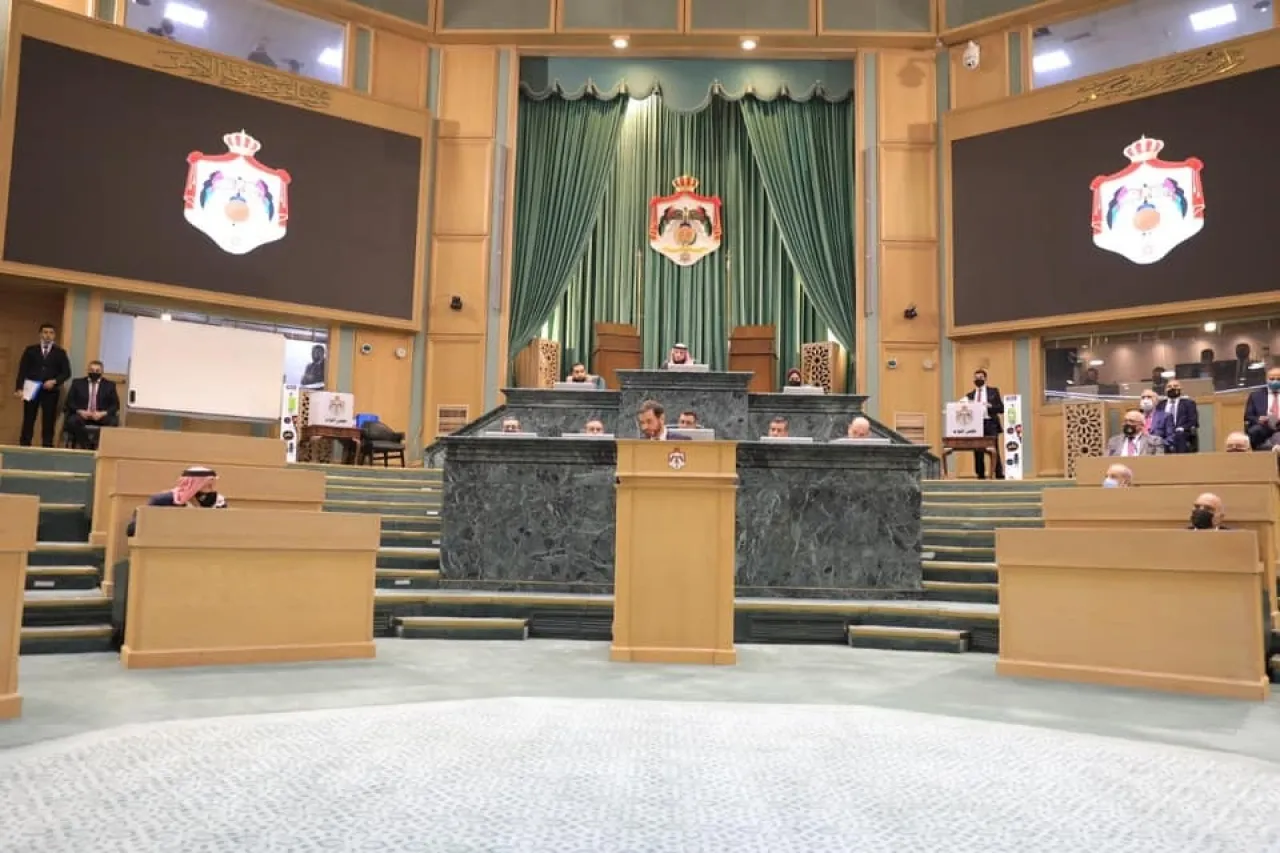
Recently, "RASED" issued an analytical part concerning the performance of the deputies, focusing on parliamentary questions, interventions, and memos as a continuation of the outcomes of its annual report regarding the performance of the 20th House of Representatives in its first year.
"Education" Dominates Parliamentary Questions
The report indicated that the council members submitted 1,125 questions, distributed among 78% of its members, reflecting a broader scope of participation in regulatory work compared to previous parliamentarians, and according to the new methodology adopted by "RASED", the questions were classified based on the sectors they addressed.
The summaries revealed that the top 20 deputies who submitted questions categorized as "quality" and "advanced" submitted 61% of the total for these two types of questions, noting that their combined total reached 768 questions.
"RASED" worked on classifying the parliamentary questions by sectors, showing that 14% of them concerned the educational sector, followed by labor and employment 8%, health 7.8%, local services and development 6.5%, overall governmental performance 5.8%, transport 5.5%, energy and mineral resources 5.3%, and water 4.5%, tourism 3.6%, agriculture 3.5%, foreign relations 3.3%, enhancing integrity and combating corruption 2.9%, promoting and stimulating investment 2.6%, and human rights 0.5%.
Enhancing the Quality and Justice of Education
Former Minister of Education Dr. Taysir Al-Naimi explained that directing 14% of the total parliamentary questions to "Education" indicates significant concerns about parliamentary and community interest in the education sector, the size of the sector, and the challenges it faces in policies and procedures, especially regarding public satisfaction and the ministry's transparency and communication performance, noting that this does not necessarily mean that the questions are qualitatively significant.
Al-Naimi stated that this rate can be analyzed on two levels: The first is the implications of the rate of parliamentary questions regarding the importance of education in the national agenda. As expected, the rate indicates that education is one of the sectors most followed and accountable by the parliament, given its importance and centrality in the economic modernization plan, particularly in enhancing the quality and fairness of education, which directly impacts human development and the national economy.
He mentioned the existence of issues or imbalances in performance or policies, and how this rate reflects the presence of recurring problems or a lack of communication, discontent with the level of educational services or policies, frequent changes in some policies, or the element of surprise in them. It also highlights the sensitivity of educational issues to the public opinion, given that education affects families directly. Thus, members of parliament pose questions in response to citizens' demands and observations, implying that the ministry faces continuous societal pressure.
According to Al-Naimi, this suggests a lack of transparency or prior communication with the House of Representatives. An increase in the rate may indicate that the ministry, specifically its communication and media channels, does not provide sufficient information preemptively, or does not present clear policy outlines and summaries to the public, leading the members of parliament to use regulatory tools (questions and interpellations).
As for the second level, according to him, it concerns what the ministry needs to do to keep up with this regulatory interest and translate it into policies and measures to reduce the rate of parliamentary questions by enhancing transparency and regular disclosure, improving media communication, and establishing regular institutional communication channels with the council by activating the parliamentary affairs section, and the ministry's communication and media channels to pave the way for policies and decisions, and to provide answers based on monitoring community observations, as well as issuing press releases and media responses regarding controversial matters, to prevent them from becoming subjects of subsequent parliamentary questions, and to improve the quality of education.
Al-Naimi indicated that as the ministry's efficiency in addressing challenges and priority issues such as the quality and fairness of education increases, the deputies' motivations to pose questions will decrease.
Developing Evaluation Systems at the Ministry
He emphasized the importance of involving the deputies in the planning and decision-making stages through regular consultation meetings with the Education Committee in the council to explain the ministry's plans and listen to observations before implementing policies, and enhancing governance and internal control by developing monitoring and evaluation systems within the ministry to correct errors quickly and prevent the accumulation of issues that later raise parliamentary questions.
In turn, educational expert Dr. Muhammad Abu Ghazaleh pointed out that the higher rate of regulatory questions posed by the council members regarding the education sector and its issues confirms that education tops all sectors, resulting from the growing awareness and concern for the sector's importance among members of the council, especially those with specialist backgrounds or genuine interest in national and educational issues, and in monitoring the quality of the education system and its outputs, reflecting a firm belief that education is a fundamental driver of the economy, development, stability, and societal progress.
Abu Ghazaleh added that the sector receiving this rate of questions indicates the magnitude of challenges it faces and reflects the urgent and ongoing societal demand to improve the quality of education and enhance the outcomes of the educational system, ensuring that students have fair and effective educational opportunities. He noted that this constitutes a fundamental call for the ministry to develop educational policies and priorities, identify the causes of decline in educational quality, address the shortage of qualified personnel, improve teaching methods, and work with the National Center for Curriculum on addressing curriculum and assessment challenges to make them more connected to real life and the needs of students and society, and to provide a stimulating school environment.
Abu Ghazaleh emphasized the importance of training and qualifying teachers, as they are the cornerstone of the educational process, and no reform can succeed without empowering them professionally and academically, especially in modern technological skills, professionalizing education, and activating the professional license announced for teaching practice, not only for new entrants but also organizing professional tests to renew the license annually for workers, making the teaching profession based on performance and excellence rather than administrative routine.
He clarified that the ministry, education directorates, schools, and teachers should focus their efforts on their fundamental task of developing education and enhancing its quality and the governance and accountability system in the ministry, directorates, and schools, setting precise performance indicators to measure the efficiency of educational administrations, educational supervisors, school leaderships, and teachers, and holding them accountable for shortcomings, and employing these as tools for genuine reform to ensure that efforts and resources are directed toward priorities in developing education.
Abu Ghazaleh pointed out that this requires instilling a culture of accountability and evaluation, implementing the results of reports from the educational accountability unit by evaluating school performance, noting the importance of involving educational leaders, school leaders, teachers, students, parents, and the local community in the educational dialogue, and decision-making to develop its outputs to meet the aspirations of society and cooperate with concerned and interested institutions from the public, private, and civil society sectors to develop a comprehensive plan to achieve comprehensive reform.
Most Vital and Impactful Sectors
In his turn, educational expert Ayesh Al-Nawaiseh stated that the education sector receiving this rate of overall parliamentary questions reflects that the sector is one of the most vital and influential sectors in daily life, as it includes more than 1.5 million students and affects 5 million citizens comprising parents, teachers, and workers in the educational field. He added that this widespread presence of education across the kingdom makes it a fundamental pivot in social and economic development and a main entry point for formulating national policies.
Al-Nawaiseh considered that this intensive presence of education in the public scene explains the increased pace of parliamentary oversight over it, as members of parliament strive to pose questions and inquiries reflecting the daily demands of citizens, whether related to teachers' problems or the needs of students and their families. Also, a significant number of members of the House of Representatives have educational backgrounds, having been teachers or administrators in the sector, which strengthens their direct connection to its issues and makes them more attentive to it.
He mentioned that this parliamentary interest comes amidst fundamental transformations observed in the sector, notably the merger of the Ministries of Education and Higher Education, curriculum development, education quality, and the development of the high school examination, which are matters of interest from the deputies. He explained that it is necessary to keep up with this regulatory interest by establishing institutional communication between the ministry and the deputies through issuing clear regular reports containing measurable performance indicators, which contribute to developing monitoring and evaluation mechanisms. It is also advisable for the ministry to interact effectively and transparently with regulatory questions by providing accurate answers and transforming parliamentary observations into inputs for decision-making, later reflected in the ministry's strategic plans.
He further added that it is also necessary to expand the proactive publication of educational data and information to reduce understanding gaps and decrease the repetition of repeated and inaccurate questions and some parliamentary inquiries. This requires adopting a scientific approach to policy-making based on evidence and results, not on momentary reactions. This requires the ministry to adopt a comprehensive performance measurement framework based on quantitative and qualitative indicators linked to fundamental values and clear targets to facilitate parliamentary monitoring of achievement and evaluation, and it is possible to benefit from the models of reports issued by the quality and accountability unit to serve as a reference in enhancing transparency and governance at the ministry.