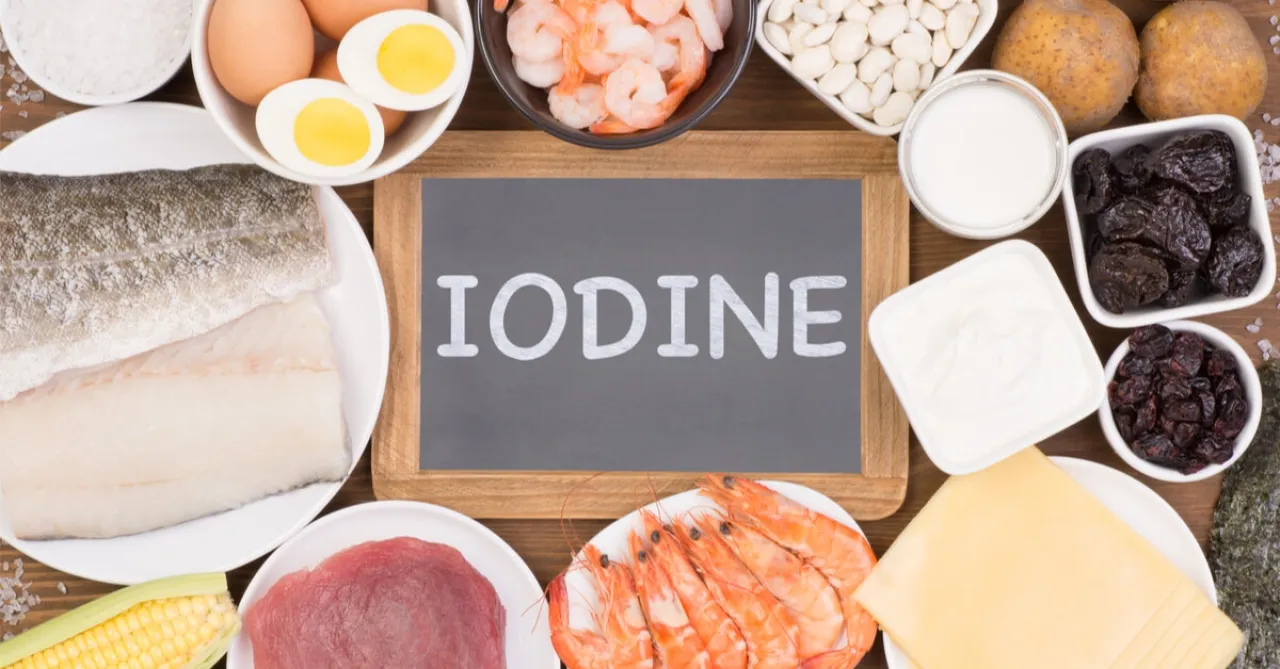
Khaberni - Dr. Olga Chernitskaya, an endocrinologist, points out that humans usually get iodine from seafood and fish, but she also explains that there are non-marine foods that are also rich in iodine.
Dr. Olga Chernitskaya, an endocrinologist, states that iodine is a micronutrient essential for body functions, emphasizing that it is necessary for the synthesis of thyroid hormones.
"A healthy person's body contains 15-20 mg of iodine, with 70-80% of it accumulated in the thyroid gland, and the daily requirement is between 100 and 200 micrograms. The body does not produce iodine on its own but obtains it from external sources," the expert explains.
To obtain a sufficient amount of iodine, Chernitskaya recommends regularly consuming iodine-rich foods, such as:
Seafood: fish, seaweed, algae, and fish oil.
Non-marine foods: eggs, dairy products, potatoes, beans, spinach, fresh and dried fruits.
She also mentioned the importance of using iodized salt as an effective way to compensate for a deficiency of this nutrient.
The expert warned that the amount of iodine decreases by 30-80% in food during long-term storage or thermal processing, emphasizing the necessity of maintaining a balanced diet and taking iodine supplements when needed.
Chernitskaya added that iodine deficiency could lead to thyroid disorders, miscarriage, physical and mental developmental delays in children, congenital iodine deficiency syndrome (endemic cretinism), and increased perinatal mortality.