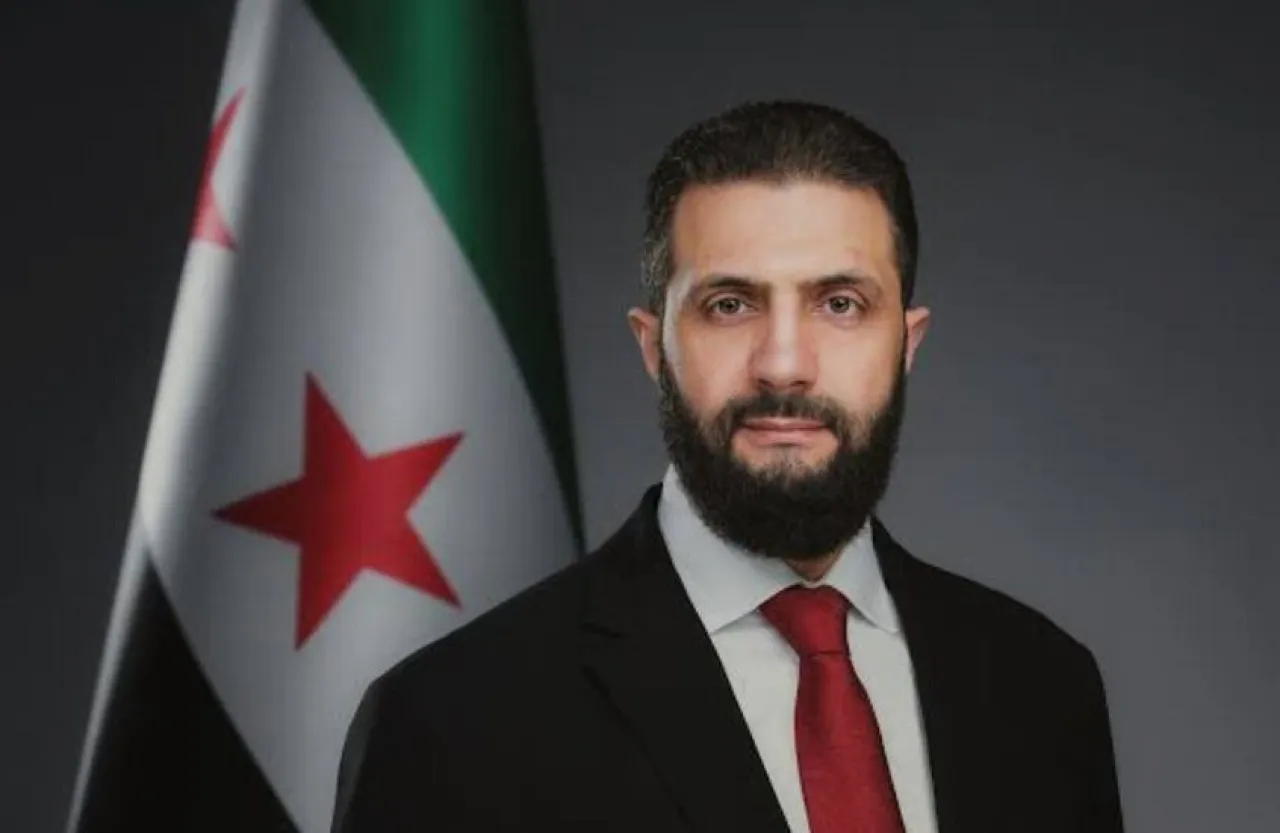
Khaberni - Syrian President Ahmad Al-Shar` caused a widespread controversy on social media platforms after making statements during his participation in the Future Investment Initiative Conference 2025 in Riyadh.
Al-Shar`'s statements came during a session attended by Saudi Crown Prince Mohammed bin Salman, where he said: "Today, Syria has an ideal relationship with Turkey, Saudi Arabia, Qatar, and the UAE. These are successful countries in my belief — with respect to other nations. Countries like Egypt and Iraq and the rest have success, but these countries (the Gulf states) are working with double the effort and tremendous speed, and they are keeping pace with the developments occurring in the world, whether technological or technology-related."
Al-Shar` added that his first foreign visit after taking office was to Saudi Arabia because it is "the key," saying: "When we went on our first trip to Saudi Arabia, we knew where the key was."
He also praised the Saudi Vision 2030, describing it as "not limited to the borders of the kingdom, but includes the entire region," emphasizing that Damascus "got the message" and hastened to engage in "this arrangement."
Al-Shar`'s statements dominated social media, especially in Egypt and Iraq, where activists and citizens criticized what they considered an unjust insult to two countries that played pivotal roles in supporting the Syrian cause during the years of war.
An Egyptian tweeter wrote: "Here comes someone who describes himself as the 'interim president' to belittle Egypt, which opened its arms to millions of Syrians fleeing the bombardment?!"
An Iraqi commented: "Iraq gave the blood of its sons in defense of the region, and today it is said to be 'working with double effort' while others are 'successful'?!"
Many considered the statements to be an instance of political flattery and an attempt to solicit Gulf support, at the expense of the historical partnerships between Syria and its Arab neighbors.
Al-Shar`'s statements come in the context of a radical shift in Syrian regime policy after the fall of Bashar Al-Assad, where the new Damascus seeks to reorder its regional relations, with a special focus on opening up to the Gulf states, especially Saudi Arabia, which plays a pivotal role in shaping the political and economic future of Syria.
However, the choice of wording in the statements — which places major Arab countries at a lower level — stirred wide discontent and led observers to wonder: Is this a new diplomatic language... or the beginning of biases that could complicate Syria's relations with its neighbors?