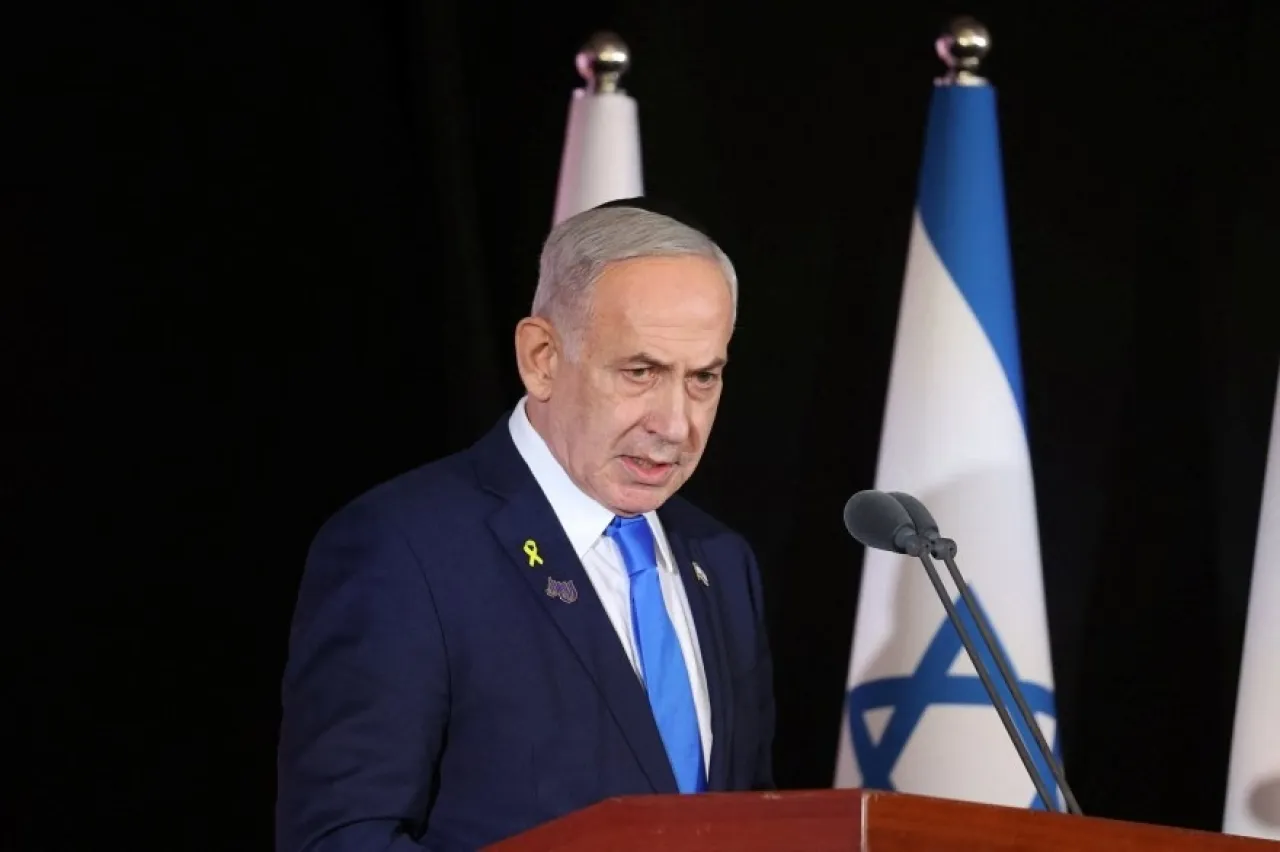
Khaberni - Israeli Prime Minister Benjamin Netanyahu said on Sunday that Israel will decide the foreign forces that it will allow to enter the Gaza Strip as part of the international effort to be formed to help end the war under US President Donald Trump's plan.
It is not yet clear whether Arab countries or others are willing to send forces to the sector, due to factors including the Palestinian Islamic Resistance Movement (Hamas) not pledging to lay down its arms according to Trump's plan. Israel has also expressed concerns about the formation of this force.
While the Trump administration rules out sending American soldiers to Gaza, it is holding talks with Indonesia, the UAE, Egypt, Qatar, Turkey, and Azerbaijan to participate in the international force.
Netanyahu said during a cabinet meeting, “We control our security, and we have made clear that Israel will determine the forces unacceptable to us in relation to the international force, and this is how we act and will continue to act.”
He added, “This, of course, is acceptable to the United States, according to what its top representatives have expressed in the past few days.”
Israel still controls all the portals leading to Gaza and has imposed a siege on the sector for two years in support of its air and ground campaign there that began after a Hamas cross-border attack on October 7, 2023.
*Israel rejects the Turkish presence within the international force in Gaza
Last week, Netanyahu hinted at his opposition to any role for Turkish security forces in Gaza. The Turkish-Israeli relations, which had been good in the past, have deteriorated to their lowest levels during the war on Gaza due to sharp criticisms by Turkish President Recep Tayyip Erdogan of the Israeli military campaign on the sector.
In the context of strengthening the fragile ceasefire, US Secretary of State Marco Rubio said during a visit to Israel on Friday that the international force must consist of forces “from countries welcomed by Israel”. Rubio did not comment on Turkey’s role.
Rubio added that the future governance in Gaza still needs to be discussed between Israel and the partner countries but it cannot include Hamas.
Rubio later said that US officials are receiving feedback concerning a possible United Nations resolution or an international agreement to mandate the multinational force in Gaza, and they will discuss this issue on Sunday in Qatar, one of the main mediators to end the war on Gaza.
The lack of commitment by Hamas to lay down its arms remains one of the main challenges since the first phase of the 20-point ceasefire agreement came into effect two weeks ago. Since then, Hamas has been waging a violent campaign against armed groups in a test of its grip on power.