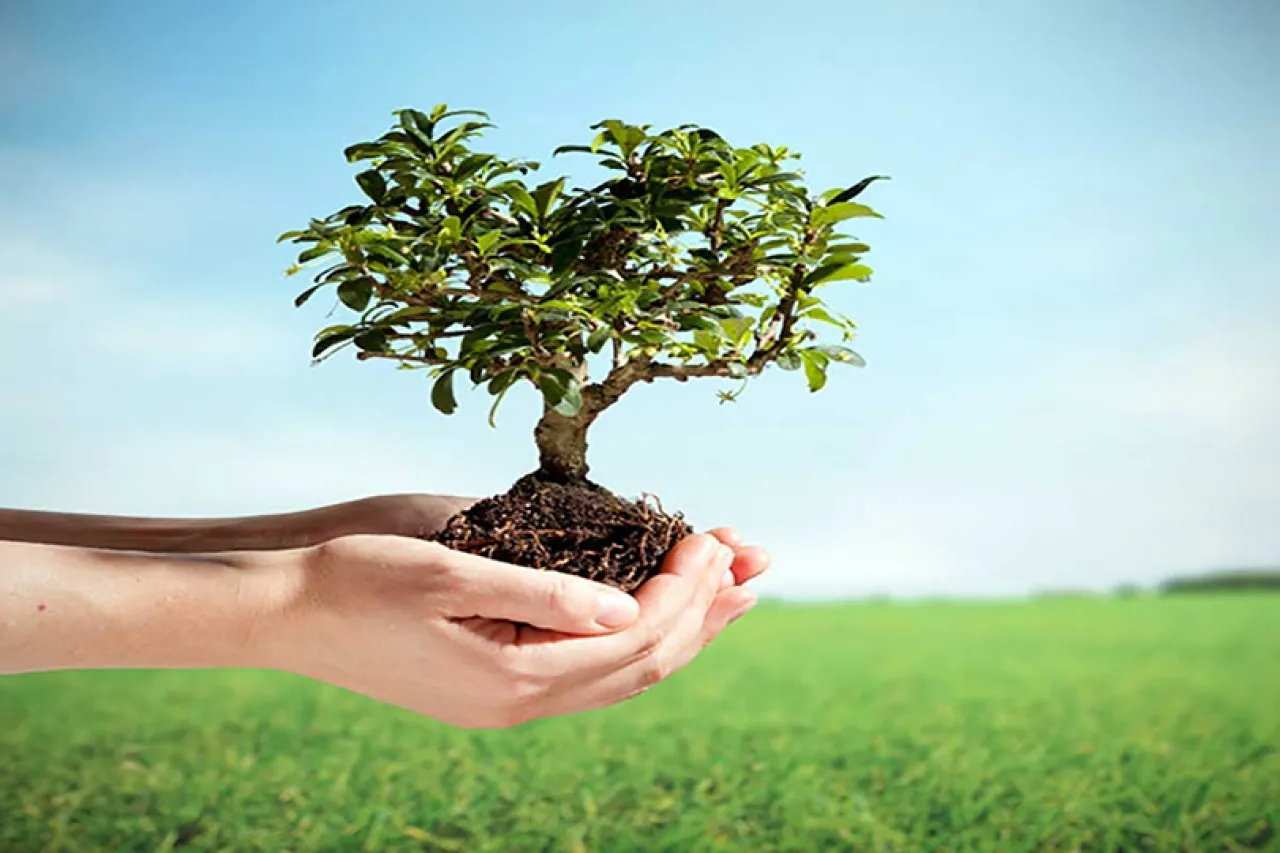
Khaberni - The tree-planting campaign witnessed in various Algerian states, last Saturday, exceeded its outlined objective by planting more than a million trees in just 24 hours, amid broad public turnout and notable participation from citizens and local authorities.
Tens of thousands of Algerians participated between Saturday and Sunday in a tree-planting campaign aimed at planting a million trees, launched by an internet influencer and supported by the authorities, according to local media.
Fouad Maalla, the initiator of the "Green by God's Will" campaign, which lasted one day, expressed his joy at the "great response from the Algerians," adding in media statements, "We will prepare to plant even more next time." Associations, families, and officials participated in the campaign.
Participant Farida Issa (61 years old) said that she came "with all family members and even the children, to instill in them the spirit of perseverance and love of nature, and to be diligent in planting trees, for a green Algeria."
Mohamed Bouchaqour (50 years old) wants "to leave this legacy to our children of the next generation," expressing regret that "Algeria's climate in the past was humid, but over time we have started living in a semi-dry climate."
For many years, Maalla, the president of the "Green Algeria" association, has been investing his savings to achieve his dream of planting a million trees, to combat desert expansion and beautify Algerian cities.
The activist, who has about a million followers online, accompanied Minister of Agriculture Yassin Walid, on Saturday, in starting the planting process of 1,400 cork trees in Oumalou forest in Tizi Ouzou (eastern Algeria).
1.390 million trees
More than 1.3 million trees were planted during the national tree-planting campaign organized by the Ministry of Agriculture, Rural Development, and Fisheries, according to the Director-General of Forests, Jamal Taheriya, who reported this today, Sunday.
Taheriya explained, in a meeting with Algerian Radio, that this national campaign, organized in cooperation with the "Green Algeria" association, exceeded its set target of one million trees, reaching 1.39 million trees of various types, including fruit trees like olive, pistachio, and carob trees, matching the geographical character of each region.
This figure was achieved thanks to the significant contribution of society in its various sections, said the Director-General, who noted in this context that the intensive turnout at many planting points led to the use of additional areas.
Taheriya specifically called on all concerned parties, especially civil society, to follow up on the planting points through regular watering of the saplings to ensure their growth and hence the real success of the campaign.
After noting the importance of this campaign in expanding forested areas and rehabilitating burned areas and combating desertification, the Director-General of Forests pointed out that the campaign will continue until March 21 next year.
"The Green Dam" project
Regarding the tree-planting activities at the Green Dam, Taheriya clarified that the latest data shows that 26,000 hectares have been planted, with a success rate of nearly 98%, thanks to the combined efforts of all concerned parties and the assistance of specialists in the field.
He added that efforts continue to achieve the goal set for 2030, which is planting 400,000 hectares.
In 1970, Algeria launched the "Green Dam" project during the presidency of Houari Boumediene, a massive tree-planting project aimed at slowing the desert's encroachment. The project was revived in 2022 after it had stopped due to poor choice of tree species and lack of irrigation.
In response to a question about the national campaign for forest fire prevention and control, Taheriya explained that his administration has recorded since the beginning of the campaign last May 880 fire hotspots nationally, a reduction of 80 percent compared to previous years, which he described as a "very positive result."
The fires affected 4090 hectares, including 900 hectares of forested areas, 200 thousand hectares of fruit-land, while the rest were spread over shrubs and bushes.