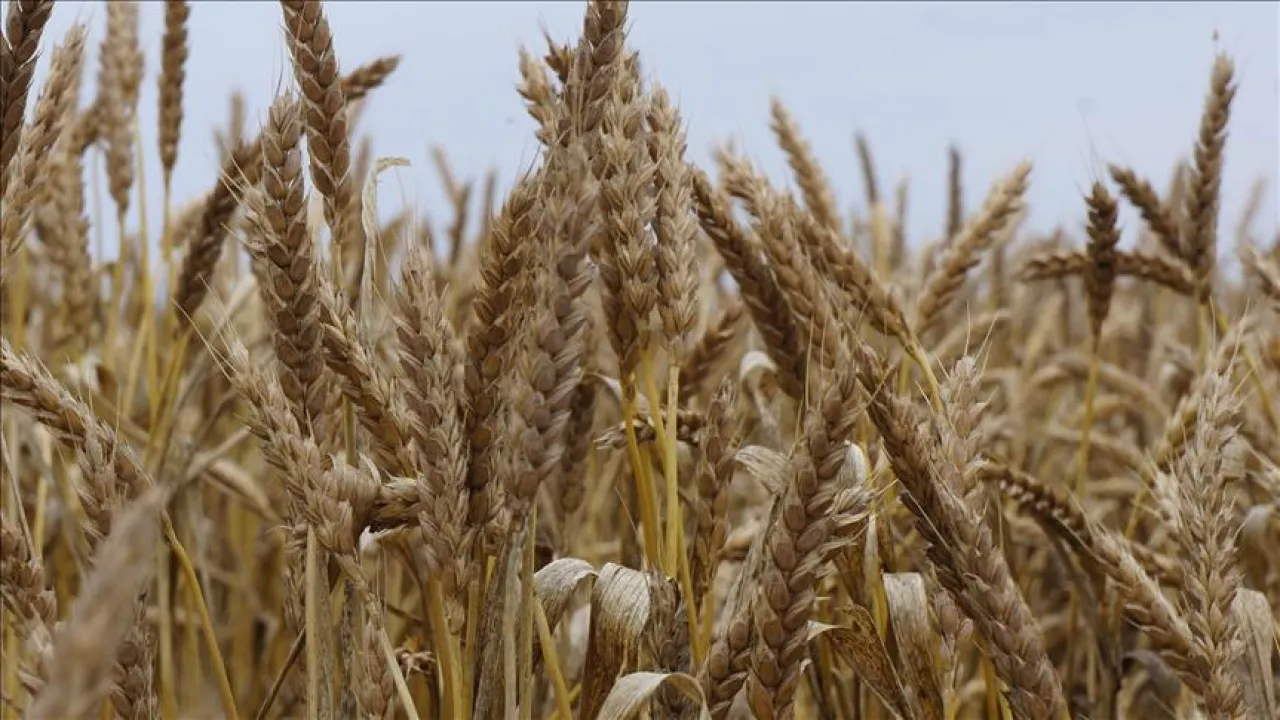
Khaberni - Scientists at the University of Maryland have discovered the genetic key behind a rare variety of wheat that produces three grains while ordinary wheat produces only one.
This discovery could revolutionize the feeding of billions of people who are in dire need of food.
The team found that the gene WUSCHEL-D1, which is usually inactive, is activated in the early stages of flower development, prompting the plant to form additional ovaries, each of which can grow into a wheat grain, according to the scitechdail website.
This discovery could allow the development of new high-yield wheat varieties without the need for more land or resources, representing a significant step towards meeting global food demand in a changing climate.
Researchers at the University of Maryland identified the gene responsible for a rare variety of wheat that develops three ovaries in each flower instead of just one, and because each ovary is capable of growing into a grain of wheat, this discovery could significantly increase the amount of wheat produced per acre.
This discovery was detailed in the Proceedings of the National Academy of Sciences on October 14, 2025.
The unusual triple ovary trait was first found in a natural mutation of common bread wheat, but initially, scientists did not know the cause.
To uncover the genetic difference, the Maryland team mapped the DNA of the mutated wheat and compared it to normal wheat DNA.
Their analysis revealed the activation of a gene normally inactive, known as WUSCHEL-D1 (WUS-D1).
When the WUS-D1 gene is activated in the early stages of flower formation, it enlarges the floral tissue, allowing the plant to produce additional female organs such as pistils or ovaries.
Turning genes into production boosters
If scientists and farmers can learn how to stimulate this same process, they might develop new wheat varieties that produce a greater number of grains per plant, as minor increases in grain numbers could have a significant impact on global food supplies.
Feeding the future without more land
As global demand for wheat continues to rise, climate change, limited arable land, and population growth increasingly complicate efforts to increase production using traditional methods. This discovery may give breeders a new effective tool to increase yields without the need for more land, water, or fertilizers.