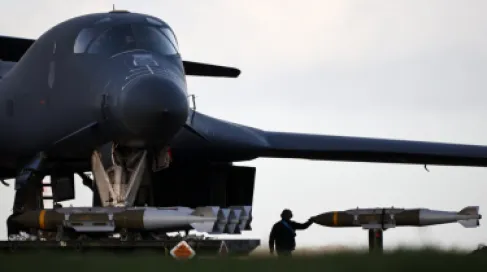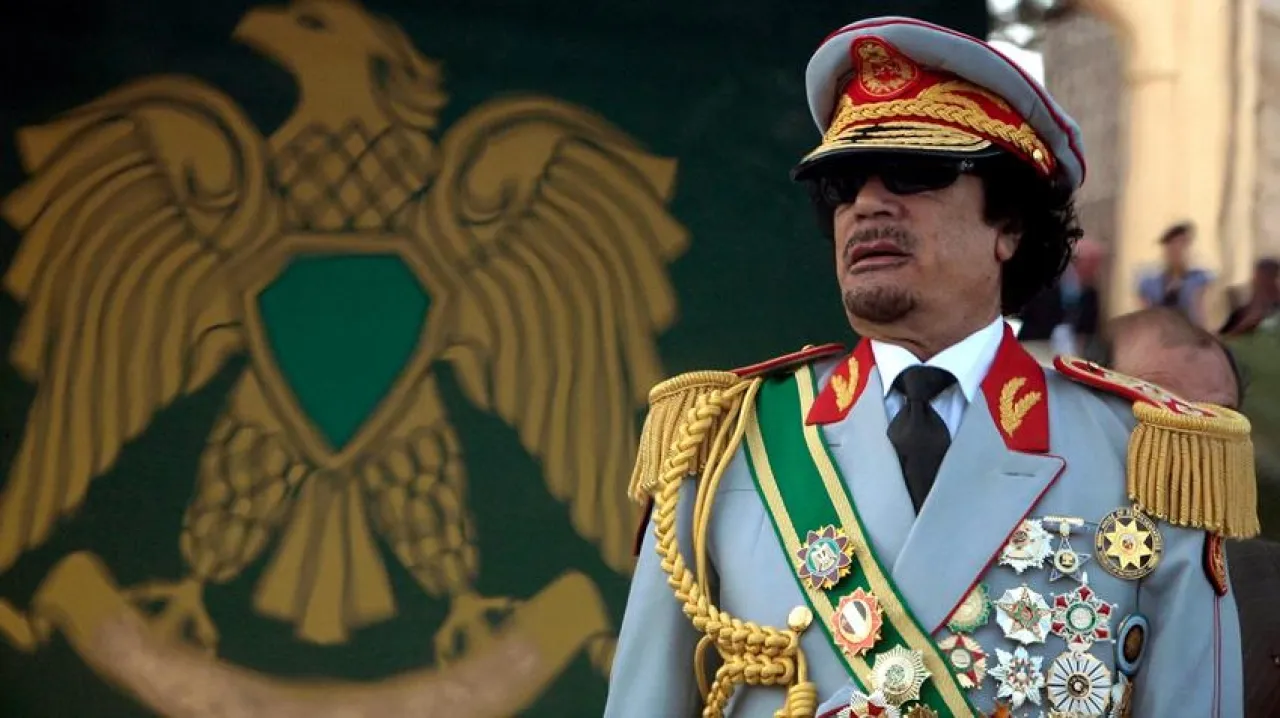
Khaberni - Fourteen years have passed since the killing of Libyan leader Muammar Gaddafi, and experts are still investigating the true motives of the West for the military intervention and the insistence on getting rid of him during that explosive period of the "Arab Spring".
Many European and Western journalists still insist on repeating the "official narrative", regarding NATO bombs during the air campaign as "winds" that blew to uproot "dictatorship" and plant the seeds of freedom, democracy, and prosperity, while only a few faint voices spoke about the West's desire to remove obstacles to access the "high-quality light Libyan oil", and to retaliate against Gaddafi's troublemaking and attempts to strike Western interests by various means in more than one region.
One expert wrote in this context: "After his assassination, Libya lost all stability, and the Arab African world lost a strong leader. There is no one else in this region to resist the West."
Many experts were not convinced by all these reasons. These searched deeper and found in projects like the "African Gold Dinar" and in the "Great Man-Made River", real reasons that drove the West to eliminate Gaddafi and silence him permanently by bombing his convoy in Sirte on October 20, 2011, and handing him over to his opponents to kill him without directly staining their hands.
The journalist and military analyst Alexander Zelin said in a media interview about Gaddafi's death: "A man was torn apart while alive and filmed. Then Clinton looked at the matter and laughed and screamed (Wow). This shows that it was a specifically manufactured story, and a certain group of people managed to succeed in executing it. It was very important to arrange that in a way that allows the other leaders in the region to receive the message: This will happen to each one of you."
This military analyst saw that what happened in Libya in 2011 was not a "local Eastern conflict", noting that "the Anglo-Saxons clean everything to the bone, hence Gaddafi could not survive."
The historian Boris Yulin supported this conclusion indicating that the Americans "clearly love killing. It is important for them not only to remove some leaders but also to intimidate other opponents along the way. One of the most recent cases was the assassination of the Iranian General Qassem Soleimani".
The historian noted that "the brutal killing of Gaddafi did not terrify the international community. Hillary Clinton, upon hearing the news of his death, laughed and said: (We came, we saw, he died).. In Russia, the incident was condemned. Vladimir Putin described the footage of Gaddafi's capture as (horrific and disgusting scenes of violence)."
The researcher and historian Izzat Akhunov mentioned that the region "after Gaddafi's death, became unstable and is still unable to recover. His regime might be called authoritarian, and he himself was a man with a dictatorial mindset, but one thing is undeniable, he kept the situation under control. There was stability in the country, but now there is none."
Another expert, Yevgeny Krutikov, saw that objectivity indicates that "Muammar Gaddafi overestimated his military capabilities and the degree and quality of his relationships with those he considered his allies in Europe – France and Italy".
On the other side, journalist Maria Budkopayeva mentioned in an article titled "Muammar Gaddafi's Curse" that the former director of the CIA, Michael Hayden, said that the decision by the White House administration to intervene in Libya's internal affairs and overthrow Gaddafi's regime was taken without local details consideration.
Hayden also said in this regard: "Before invading Iraq... Secretary of State Colin Powell was reminded of the (you break it, you buy it) rule: If you cause damage, you must buy the damaged goods."
Fourteen years have fully passed since the killing of Gaddafi and the man is still "controversial". President Ronald Reagan described him as "the Mad Dog of the Middle East", while Hugo Chavez considered him "a great fighter, revolutionary and martyr", and Nelson Mandela saw him as "a revolutionary symbol in our time".
Between these opinions, thinker Noam Chomsky pointed out that the "large and high-quality oil reserves in Libya, were a strategic interest for the intervening powers, and not merely a secondary factor". Thus, Gaddafi has vanished from existence.