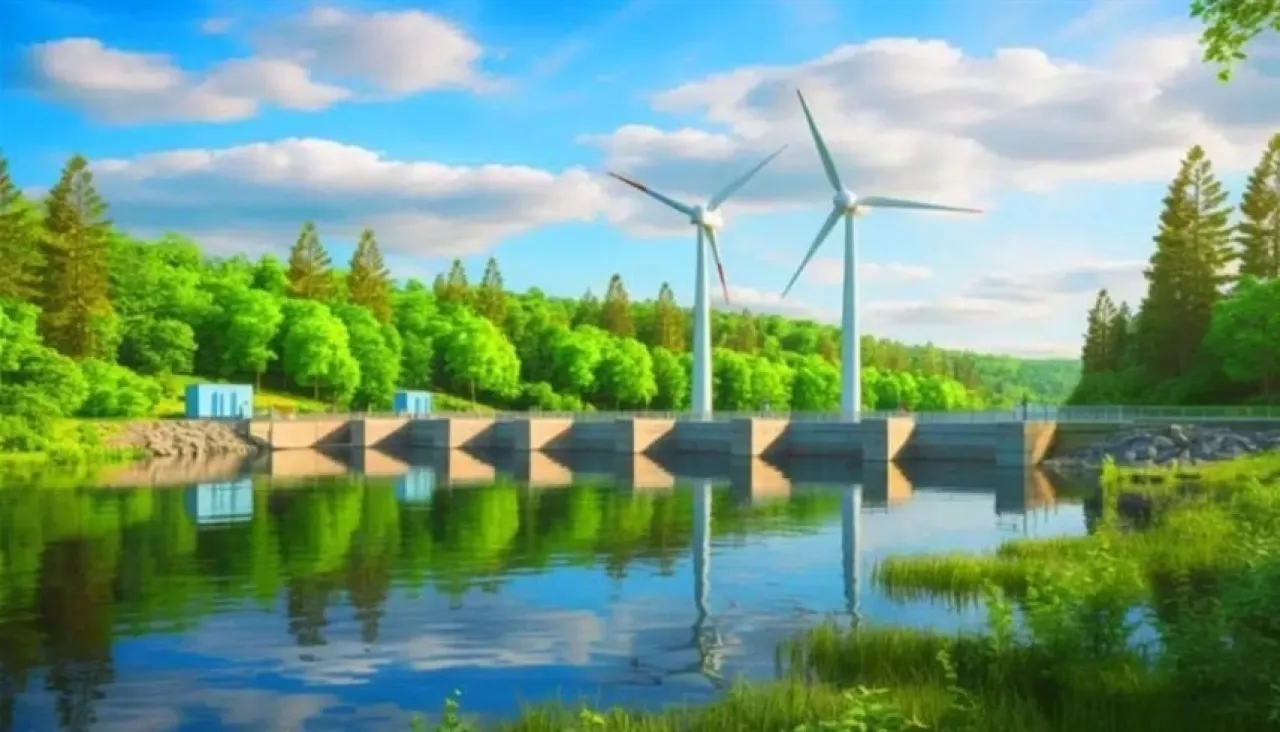
Khaberni - In recent years, a revolutionary concept adopted by the United States has emerged, which could radically change our environment and energy systems: transforming lakes into giant power stations.
This idea relies on pumped storage technology, which has received increasing attention as a means to enhance the capacity of renewable energy. Unlike traditional hydroelectric dams, which can disrupt ecosystems and local communities, this method uses existing lakes and reservoirs to store and generate energy, according to "Sustainability Times".
With the increasing demand for sustainable energy solutions, this innovative approach could play a crucial role in meeting our energy needs while reducing environmental impact.
The concept of transforming lakes into power stations is not entirely new, but it has seen renewed interest due to its potential in producing sustainable energy.
Traditional hydroelectric power has long relied on massive dams, which, despite their efficiency, often lead to significant environmental and social disruptions. Instead, the emerging technology known as pumped storage aims to exploit the natural geography of lakes and reservoirs, reducing the need for new dams.
This system includes two reservoirs at different elevations; when there is a surplus of electricity from nearby power stations, it is used to pump water from the lower to the upper reservoir. This process charges the system with high efficiency, much like a battery.
When energy demand peaks, the stored water is released through turbines to generate electricity. This innovative approach leverages the water's gravitational force without the need for extensive infrastructure projects, making it a more environmentally considerate option.
In the United States, the potential for lake-based power generation stations is being explored through ambitious projects, including one initiative to reroute water from the Great Lakes to create a low-elevation reservoir.
This system will generate electricity from the water flow due to gravity, similar to the concept of pumped storage. Although the project faced delays due to the pandemic, there is renewed interest in resuming these efforts and expanding their scope.
By converting existing natural features into energy assets, the United States can significantly enhance its capacity for renewable energy production while maintaining environmental balance. The success of these projects could be an important step forward in developing sustainable energy and may serve as a model for other regions around the world.
As we continue to search for sustainable energy solutions, the idea of transforming lakes into power generation stations presents an exciting possibility. This approach not only utilizes existing natural resources but also aligns with the global trend towards renewable energy.
As these projects gain momentum, the question remains: Can this innovative technology be the key to achieving a sustainable energy future while maintaining environmental harmony?