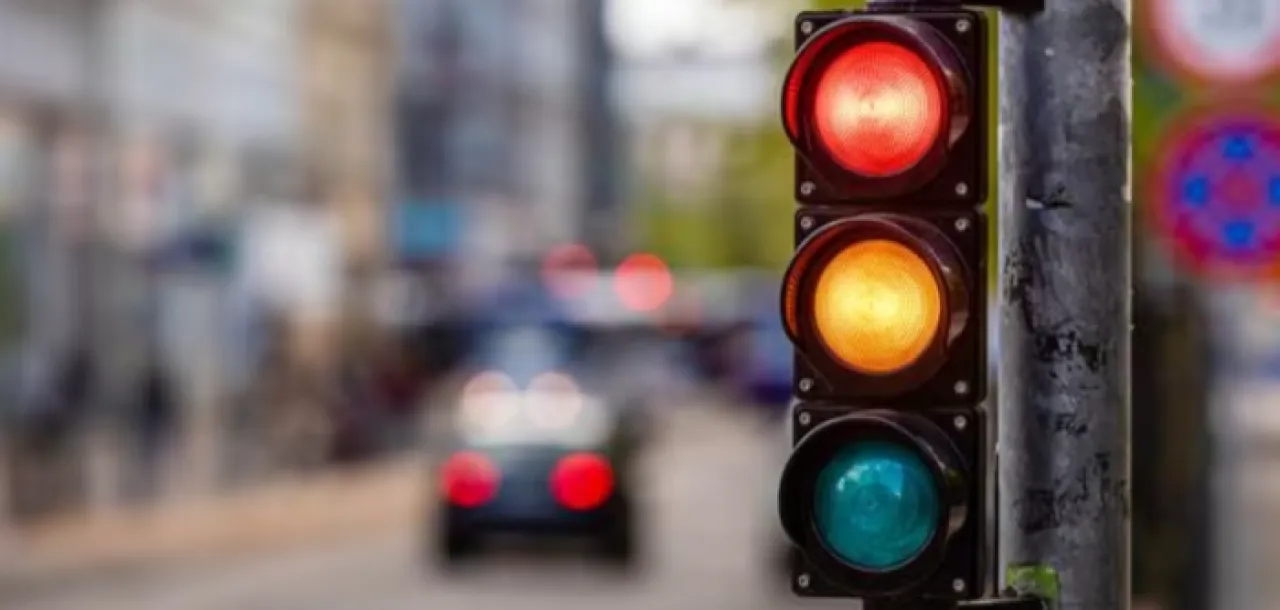
Khaberni - The traffic signals we know are preparing for a radical change in the near future, with scientists from North Carolina State University announcing the development and trial of an innovative traffic signal system that includes a fourth color: white light.
This revolutionary addition aims to significantly improve traffic flow and increase safety, especially with the rapid increase in the number of autonomous vehicles on our roads.
The white light will not replace the traditional colors (red for stop, yellow for caution, and green for go) but will act as a special and complementary signal. When the white light is on, it means that autonomous vehicles are coordinating traffic at the intersection at that moment.
These smart vehicles are capable of communicating with each other and with the traffic signal control unit to adjust the flow of movement more quickly, accurately, and efficiently than relying only on human drivers.
When white is illuminated, the human driver can simply "follow the car in front of them" safely, without the need to be distracted by watching the traditional signal, as the movement is automatically coordinated by the smart vehicles.
The new system relies on "distributed computing" technology, allowing autonomous vehicles and traffic signals to exchange vital information (such as speed, location, and destination) in real time.
The process begins when a group of autonomous vehicles approaches the intersection. These vehicles send their data to the traffic signal control unit.
If the system detects a sufficient number of smart vehicles capable of coordinating the movement among themselves, the white light illuminates, and the smart vehicles take over managing the traffic flow efficiently.
When the number of smart vehicles falls below the required limit, the traffic signal automatically reverts to the traditional color system (red, yellow, and green).
Preliminary studies conducted by the research team indicate that the addition of the white light could revolutionize congestion management:
With only 10% of autonomous vehicles on the road, delays at intersections are expected to decrease by 3%.
If the majority of the vehicles are autonomous, the reduction in delays could reach 94%.
This significant reduction in delays translates into clear economic and environmental benefits, including reduced fuel consumption, lower emissions of greenhouse gases that pollute the environment, and increased road safety.
The University of North Carolina team is preparing for the initial practical trials of the new system in monitored and enclosed areas, such as ports.
These locations were chosen because they feature a high density of heavy vehicle traffic, few pedestrians, and a repetitive and predictable movement pattern, which facilitates the study of the system and accurate evaluation before its broader application on public streets.
The scientists confirmed that the white color is not mandatory, but any other clear and easily distinguishable color could be used, provided it is understandable by all drivers (humans and machines).
This technology marks the beginning of a new era in the transport world, where smart vehicles and humans will collaborate to regulate traffic, making our travels faster, safer, and more efficient.