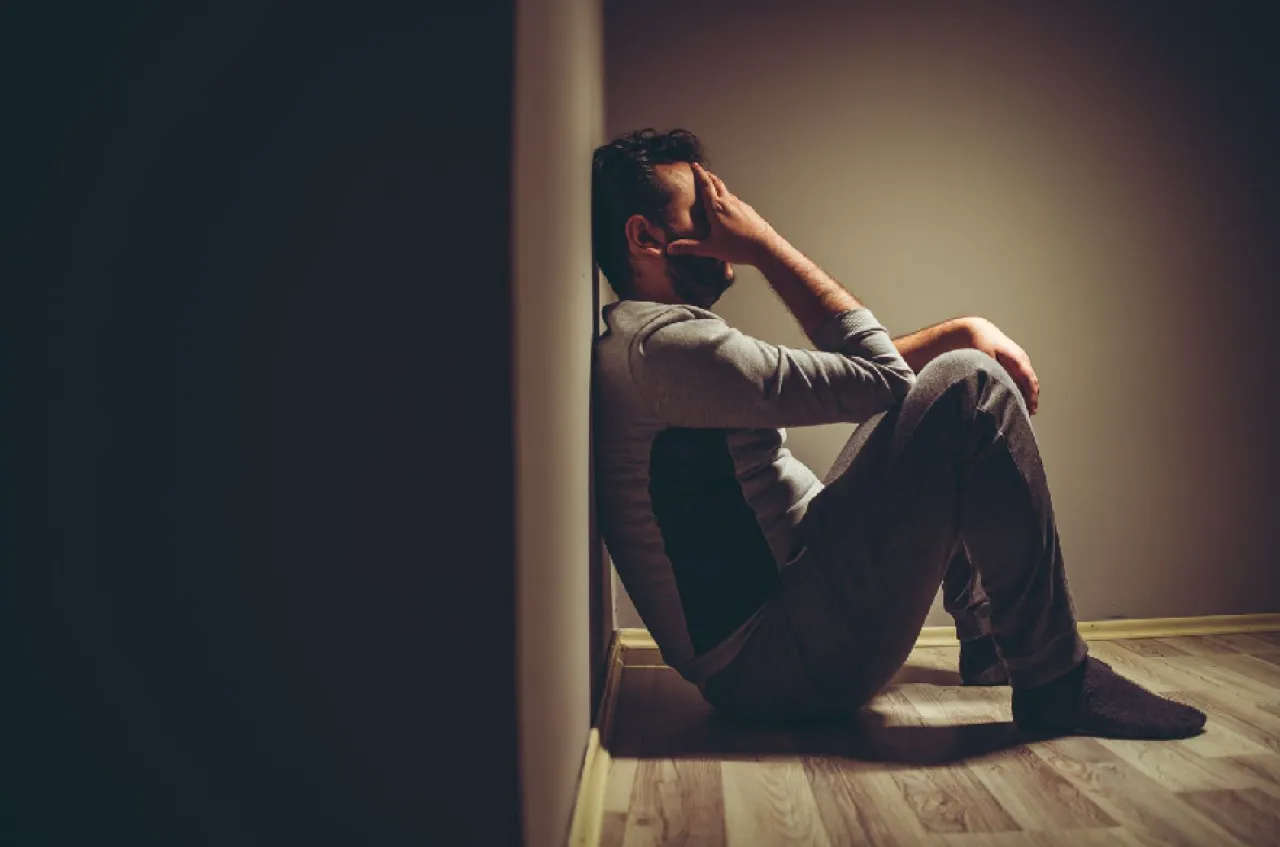
Khaberni - "Traditional masculinity rules" imposed on men the prohibition of expressing their feelings, thus this culture becomes entrenched in the minds and transmitted across generations, making the suppression of his feelings a standard for masculinity and strength. These are ideas tied to culture and social upbringing, but it soon became apparent that they significantly increased the burdens placed on men. These burdens reached his mental health and destabilized it, making him a prisoner to false beliefs and a culture that criticizes a man who expresses his feelings or the mental pressures he goes through. It also resulted in higher suicide rates among men compared to women, as statistics show. In Lebanon, the burdens seemed even more catastrophic amidst the ongoing crises and the conditions of war that placed unbearable psychological pressures on men.
When men become more prone to suicide
Every 40 seconds, according to World Health Organization reports, someone in the world commits suicide, highlighting the high suicide rates globally, despite variations between countries. While it is true that women show higher rates of suicidal behavior compared to men, they are, on the other hand, less likely to commit suicide. Thus, higher suicide rates among men compared to women are recorded, with one woman committing suicide for every four men. This disparity between the genders is striking, while reports show that women are more prone to mental disorders and record higher depression rates among women. So, what is the secret behind this disparity?
In fact, part of this disparity is due to men suppressing the psychological issues they suffer from, which stems from the prevailing male stereotype that imposes on men the non-expression of mental pressures and suffering, thereby forcing them to endure its implications on their mental health. This prevailing culture, especially in our societies, links expressing feelings, on one hand, with weakness or incapacity on the other, which constitutes a diminution of masculinity according to the prevailing notion. Social upbringing in Eastern societies, particularly, is centered on raising boys to be tough and resilient, with a necessity to avoid behavior that could reflect weakness or incapacity, even when feeling sad or under severe stress.
However, in recent years, with the disparity in the numbers between genders, particularly regarding suicide attempts, it has become apparent that these prevailing concepts make men more susceptible to depression and also to committing suicide if specialized intervention does not occur, although such intervention rarely happens among men, since men seek help at lower rates, and experts attribute the variance in depression rates recorded between women and men to this precisely, as long as statistics concern those who receive a diagnosis for the condition.
If a boy grows up from childhood on a fundamental principle in his upbringing, namely not to show his "weakness" and to avoid crying or expressing his feelings despite feeling sad or fearful or anxious, it is natural that psychological burdens on him increase given the many pressures he endures in his life and responsibilities thrust upon him in society, especially when he becomes a man responsible for a family and home. This is clarified by the specialist in psychological treatment Antoine Cherton, noting that men generally tend to not express their feelings, although this does not mean that there are no men who express them normally. In addition, men in our societies are not accustomed to expressing their feelings, as the traditional Eastern upbringing dominated by the male pattern instructs the boy not to express at all, including feelings of sadness, so when the boy cries, this behavior reflects weakness and seems like a flaw, so he is not allowed to do so from the early years of childhood, while it is natural for a girl to cry without it being a problem or affecting her image, "It is one of the grave errors in upbringing, because anyone, whether a boy or a girl, has the right to freely express their feelings and emotions, and the boy carries this idea with him from childhood and grows up with the notion that expressing feelings is a flaw and affects his masculinity. Therefore, he is not allowed to express sadness, anxiety, or stress, or any other problem. Even in some societies, a boy is not allowed to express feelings of happiness or any other emotions, which negatively impacts his mental health, because it creates suppression and leads to psychological issues and disorders, potentially leading to clinical depression and ultimately to suicidal thoughts and suicide if exposed to extreme pressures."
Educating to reinforce suppressing feelings
If we set aside these concepts related to upbringing and culture that encourage a boy to suppress his feelings, the boy inherently tends to be less talkative and expressive of his emotions compared to a girl, as he might prefer to release the energy he has through playing rather than through talking, while girls' toys stimulate them more to express, whether when talking to her doll or playing with kitchen utensils, or having coffee with a friend, unlike boys' toys which do not involve expression of feelings as much.
Additionally, the prevailing concepts related to the male stereotype come to worsen the problem with the burdens and psychological implications they bring forth. From here stems the importance of encouraging children, both males and females, to freely express their feelings because this positively reflects on their mental health and makes them less susceptible to psychological pressures.
As for the higher suicide rates among men compared to those recorded among women, Cherton also attributes it to men committing suicide using more violent methods, whereas women might try suicide using different, less fierce methods. Mentioning those who reach the stage of suicide, they have gone through a period of mental disorders, especially depression, since the act of suicide does not come from nothing, and does not occur isolated from a certain course those who attempt it go through. It is notable for Cherton, indeed, that even men who visit clinics of mental health experts, do so with embarrassment as if it seems to them a flaw, while a woman appears more bold in doing that, and does not shy away in talking about psychological issues or disorders she suffers from, and in seeking help.
Therefore, the importance of encouraging men to express their feelings arises due to its significance for their mental health, and given the many burdens they bear in society. Thus, in recent years, major awareness campaigns have been held in this field to encourage men to express freely, and to seek to protect their mental health, sharing their psychological suffering with others, and seeking help without embarrassment because that is not a flaw, and it is a matter that must be conveyed to children within a sound upbringing aimed at maintaining mental health at different life stages.
Crises increased pressures
In Lebanon in particular, due to the many crises the country has gone through, including political, economic, financial, and security crises, as well as war conditions, pressure rates on every citizen have increased, but since a man expresses less about the psychological pressures he sufferers, and given that he in our societies bears family responsibilities, these pressures increased more in the midst of extremely difficult living conditions and fear for the future, contributing to the rise in rates of mental disorders as numbers show, according to Cherton and as demonstrated in consultations in psychological clinics. Particularly, there was an increase in depression rates and similar mental disorders, with symptoms like sadness, a lack of interest in usual activities, energy loss, suicidal thoughts, and suicide.
According to the internal security forces' figures, in the first few months of 2025 there was a 20 percent increase in suicide cases compared to the past, in addition to recording a rise in depression rates, confirming the extent of psychological pressures citizens generally face. Family bonds, which Lebanese citizens still cling to, remain a hope to hold onto, as they provide a minimum level of support and backing in tough circumstances. In this case too, it might be easier for a man to seek help from those around him rather than seeking specialized help in psychological clinics.