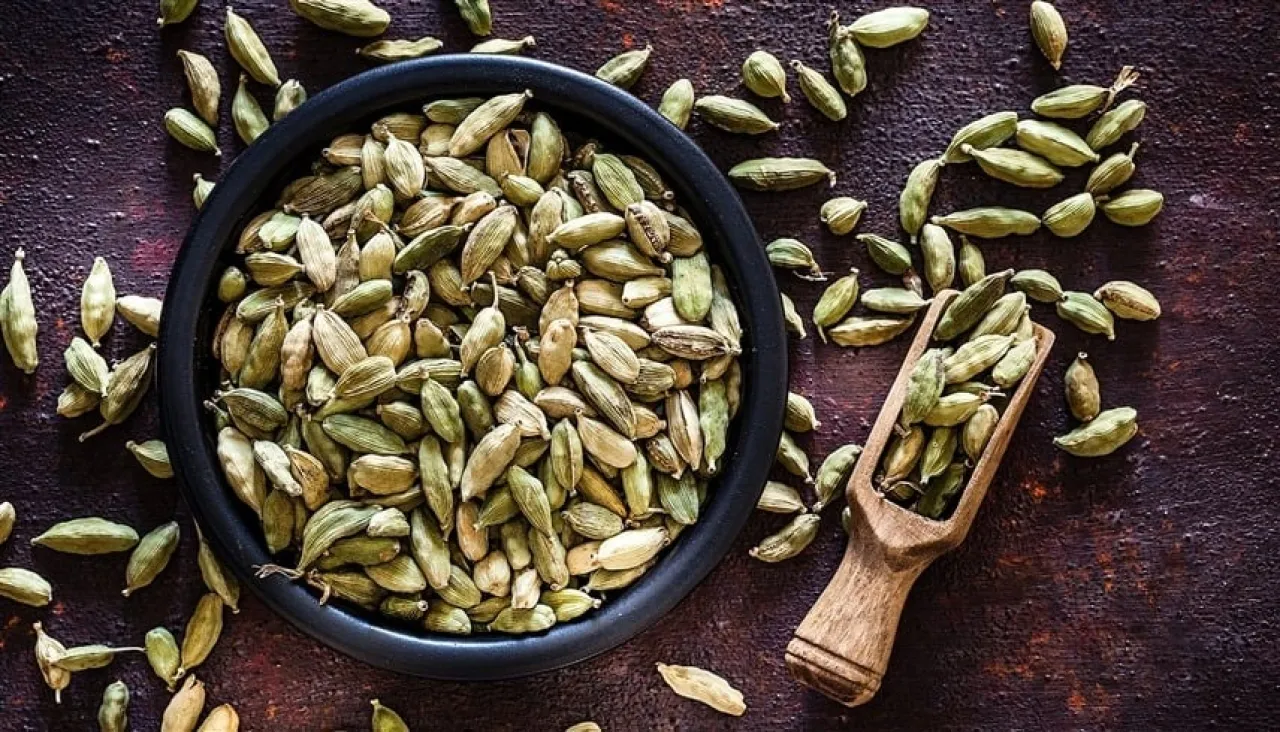
Khaberni - A recent Japanese study found that cardamom seeds have antiviral properties and they can enhance the production of Type I interferons, proteins that protect against viral infections.
Researchers from Shinshu University in Japan have long been looking for dietary components that can prevent drug-resistant viral infections, and they say their work has become even more important since the COVID-19 pandemic.
Cardamom protects against influenza
According to "Daily Mail," in a previous study, scientists found that the cardamom seed extract had a protective effect against influenza virus infection.
Continuing this research, in the recent study, scientists conducted experiments on human lung cells known as A549 cells, which are widely used in cancer research, drug development, and as a model for pulmonary diseases.
In a laboratory environment, these cells were treated with cardamom seed extract and exposed to a simulated viral infection, to better understand the impact of the seeds on the production of antiviral molecules.
The researchers found that the extract, specifically 1,8-cineole, the active ingredient in it, helped activate sensors within the cells that recognize viral genetic material.
This stimulated the production of cytokines, proteins that help the body fight viruses, in addition to Type I interferons.
Boiled cardamom seeds
In the experiments, researchers used an extract of cardamom seeds that had been boiled in hot water for an hour.
Then, the resulting liquid was freeze-dried to obtain a powder of the hot cardamom seed extract. This powder was dissolved in water for use in subsequent experiments.
It is unclear whether people can replicate this at home, but the researchers believe that their findings could lead to new uses for cardamom in health and medicine.
Previous studies have suggested that cardamom may be effective as an antihypertensive.