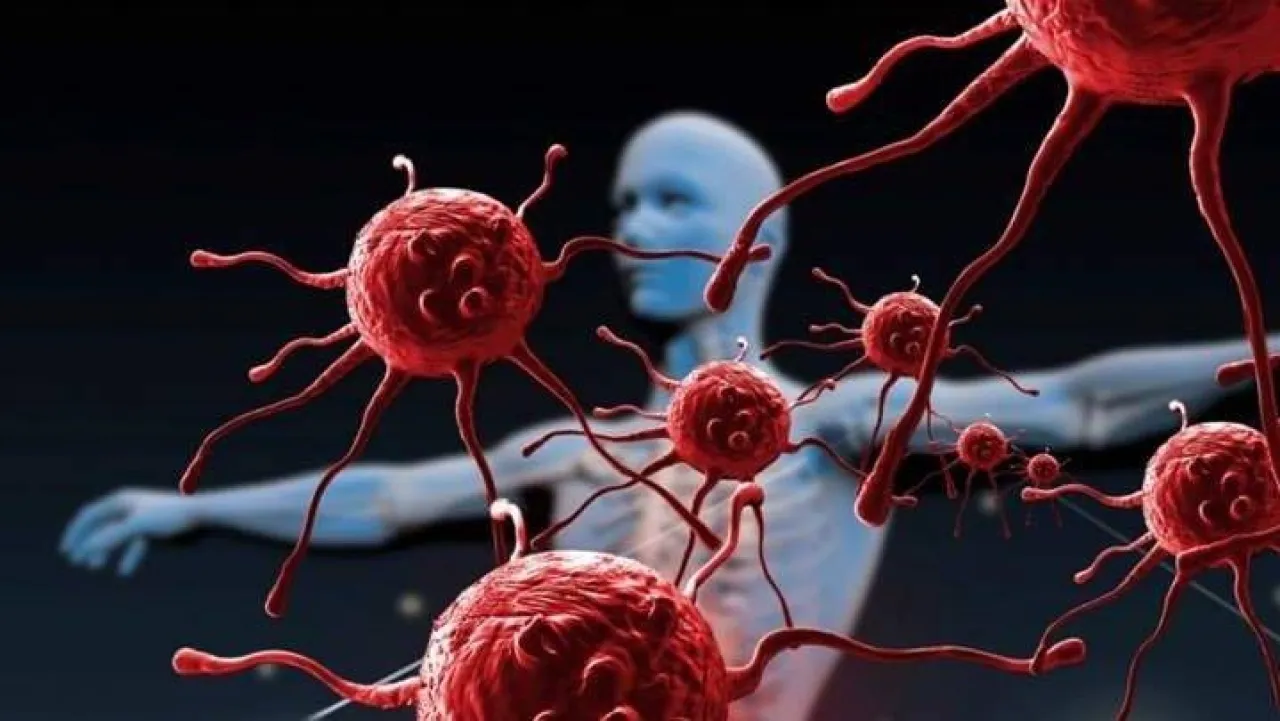
Khaberni - Researchers have developed a pioneering vaccine that provides immunity against several aggressive cancers before they grow and spread. The new vaccine contains tiny nanoparticles made from lipid molecules that provide materials to enhance the body's immune response.
The study was conducted by researchers from the University of Massachusetts Amherst in the United States, and its results were published in the Cell Reports Medicine journal on October 9th, and reported by the British newspaper, Daily Mail.
Experiments at the University of Massachusetts Amherst started by combining nanoparticles with an antigen that stimulates an immune response to cancer. The mice that received the vaccine were then exposed to melanoma (a type of skin cancer), a kind of tumor that can spread to any organ.
Impressively, 80% of the mice that received the nanoparticle vaccine remained tumor-free and survived for 250 days. In contrast, all mice that received traditional vaccines or no vaccine at all developed tumors and died within 35 days.
While the team is working on developing a treatment for humans, they warn that their work is still in its early stages.
Stopping Cancer
The researchers found that the injection stopped the spread of cancer to the lungs. The team then tested a second version of the vaccine consisting of nanoparticles and another antigen called tumor lysate.
The vaccinated mice were later exposed to skin cancer, breast cancer cells, or the most common type of pancreatic cancer.
Overall, 88% of the mice exposed to pancreatic cancer, 75% of the mice exposed to breast cancer, and 69% of the mice exposed to skin cancer remained tumor-free. All the mice that remained tumor-free after vaccination also resisted the development of secondary malignant tumors when exposed to cancer cells.
The study's author, Prabhani Atukorale, an assistant professor of biomedical engineering at the University of Massachusetts Amherst, had previously demonstrated that her drug design based on nanoparticles could shrink or eliminate tumors in mice.
The results reveal that this approach can also prevent the formation of cancer altogether. The researchers say that their design can be used on multiple types of cancer, not just those tested in this study.