Khaberni - How many senses do humans possess? A question that seems simple, and the answer we all learned in childhood has always been clear – five main senses: sight, smell, hearing, taste, and touch. However, it appears that this classical knowledge is no longer sufficient, as scientists today believe that our bodies possess a hidden sixth sense, no less important than any of the other senses, and perhaps key to a deeper understanding of physical and mental health.
Scientists call this new sense "interoception," and it is not a sense that allows us to interact with the external world, but an internal one that continuously monitors what is happening inside our bodies. Thanks to it, our brain knows when the body needs oxygen, how blood pressure is regulated, or when to fight an infection or feel hungry or thirsty. It is like a "constant internal alarm system" that maintains our vital balance without our conscious awareness.
This discovery came after extensive research by the Scripps Research Institute in the United States, which recently received a $14.2 million grant from the National Institutes of Health (NIH) to study this mysterious system.
The project is led by Professor Shen Jin, who described interoception as "one of the most elusive areas of neuroscience, yet it is essential for every aspect of health."
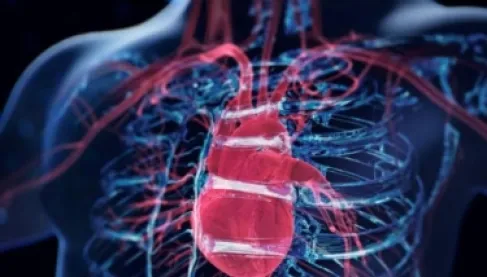
The scientific team aims to create the world's first atlas of the internal sensory system, a precise map that shows how sensory neurons are connected to a wide range of internal organs, from the heart and lungs to the stomach and kidneys. This ambitious project may revolutionize our understanding of the relationship between the brain and the body, and pave the way for new treatments for diseases that have long baffled doctors.
It has been shown that a disturbance in this internal system is linked to several complex health conditions such as chronic pain, autoimmune disorders, and high blood pressure. More excitingly, it also has a profound impact on mental health, according to the "Daily Mail."
According to a study involving researchers Jennifer Murphy from Royal Holloway University and Freya Prentice from University College London, interoception plays a central role in regulating emotions, decision-making, and social ability. Their research suggests that its disturbance might explain the similarities in symptoms between different mental illnesses such as anxiety, depression, and eating disorders, as those affected often struggle to interpret signals from their bodies.
For example, the brain might misread signals of hunger or fatigue or rapid heartbeat, interpreting them as stress or fear or a desire to eat, leading to complex behavioral or psychological imbalances.
Scientists believe that understanding this sense precisely could open the door to a new era of personalized medicine, where internal body signals are used to diagnose disorders before their external symptoms appear.
Professor Shen Jin concludes saying, "By creating the first atlas of this internal sensory system, we hope to understand how the brain maintains the balance of the body, how this balance is disrupted in illness, and most importantly, how we can restore it."
The discovery of interoception does not just add a "sixth sense" to the list of human senses but redefines the concept of body awareness itself, opening a new window on the complex relationship between the mind, the body, and emotions—an area that may hold the keys to treating both psychological and physical illnesses of our era.