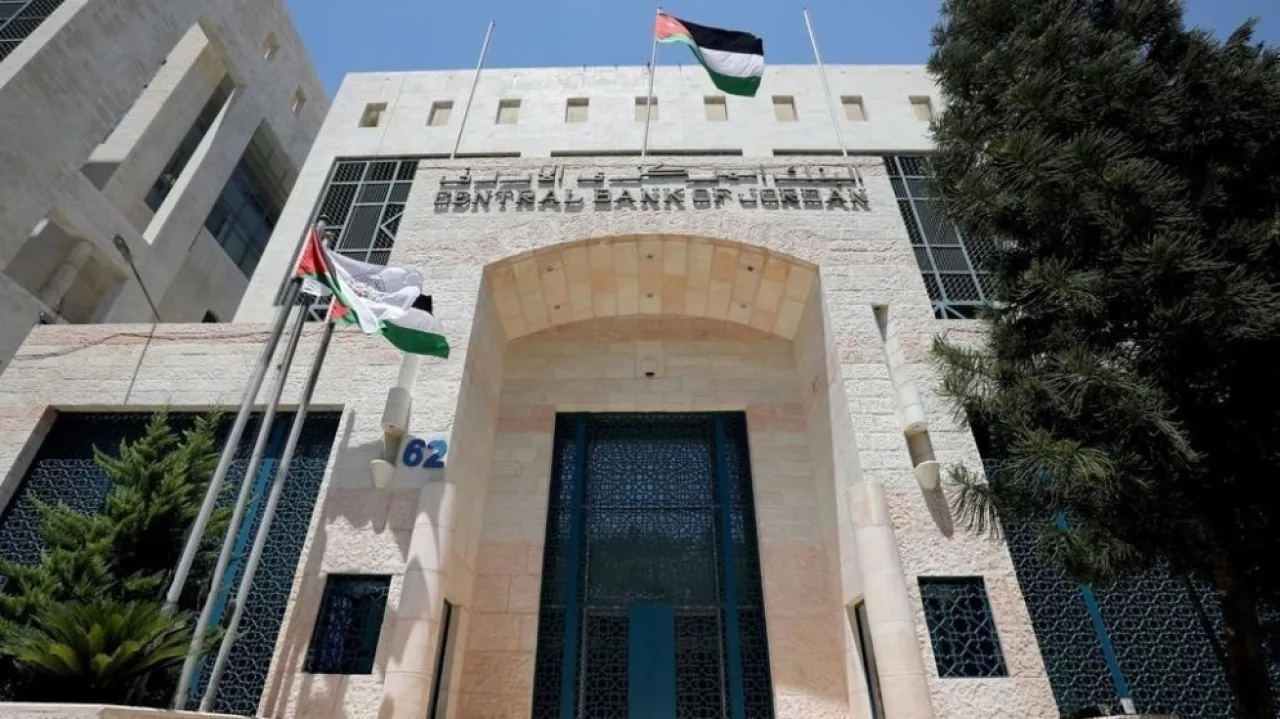
Khaberni - The Central Bank of Jordan confirmed that the stress tests results conducted on the banking sector showed the Jordanian banks' ability to withstand high shocks and risks, thanks to comfortable levels of capital, liquidity, and profitability.
According to the annual financial stability report for 2024, which "Khaberni" reviewed, the tests demonstrated that the capital adequacy ratio within the banking sector remains high even in the most severe scenarios, ranging between 14.6% and 16.5% for the years 2025–2027, which is higher than the minimum required in Jordan at 12% and above the limit set by the Basel Committee (10.5%).
The report mentioned that this performance reflects the financial robustness of Jordanian banks and their ability to continue providing financing and maintaining financial stability in case the geopolitical and economic challenges persist.
In the same context, the financial stability index in Jordan continued to improve, as it rose from 0.50 in 2020 to 0.57 at the end of 2023, a level that reflects a high degree of stability for the Jordanian banking sector, despite the challenging regional and international conditions.
The report indicated that Jordan ranked first in terms of financial stability level in the banking sector compared to 23 other countries that developed their index using the same methodology used by the Central Bank of Jordan, affirming that the local banking system is highly robust and continuously capable of adapting to economic and geopolitical developments.
The Central Bank confirmed that this performance enhances the resilience of the Jordanian financial system and places Jordan among the top 23 countries in terms of financial stability degree according to the international methodologies used in building the index.