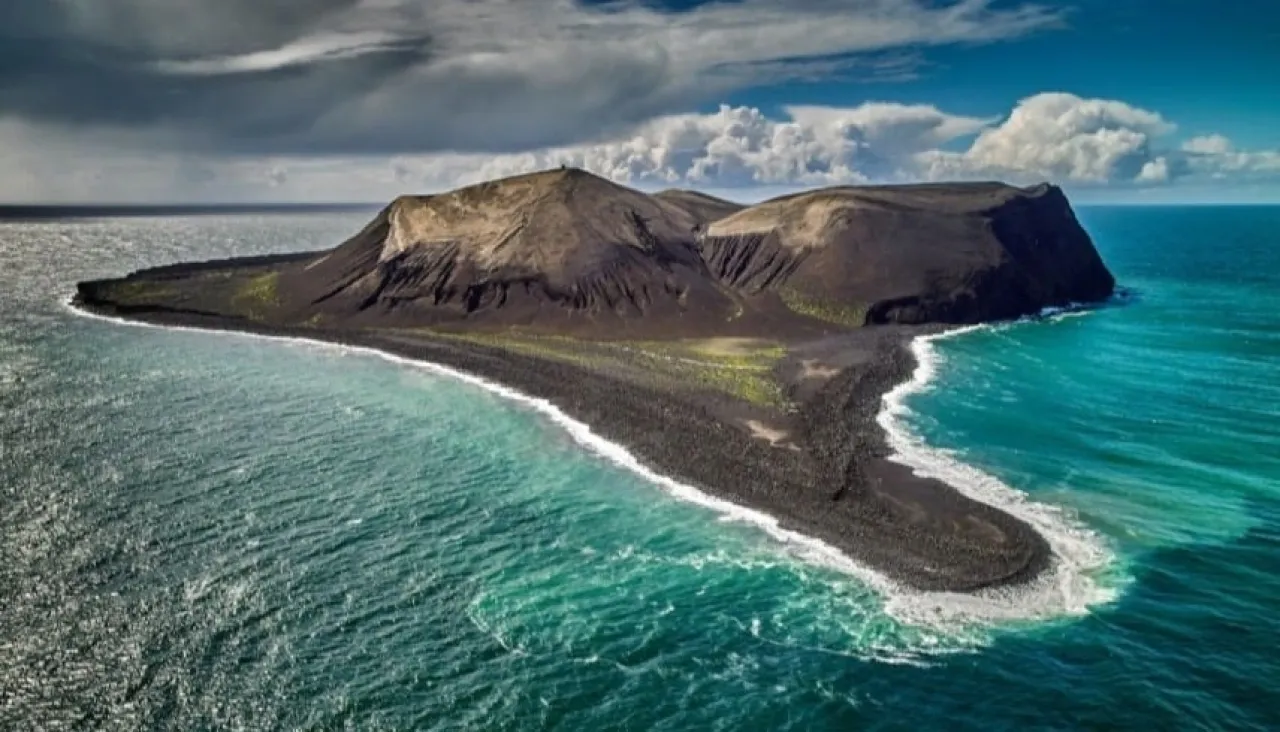
Khaberni - A new island has emerged from the heart of the ocean off the coast of southern Iceland, opening a rare scientific window into the workings of nature far away from human influence.
The volcanic island "Surtsey" was born in November 1963 following an underwater volcanic eruption, beginning as a mountain of lava and ash that gradually rose above the water, transforming the initial chaos into stable terrain, until the island reached over a kilometer in length and 174 meters in height just two months later.
Fishermen and nearby residents observed the phenomenon in astonishment, while researchers began monitoring the first life to settle on the island, as the first plants appeared quickly and the arrival of birds was essential in the dispersal of seeds on the bare volcanic rocks, helping to establish a stable vegetative cover later on.
By the 1980s, black-headed gulls began nesting, which accelerated the growth of the vegetative cover through droppings that carried new seeds.
Over time, the island became a refuge for grey seals that settled on the rocks for rest and breeding, laying a new foundation for protected biological diversity, while studies warn that marine erosion processes might reduce the island's area by the end of the century, leaving sharp rocks on the ocean.
Surtsey shows that the natural recovery of lands does not follow a fixed path, but is intertwined with surprising and varied factors, giving hope to environments damaged by wars, pollution, or excessive exploitation, confirming that nature is capable of restoring itself if sufficient space and freedom for growth are provided.