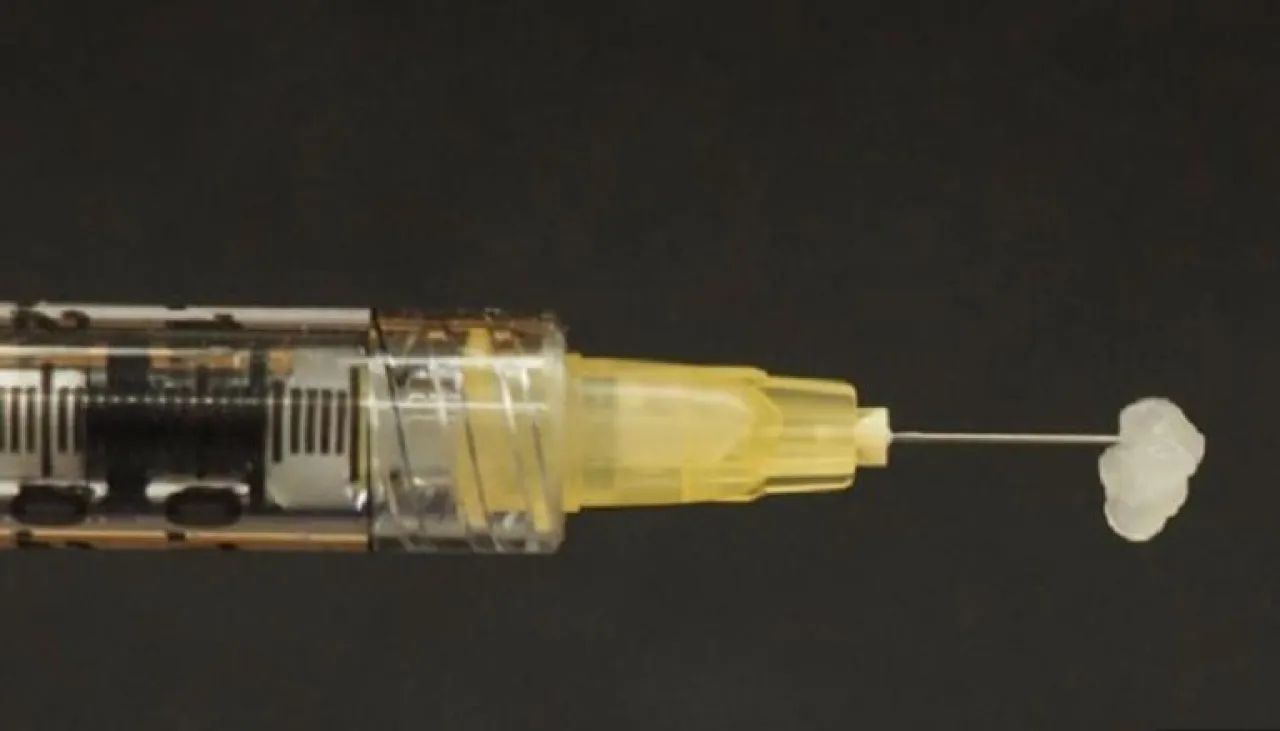
Khaberni - Researchers from McGill University in Canada developed a new hydrogel that shows early promising results for treating vocal cord injuries.
Typically, voice loss occurs as a result of scarring on the vocal cords, while current treatments, which rely on injections with temporary materials, fail to remain inside the tissues for long periods, forcing patients to repeat treatment procedures that may further damage the sensitive vocal cords.
However, the new study, published in the journal "Biomaterials," revealed that the hydrogel developed at McGill's lab resisted degradation for several weeks in laboratory and animal experiments, outperforming currently used injectable materials, thus providing a greater chance for tissue healing.
Professor Maryam Tabrizian, who co-led the research and is a professor of biomedical engineering at the university, said: "The secret to this hydrogel's success is the use of a technique known as click chemistry, which acts like molecular glue that binds the material's components together and prevents them from breaking down quickly after injection."
The new hydrogel is made from natural tissue proteins that have been processed into powder and then converted to gel, making it biocompatible with body tissues.
Vocal cord injuries are more common among the elderly who suffer from esophageal reflux or smokers, as well as among those who use their voices professionally like singers, teachers, and broadcasters. Statistics from the National Institute of Health indicate that about one in every 13 adults suffers from a voice disorder annually.
Professor Nicole Li-Jessen, the co-researcher and professor at McGill's School of Communication Sciences and Disorders, said: "Many people do not realize the importance of their voices until they lose them, which can severely affect their mental health and quality of life, especially for those who rely on their voice for work."
The team is currently testing the performance of the hydrogel through computer simulation of its interaction inside the body, in preparation for moving to clinical trials on humans. If proven successful, it may pave the way for a long-term, non-surgical treatment that restores hope for those who have lost their voices.