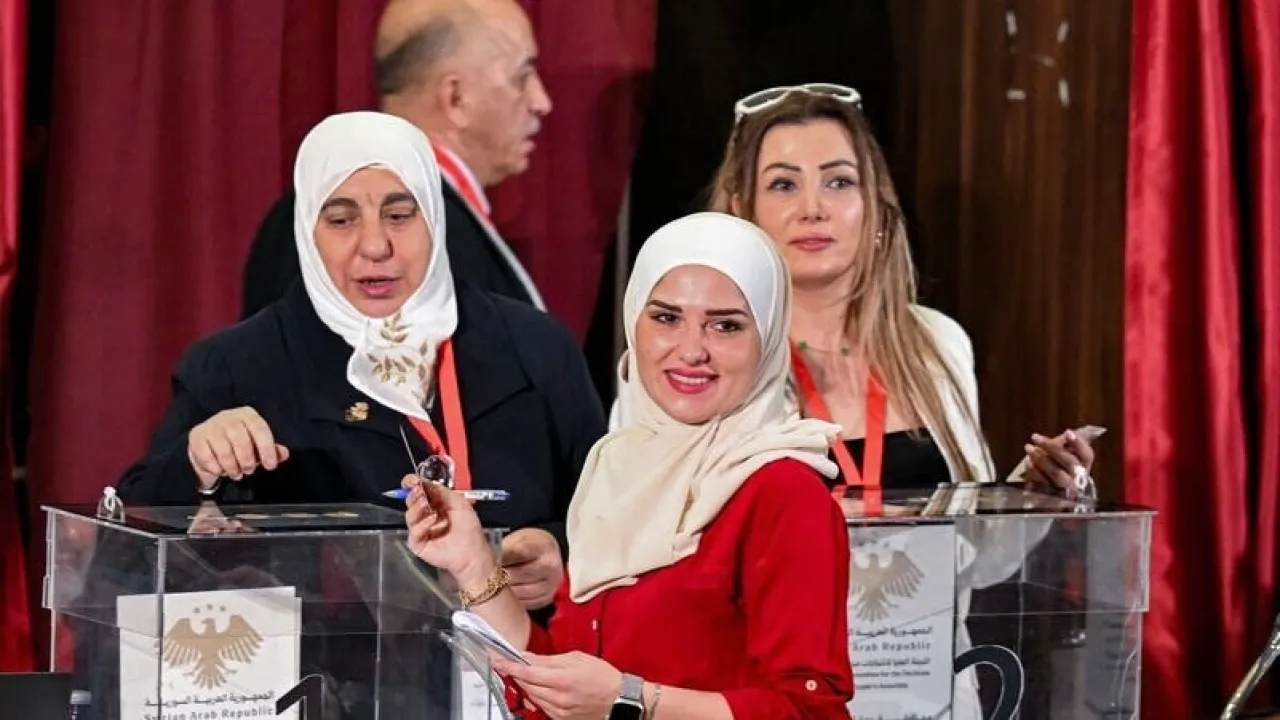
Khaberni - The selection process for the first parliament in Syria after the overthrow of Bashar al-Assad's government concluded last Sunday. Nouar Najmeh, the spokesman for the High Committee for People's Council Elections, announced that "the voting processes were completed in all Syrian provinces".
He also confirmed in a tweet on his account on X yesterday that "the People's Council is completely free from supporters of the former regime," according to his statement.
In subsequent statements to Syrian News, he clarified that if evidence emerged proving any individual's connection to the previous regime, they would be excluded from the council.
Furthermore, he emphasized that the parliament is "an official institution for national dialogue and establishing laws that will lay the foundation for the future".
An election committee member explained that although some initial results appeared gradually on Sunday evening, the final list of winners would not be announced until Monday.
Only 15% of women
Simultaneously, some Syrians on social media expressed their disappointment at the timid presence of women in the new parliament. They confirmed that only eight women won during the electoral process that took place yesterday.
About 6,000 people participated in the deputies' selection process yesterday after more than 1,500 candidates competed, only 14% of whom were women for council membership, which has a renewable mandate of 30 months, according to the Supreme Election Committee.
Syrian President Ahmad al-Shar'a confirmed yesterday that "Syrians are proud of the transition from a stage of war and chaos to elections".
He also emphasized that "this historic moment is very important at this time," calling on all Syrians to rebuild their homeland anew.
It is noted that the formation of the upcoming parliament will be based on a mechanism defined by the constitutional declaration, and not by direct elections from the people. According to this mechanism, regional bodies formed by a high committee elected two-thirds of the council members, totaling 210, while the Syrian president appointed the remaining third.
The selection of council members in the provinces of Sweida, Raqqa (north), and Hasakah (northeast) was delayed due to "security challenges," according to previous announcements by the election committee.