Khaberni -
In an era where identities are eroded under the feet of fashion, and principles are sold on the sidewalks of interests, there remains a longing in the heart for cities that were not just cities, but were men walking, positions throbbing, and history flaming in every stone, with Al-Karak being foremost among them.
I am a son of Al-Karak… I carry not only its name, but also a legacy, an inheritance of manhood that cannot be obliterated or surpassed. I was raised in its alleys, at a time when manhood was measured by deeds not words, and honor preceded titles, and silence was more eloquent than a thousand slogans. And today, after those who were pillars of this land have gone, I find solace only in the values they left behind… for what remains after the ruins are the values.
When Al-Karak was a school, not just a city
Al-Karak was never just a spot on the map of Jordan. It has always been a school of sacrifice, a university of chivalry, a mine of men who are not replicated. It did not need trumpets or publicity; it defined itself by its silence, its men, its unforgettable positions.
Perhaps the greatest story that can be told about Al-Karak isn't found in geography books or school curriculums, but in the living biography of a single man who embodied Al-Karak entirely: Sheikh Ibrahim Al-Damour.
This man, whose life pages of history are not enough to describe, because he etched his name in the conscience of everyone who knew the meaning of sacrifice. When the Syrian rebel Ahmad Pasha Al-Qutaish Al-Hamoud Al-Fa’our sought refuge from the tyranny of the Ottoman rule, Sheikh Ibrahim Al-Damour did not hesitate to welcome him, despite knowing that the price might be his life, or something dearer than his life: his children.
The Ottomans threatened him and demanded that he hand over the guest, but he refused. They wanted to humiliate him, so they showed their cruelty, and threatened to burn his sons if he did not surrender the refugee. His response was epic: He offered his sons one after another, martyrs at the altar of dignity, not for a person, but for a principle.
Have you heard this?! A man who offered his own flesh and blood to protect a refugee who sought his shelter. What ethical stature was this? What a mountain of honor was this man?! This is not a passing story, but a gene inherited by Al-Karak generation after generation.
When dignity is an unbreakable law
In Al-Karak, laws were not written on paper, but in hearts. Valor was law, and zeal was the constitution. If a cry for help was raised, those who did not know the caller nor his name came to his aid, simply because he "sought refuge". The weak are not asked about their lineage, and the guest is not judged on why he came. In Al-Karak, protection was a religion, loyalty a creed, and dishonor is washed with blood, not apologies.
And today, when you pass through Al-Karak's alleys, you might not find the men you knew. Some have died, others have migrated, and some have been worn out by reality. But if you look closely at the faces of their grandchildren, in the eyes of its youth, in the voice of its mothers, you will see that the fire has not gone out, and the spark is still ignited.
Why do I write?
Because I don’t mourn the ruins, but rather awaken what remains. I write because history should not be condensed into tales, but must be reclaimed in actions. I write to say that Al-Karak was not great because of its buildings, but because of its sons. It was not rich with its wealth, but with its stances. I write to say: O sons of Al-Karak, do not allow the wind to steal your glory, and do not let the memory of Ibrahim Al-Damour be forgotten in the rush of oblivion.
After the ruins… only values
Yes, those who spoke have died, but their words have not. Those who carried the principle have passed, but the principle remains alive. After the ruins, only values, and after men, only those who resemble them. Al-Karak does not die, because it never lived by the bodies of its people alone, but by their stances that do not die.
O time that tries to melt everything… know that Al-Karak is a rock that cannot be melted. And O map that draws borders with ink… Al-Karak draws souls with blood. And O sons of Al-Karak, always remember that you are not from a city, but from a lineage of principles that do not age.
Peace be upon Al-Karak… and peace be upon all who resemble it.
And peace upon the soul of Ibrahim Al-Damour, who died standing, to keep the name of Al-Karak high unbroken.
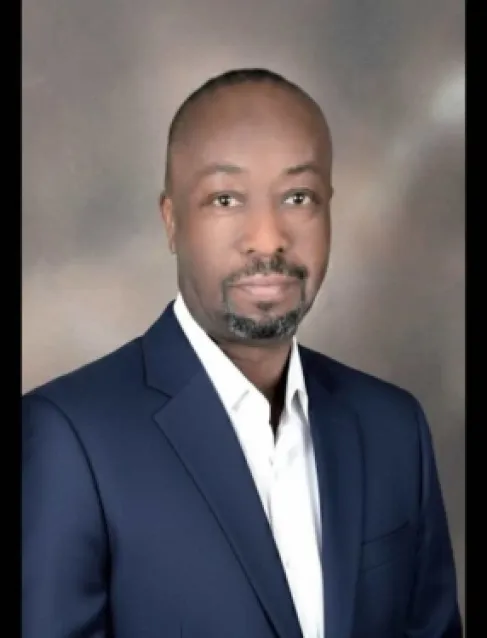
Dr. Hani Al-Damour