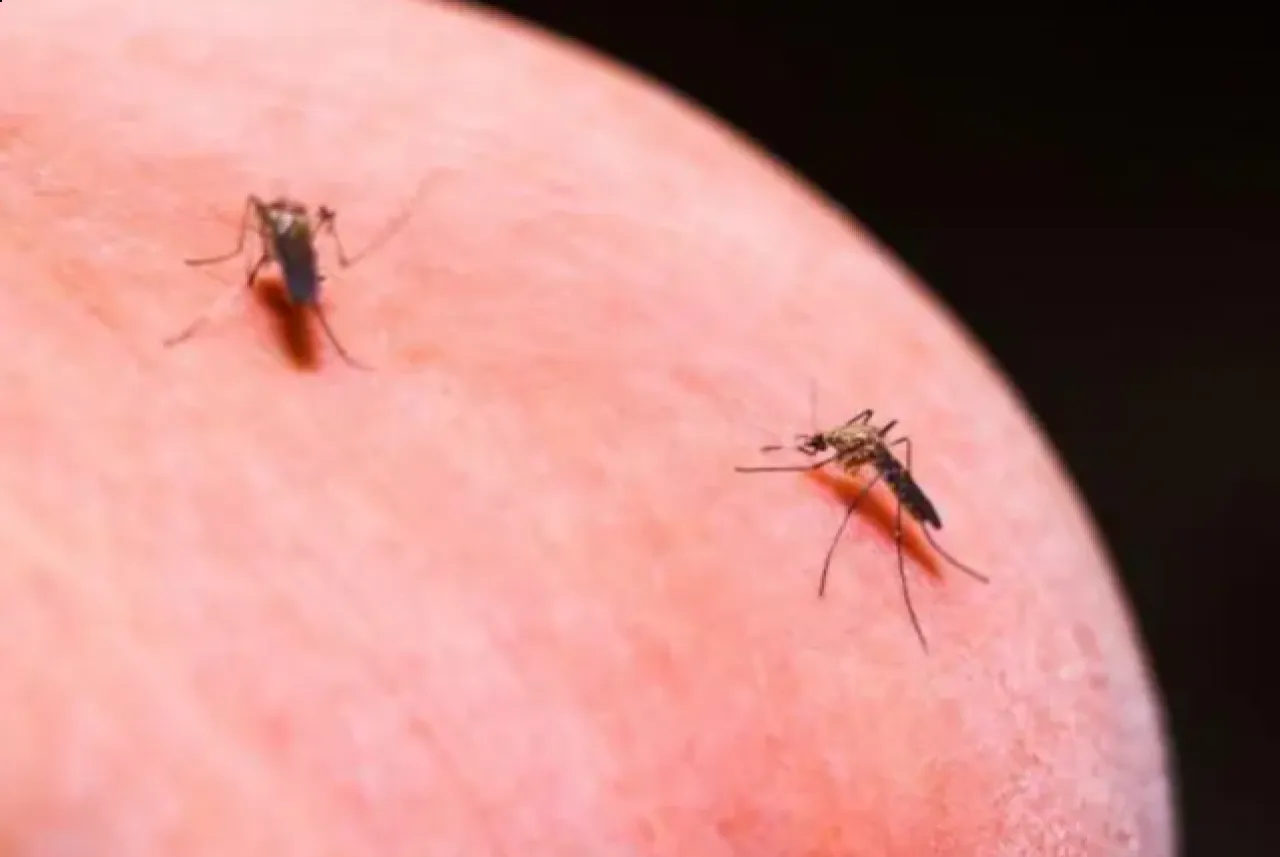
American researchers suggest that it is necessary to give mosquitoes malaria medication to eliminate the infection so they cannot spread the disease.
Malaria parasites, which kill about 600,000 people annually, most of them children, are spread by female mosquitoes during the absorption of human blood.
This comes in contrast to the current practices in malaria control, where mosquitoes are killed with insecticides instead of treating them for malaria.
However, a team from Harvard University discovered two drugs that successfully free these insects from the parasites when absorbed through their legs. Ensuring bed nets are saturated with this medicinal mixture is a long-term goal of the study.
The team also recommended vaccination to protect children living in areas at risk of contracting malaria.
These bed nets act as a physical barrier and also contain insecticides that kill mosquitoes landing on them.
However, mosquitoes have become resistant to insecticides in many countries; hence, chemicals no longer kill the insects as effectively as they did in the past.
Harvard academic researcher Alexandra Probst says: "We had not previously tried to kill the parasites in the mosquitoes directly, as we were only killing the mosquitoes."
She added that this approach "is no longer effective."
The researchers analyzed the DNA of the malaria disease to find possible vulnerabilities during a mosquito infection.
The researchers reviewed a large library of potential drugs and narrowed the choices down to a shortlist of 22 drugs. These drugs were then tested during a blood meal given to female mosquitoes contaminated with malaria.
In their article published in "Nature" journal, the scientists identified two drugs that were largely effective after they managed to eliminate 100% of the parasites.
These drugs were tested on a material similar to bed netting.
Probst said: "Even if a mosquito survives a collision with the netting, the fungi are eliminated, stopping the transmission of malaria."
She added: "I think this approach is really interesting because it's a completely new way of targeting the mosquito itself."
She noted that the chance of malaria parasites developing resistance to the drugs is almost nil, as there are billions of these parasites in the body of each infected person - while in each mosquito, their number does not exceed five.
Researchers say the effect of the drugs lasts for a year on the bed nets, making them a cheap and durable alternative to insecticides.
This approach has been proven effective in the laboratory. The next phase is planned in Ethiopia to verify the effectiveness of the anti-malaria bed nets in reality.
It is expected to take at least six years to complete all studies to see whether this method will be successful or not.
But the vision this research is based on is that the bed nets are treated with anti-malaria drugs and insecticides so that if one method does not work, the other will succeed.