



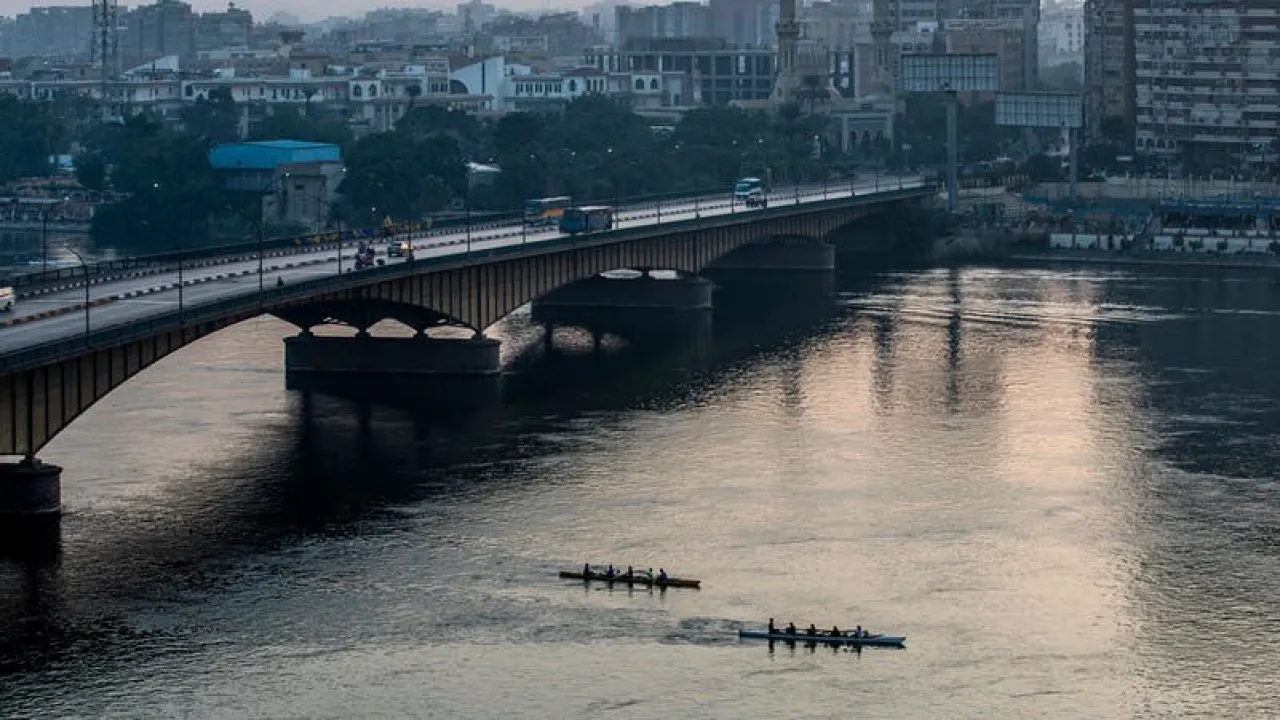
Khaberni - In a new strategic step to protect the River Nile, the Egyptian Cabinet has approved the inclusion of the national project to control the River Nile and its branches as a main project within the state budget until 2029.
The project aims to restore the natural course of the river by removing landfill and construction encroachments, providing an accurate digital database for the riverbed and banks, contributing to the monitoring and analysis of changes affecting water flow, and improving the efficiency of managing the river course and maintaining its facilities.
The project focuses on key pillars including the preparation of modern digital maps of the bottom and banks of the River Nile and its branches based on topographic lifting and bathymetric measurements, inventorying and raising public properties related to irrigation and drainage and riverbank lands, and removing encroachments and violations affecting the river course and the efficiency of water flow.
According to the plan, the Nile River management system will be developed based on data and modern technologies to support the achievement of the second generation of the water system 2.0, and enhancing Egyptian water security in the long term to face any future repercussions.
"A necessary project"
In this context, Dr. Ahmed Fawzi Diab, the Senior Manager of Project Management and Water at the United Nations, confirmed that the national project to control the River Nile and its branches is of utmost importance and necessity. He pointed out in statements to Alarabiya.net/Alhadath.net that this type of project is recommended for implementation in all international rivers due to its vital role in protecting countries from the dangers of floods and ensuring the smooth movement of water and its smooth reach to needed areas or the final estuary.
He also confirmed that this approach represents an urgent necessity in managing international rivers to reduce the risks of floods and protect countries from damages caused by disrupted water flows.
Using artificial intelligence
Dr. Abbas Sharaki, a professor of geology and water resources at Cairo University, explained that following the rise of the Nile water level and the occurrence of a flood in Sudan at the end of September 2025 due to poor management of the Renaissance Dam and the opening of four discharge gates, the Egyptian government launched a national project to manage and develop the river course, protect it, and enhance its discharge efficiency. He noted that the project targets the creation of a scientific database using satellites and artificial intelligence to monitor changes in the riverbed and banks, producing digital maps to improve water management, in addition to inventorying lands and public properties associated with irrigation and drainage of riverbank lands and removing encroachments to restore the River Nile and its branches, Damietta and Rosetta, to their natural state.
Furthermore, he affirmed that the project will contribute to the maintenance of infrastructure such as barrages and canals, which helps the Ministry of Water Resources and Irrigation make precise decisions to improve water use efficiency and minimize the water deficit, which reaches up to 50% of initial needs, besides providing opportunities for the expansion in agricultural projects on the margins of the valley and the delta and improving the efficiency of river navigation and the movement of tourist boats through sediment clearing.
It is notable that Egypt historically depends on a fixed share of Nile water amounting to 55.5 billion cubic meters annually according to the 1959 agreement, and faces a water deficit.
Cairo sees the Ethiopian Renaissance Dam as a direct strategic threat to Egyptian water security due to Ethiopia's insistence on unilateral filling and operation and the absence of any binding legal agreement, which increases the risks of reduced water flow during drought and storage years and severely pressures the strategic reservoir in Lake Nasser and the High Dam, which has long been considered a safety valve for the country. This likely decline entails severe repercussions affecting the agricultural and economic sectors, prompting Cairo to adopt a package of large national projects for mitigation and to face the deficit, including maximizing the use of available resources by recycling agricultural drainage water in giant stations, lining canals, and upgrading the management of the watercourse and modern monitoring technologies to ensure the sustainability of water security and protect Egypt's historical rights.