



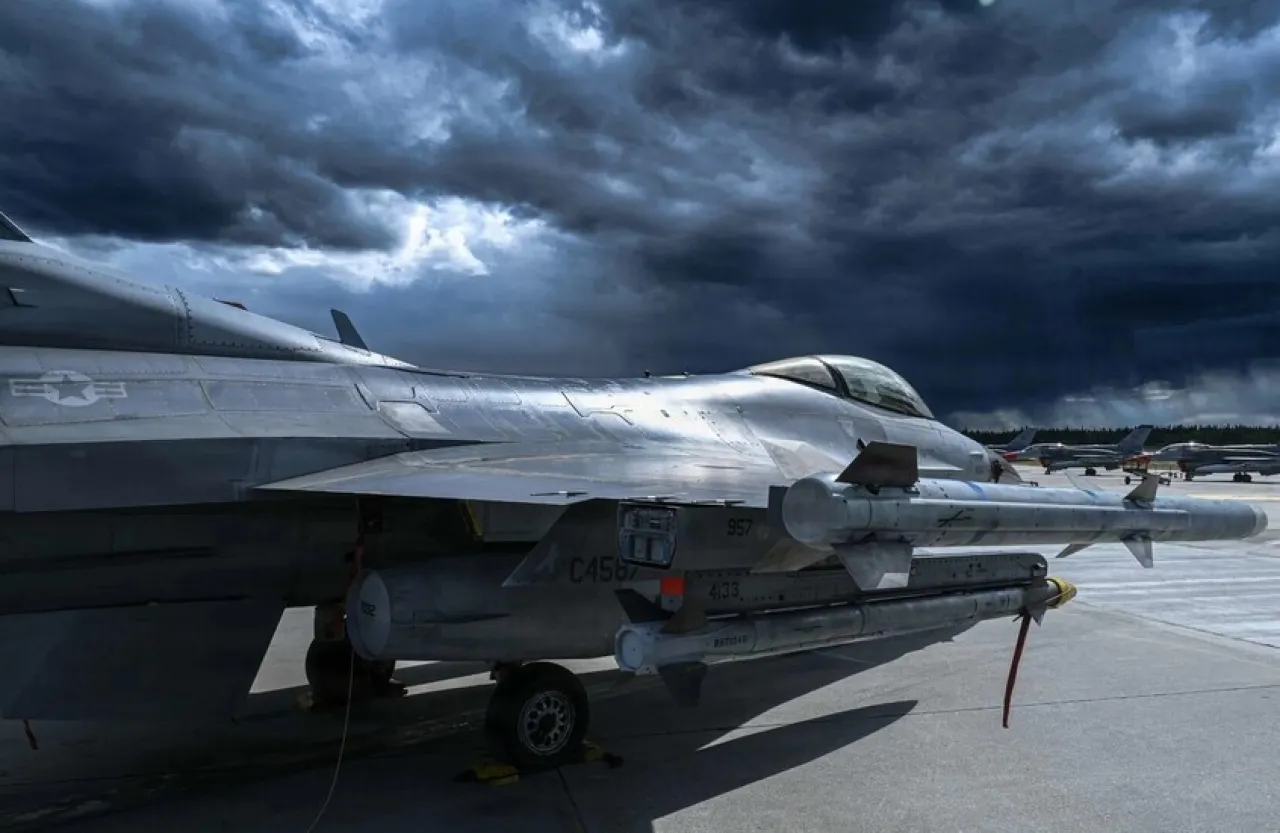
Khaberni - Israeli reports revealed that Egypt has advanced an official and secret request to the United States to purchase “F-16 Viper Block 70” jets directly from the production line.
The Hebrew media reports explained that this move aims to update the Egyptian air fleet while Israel remains silent on this strategic deal.
The Israeli platform “Kikar Hashabat” reported that during the El Alamein air show held recently, Egypt made an official and secret request to the United States for the purchase of brand-new F-16 Viper Block 70 jets straight from Lockheed Martin’s production line.
The Hebrew platform added that this Egyptian request represents an important step in trying to replace the old fleet of the Egyptian Air Force, noting that Cairo has one of the largest fleets of F-16 jets in the world, which includes about 220 to 240 aircraft.
It pointed out that about 129 of these jets are old structures dating back to the 1980s and 1990s and have reached the end of their operational life, noting that the current request aims to counter the expected threats by 2030 according to professional estimates.
The Block 70 model offers a significant upgrade in combat capabilities, as it includes the advanced APG-83 AESA radar with technologies developed for F-22 and F-35 aircraft, providing detection, tracking, and countermeasure capabilities in electronic warfare not previously available to Egypt. Additionally, the jet includes new avionics systems, a modern mission computer, and an advanced electronic warfare system called Viper Shield developed by L3 Harris.
The new jets provide 12,000 flying hours compared to 6,000 hours in the old jets, which doubles the assumed structural lifespan, and this technological upgrade allows Egypt to maintain its operational significance against evolving threats in the region.
Egypt continues its policy of diversifying military suppliers, concurrently negotiating with the French around purchasing additional Rafale jets, including the F3-R version equipped with long-range cruise missiles.
In addition, Cairo is considering Chinese alternatives such as the J-10C and the stealth J-31.
The request made to the United States sends a clear message that Cairo seeks to remain in the Western axis, but it requests not to be taken for granted, and Egypt’s strategy relies on balancing between different sources of weaponry while maintaining relations with the superpowers.
Unlike the past where Israel strongly opposed advanced weapons deals for Egypt, this time it seems that they do not object and might quietly support it, since it is better for Egypt to purchase American F-16 planes that come with software restrictions and controls over armaments and spare parts, rather than unrestricted Chinese aircraft.
U.S. law requires maintaining Israel's qualitative superiority, so the latest air-to-air missiles are expected to be restricted, and the gap against Israeli Sufa and Barak jets will be maintained, as well as the absolute superiority of the Adir F-35 aircraft system.
The United States has transferred to Egypt a military aid package worth $320 million without conditions related to human rights and democracy, justified by Cairo's supportive role since the onset of Operation Wrath of God in February. The total annual size of military aid provided by the United States to Egypt amounts to about $1.3 billion a year.
The Egyptian Air Force enhances its strength to become a multi-dimensional force capable of intercepting drones and cruise missiles and projecting power in the Mediterranean and Africa. According to Global Fire Power data for 2026, Egypt ranks nineteenth globally thanks to a combination of massive human power and quantitative strength, with the army comprising about 438,500 regular soldiers, in addition to approximately 479,000 reservists and 300,000 internal security personnel.
These developments come amid Egypt's continued efforts to update its military arsenal and enhance the capabilities of its air force to face growing security challenges in the region, while maintaining a strategic balance in its relations with major global powers.
The relative Israeli silence towards this deal indicates Tel Aviv's understanding of the importance of Egyptian stability and the priority of keeping Cairo within the American-controlled arms system, ensuring the preservation of Israel's qualitative military superiority without pushing Egypt towards alternatives that might be less detectable or restricted.