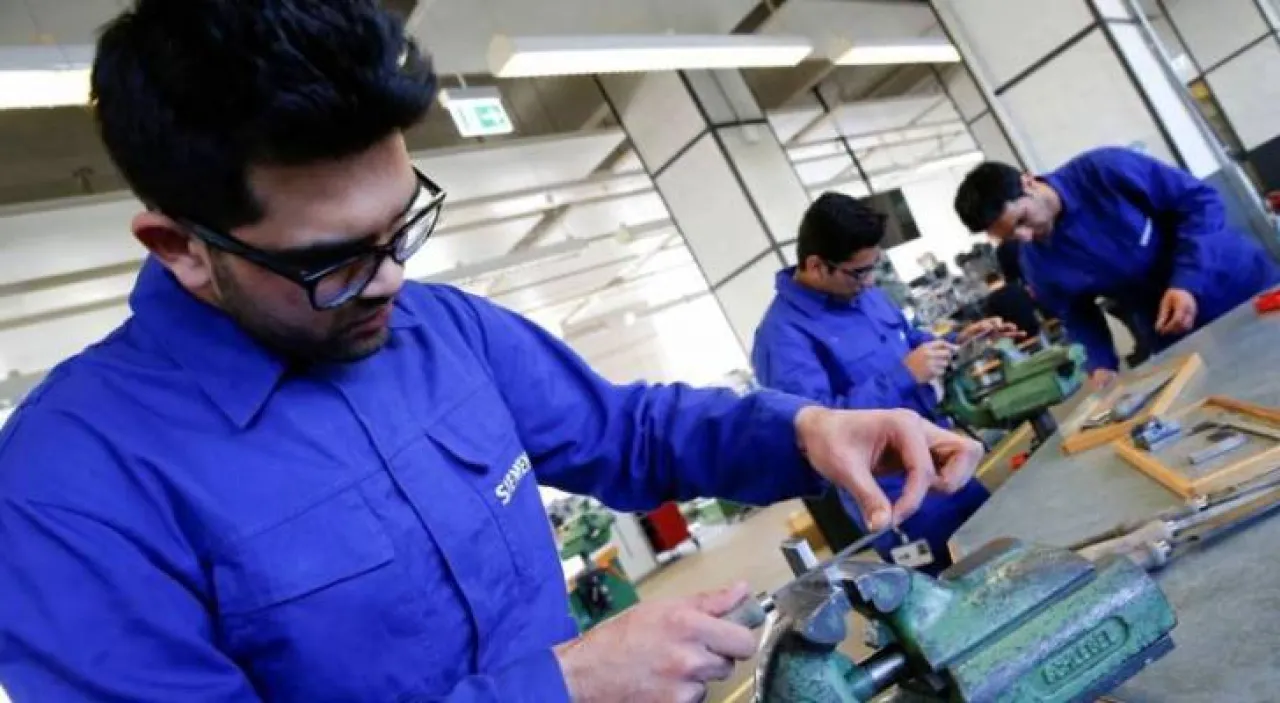
Khaberni - A UN report revealed that Jordan is among the top five countries in the Arab region in attracting and accessing outputs and projects for skills development, and technical and vocational education and training (TVET).
This was stated in the high-level evaluation report issued by the Independent Evaluation Office of the International Labour Organization (ILO) for the year 2026, which included results and evaluations of partnerships and programs aimed at developing lifelong learning skills strategies (2022-2026).
According to the report, Jordan ranks among the core countries and regions benefiting from the organization's programs and technical support in the Arab region.
The security-development report confirmed that despite the tangible success in formulating national policies and frameworks for vocational training, sustainable employment requires sustainable national financing and building the capacities of institutions at the executive level.
Policy-level structural reforms
The report explained that the global strategy for skills and lifelong learning for 2030 managed to provide a strong reference framework for building national frameworks, expanding the adoption of "recognition of prior learning" (RPL) systems, and updating competency-based training programs.
Regarding the Jordanian and regional situation, the report noted that Jordan is among the top five countries in the Arab region in attracting and accessing outputs and projects for skills development and technical and vocational education and training (TVET) with support from the organization.
These efforts were primarily focused on enhancing the efficiency of institutional governance, developing curricula to meet the changing requirements of the labor market, and activating social dialogue among the three production parties (government, employers, and workers).
Funding challenges and sustainability requirements
In a pivotal analysis presented in the report, it was found that the majority of funding for skills and training activities globally is based, by 97.5%, on resources from investment and external cooperation (XBDC). The independent evaluation warned that reliance solely on grant support and funding could threaten the sustainability of results and achievements in the long run, once the international projects end.
It emphasized the need for beneficiary countries, including Jordan, to transition from "the phase of funded projects and initiatives" to "the phase of institutional development and sustainable self-financing" by fully integrating these programs into government budgets and national development plans.
Integrating the most vulnerable categories
and the green transition
The report also reviewed the successes achieved in integrating vulnerable and needy categories into the labor market, including youth, women, informal labor, host communities, and refugees. This was evident through comprehensive programs implemented to support community livelihoods and enhance economic opportunities, and to address unemployment challenges.
On the other hand, the report highlighted future challenges and recent trends in the labor market, calling for accelerating the pace of skills foresight and expanding training on green skills (Green Skills), digital transformation, and artificial intelligence.
It noted that meeting the requirements of the green economy and future jobs now requires a more effective and deeper partnership with the private sector to bridge the gap between training outputs and practical market needs.
UN recommendations toward
a future roadmap
The ILO report concluded with strategic recommendations for the remaining period of strategy implementation (2026-2030), focusing on updating monitoring and measurement frameworks, developing accurate tools for measuring the long-term impact of training on employment rates and graduates' income. It also advised focusing on sustainable funding and supporting national financing mechanisms to ensure that programs are not affected by reduced international aid.
It stressed the importance of enhancing social dialogue and giving a greater role to workers' representatives and employers in planning and implementing training programs, beyond just advisory roles. It called for building executive capacities and investing in national cadres and training institutions to achieve comprehensive access to all regions and provinces.
The UN report sent a clear message to Jordanian national institutions concerned with the vocational and technical sector, stating that the infrastructure and public policies are robust and ready, and the next bet requires consolidating self-financing and enhancing partnership with the private sector to ensure the creation of decent and sustainable job opportunities for Jordanian youth.