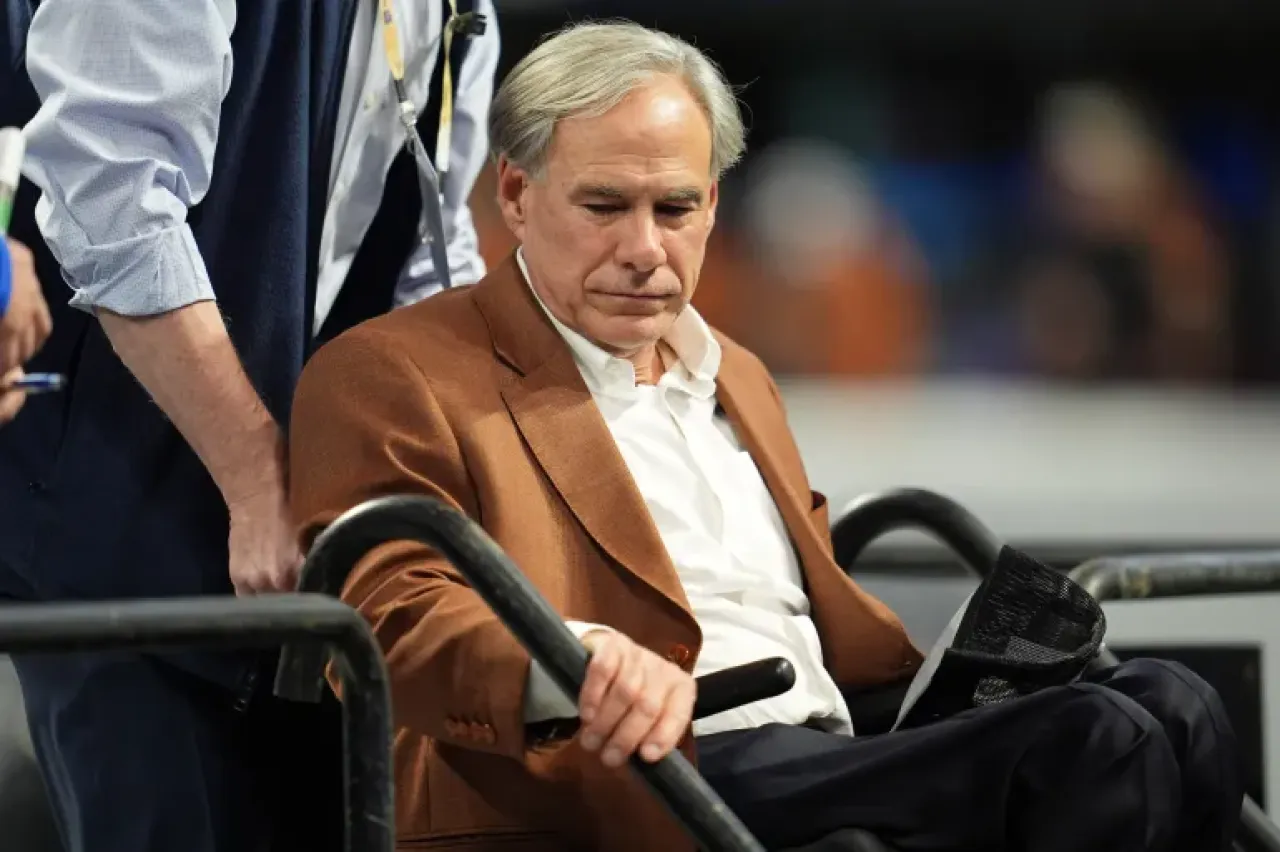
Khaberni - Republican Governor of Texas, Greg Abbott, has escalated his campaign against Muslim ablution facilities at the state’s two largest airports, demanding the U.S. Department of Justice to conduct an official investigation into these facilities, which he sees as "discriminatory" against non-Muslims.
Abbott said, in an official statement reported by the Washington Post, that the ablution facilities at Dallas-Fort Worth and George Bush International airports in Houston "are not multi-faith chapels equipped for everyone, but rather established to serve Muslim residents exclusively."
The newspaper reported that Abbott recently asked the Department of Transportation to withhold grant funds from the airports until these facilities are shut down. Shortly thereafter, officials at Dallas-Fort Worth Airport decided not to proceed with the construction of additional ablution facilities they had planned.
Legal Refutation and Responses from Rights Experts
According to the report, this escalation has provoked widespread condemnation among constitutional law experts and Islamic leaders, who see the attack as part of an increasing pattern of anti-Islam rhetoric and political targeting of the Muslim community in the state.
Muslim leaders and experts in religious freedoms rejected Abbott’s claim that the facilities entail discrimination against non-Muslims. The Washington Post quoted several people saying that the refusal to establish ablution places is the latest example of Republican leaders’ - particularly in Texas - attack on Islam.
Steven T. Collier - a law professor at the University of Texas at Austin - wrote in an email to the Washington Post, "Although Governor Abbott's statement described what the airports offer as discrimination in favor of Muslims, this new claim is actually part of a much wider pattern where state officials target Muslims, trying to make Texas an unwelcoming place for them."
Constitutional law expert Asma Eldeen said that the U.S. Supreme Court has long recognized that the principle of religious neutrality does not mean treating every religion in the same literal way, but means that the government should not coerce, favor, or exclude based on religious identity.
Experts provided examples of public facilities and services targeting specific group needs, such as providing halal or kosher foods for the Jewish faith in airports, or designating museum and park visitation hours that consider the feelings of people with autism by reducing noise, congestion, and lowering music volumes and other sensory impacts.
Political Motives
Observers believe that Abbott’s escalation, as he seeks a fourth term in office, coincides with the intensification of the electoral competition and the rise in anti-Islam rhetoric among Republican leaders.
Imam Omar Suleiman - head of the "Yaqeen" Institute for Islamic Studies in Dallas - commented on these moves by revealing their political and religious dimensions, saying "We can pretend there are genuine concerns about discrimination, public safety, or spending, or we can acknowledge the clear truth that bigotry against Muslims is still alive, being fed and funded to increase polarization in Texas and across the country, with people like Governor Abbott at the heart of this phenomenon."
Suleiman added that the use of ablution facilities at airports aims to facilitate the practice of worship and avoid the daily difficulties that Muslim travelers face in public restrooms, noting that Abbott’s actions seek to undermine these facilities.
The newspaper reminded that Abbott - when asked in an interview with Fox News why he opposed the establishment of ablution facilities while supporting a state law that requires public schools to display the Ten Commandments in every classroom - responded by saying that the comparison is not correct, as the Commandments are part of the state’s history and core identity, while other religions do not have the same historical applications in Texas’s history.
Last year, Abbott classified the Council on American-Islamic Relations (CAIR) as a foreign terrorist organization. He also led the Republican party’s attempt in the state to hinder a plan to develop a comprehensive real estate and residential project affiliated with an Islamic Center near Dallas.
Demographic Growth and Field Positions
The campaign comes in a broader political context. According to the Washington Post, citing international statistics, the Muslim population in the United States exceeds 4.6 million, including about 313,000 in Texas, while Muslim communities have become more visible in public life.
The Houston area has the largest Islamic congregation in the state with over 200 mosques and Islamic complexes, while the number of Muslims in the city of Dallas has doubled over a single decade.
At the same time, Harris Tarin, Vice President of the Council on Public Affairs for Muslims, pointed out that hostility towards Muslims is now more publicly visible and widespread than it was after the attacks of September 11, 2001.
In response to Abbott’s escalation, Houston Mayor John Whitmire clarified in a statement that 22% of international travelers in Terminal D - where the ablution room is located - use airlines from predominantly Muslim countries, confirming that the facility was established based on travelers' requests and meets a practical need in an international airport.
Travelers and airport workers expressed their surprise at the controversy, with Obaid Mian - a manager of several restaurants at Houston Airport and a regular user of the ablution room - emphasizing that Texas includes diverse populations, stressing that "diversity should be appreciated and respected, and there is no harm in providing these facilities."
These developments occur at a time when authorities in Texas have made a series of decisions targeting Islamic institutions, including attempts to cancel the legal status of human rights organizations and deny Islamic schools from educational voucher programs before the courts intervened, making the ablution facilities crisis a face for widespread religious and political polarization.