Khaberni - The United Nations said on Friday that the Ebola virus is spreading at an accelerated pace in the Democratic Republic of the Congo after it has killed more than 2500 people, calling for more aid, and warning that the currently allocated funding will run out within weeks.
Julian Harniss, the leading UN coordinator for Ebola, said during a press conference from the city of Bunia in the Democratic Republic of the Congo, that the virus has caused the death of more than 2500 people in the Republic and continues to spread at an accelerated pace.
He alerted that the number of deaths is rising daily, and that half of the deaths were recorded in the past twenty days.
Harniss continued, "Its spread exceeds our capacity to combat it, it is intensifying and expanding at a faster pace than the efforts deployed throughout the region, which has been exhausted by a conflict lasting 3 decades, exacerbating the humanitarian needs."
Public order threatened
The UN official warned that public order is threatened, as well as basic services, especially healthcare, have become fragmented, explaining that the conditions for intervention are extremely difficult, and a large number of armed groups are active in the virus-affected areas, complicating access to the populations.
Harniss also noted the death of 43 health workers out of 160 infected with the virus, while others were targeted in attacks that affected ambulances or health facilities by local residents who were angry and panicked about the spread of the disease.
The UN official counted more than 260 attacks targeting health workers in the past 6 months, resulting in the death of 8 of them, pointing out that the reduction in aid over the past few years has reduced the capability of humanitarian organizations.
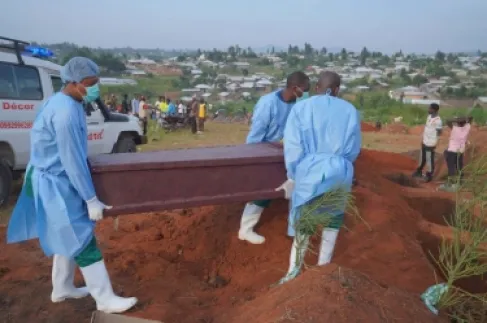
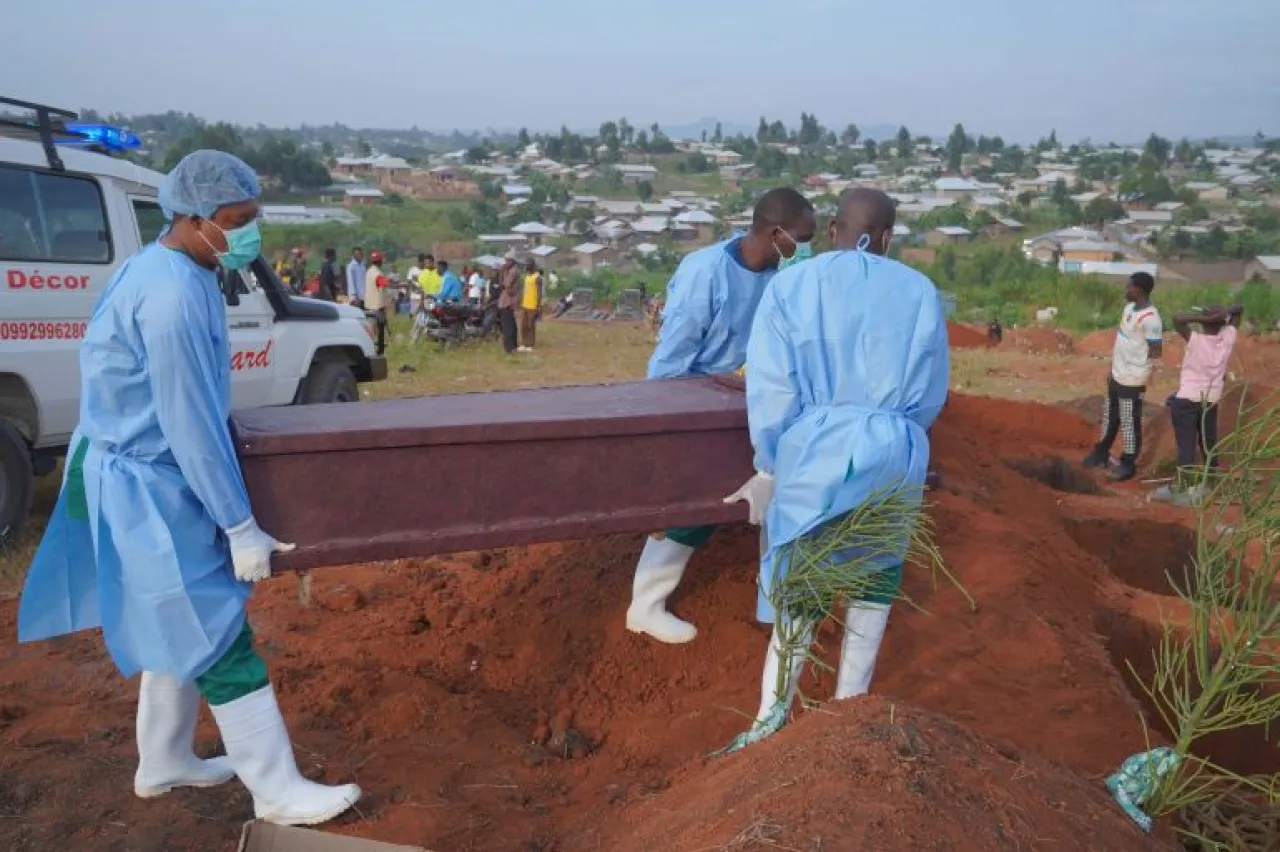
Other relief workers said that some locals believed conspiracy theories claiming that the disease outbreak was just a hoax, expressing their severe anger when health restrictions prevented them from burying their dead themselves.
Chances to eliminate the virus
However, Harniss expressed optimism about eliminating the virus through intensified efforts, saying "If we increase the number of staff and provide more resources to the remote areas in eastern Democratic Republic of the Congo, we will be able to slow down the transmission of the infection within a few months, or even completely eradicate it."
Meanwhile, Javid Abdul Munem, the international president of Doctors Without Borders, said in a statement issued in Geneva, "The virus continues to spread at a pace where the efforts made are inadequate to confront it," adding "This response requires much more than just providing more hospital beds: improving testing, securely isolating the infected and their contacts, and supporting healthcare workers."
In just 3 months, Ebola - announced on May 15th as having broken out in the Democratic Republic of the Congo - surpassed the wave that hit the country during the period 2018-2020, which was then the deadliest in its history, having killed 2299 people out of 3381 confirmed cases, according to figures from the World Health Organization based on data from the Congolese authorities.
In 3 months, the Congo Democratic Republic recorded infections 7 times higher, and deaths 5 times higher compared to the first 3 months of the largest Ebola outbreak.
The virus - which is transmitted through contact with body fluids and causes hemorrhagic fever - has killed more than 15,000 people in Africa in the past 50 years.
There are no approved vaccines or treatments for the rare strain known as "Bundibugyo", responsible for the current outbreak, although clinical trials are ongoing.