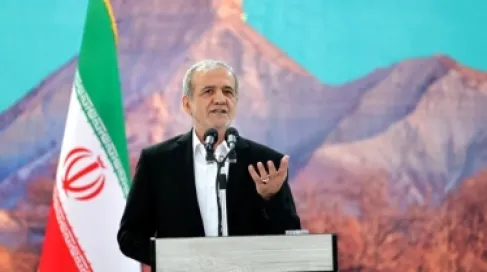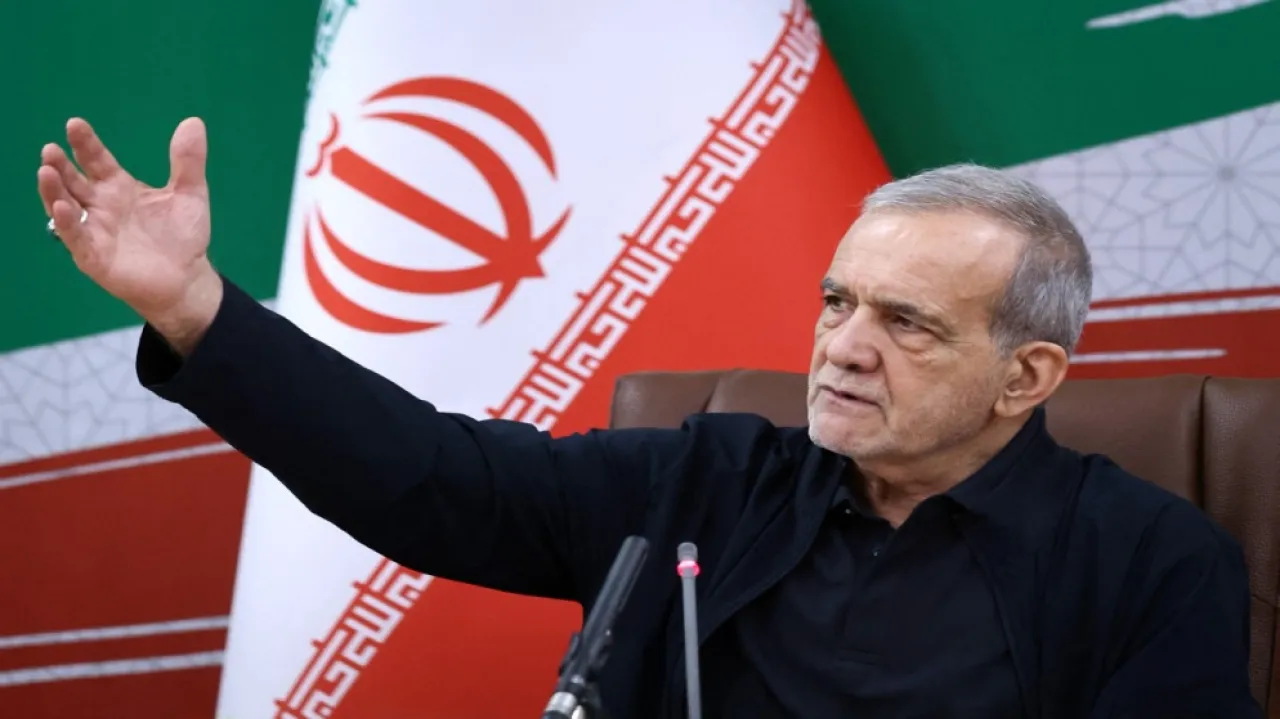
Khaberni - The Iranian President, Masoud Bazshkyan, on Friday, called for an end to the war with the United States "today" while Iran is "in a position of strength."
Bazshkyan said during a meeting with doctors in Tehran, "It is better to end the war today, while we are in a position of strength and dignity, and while the whole world acknowledges our victory."
He emphasized that "what was achieved during the negotiations was a significant accomplishment endorsed by the Supreme National Security Council," adding that "not a single clause in the memorandum of understanding signed with the United States suggests surrender; all commitments relate to the other party."
Iran set six conditions for the United States to reopen the Strait of Hormuz, the most significant being an end to military operations, lifting sanctions and the blockade, withdrawing American forces from its vicinity, and compensating for war damages and releasing frozen Iranian funds, while Washington stated that Tehran pledged not to impose fees on ships and allow the flow of oil through the strait amidst negotiations mediated by Oman concerning navigation arrangements.
On June 18, 2026, Washington and Tehran signed a memorandum of understanding regarding the freedom of navigation in the Strait of Hormuz as a precursor to reaching a final agreement, although its implementation was hindered due to disagreements related to the security of the strait.
Between July 8 and 24 last year, the United States resumed its attacks on Iran, and Tehran responded by targeting countries in the region before resuming talks regarding safe shipping lanes in the Strait of Hormuz.
The United States reimposed a maritime blockade on Iranian ports in the Strait of Hormuz, after renewed confrontations described as the most intense since the ceasefire that came into effect between the two parties in April.
Iran warned that the resumption of the maritime blockade on its ports undermines the memorandum of understanding with Washington.
The war erupted on February 28, when Israel and the United States attacked Iran, to which Tehran responded by closing the Strait of Hormuz, which was before the war the principal maritime passage for about one-fifth of the world's energy supplies.
The Strait of Hormuz is one of the main focal points of tension in the conflict. Iran's control over the strait provided significant leverage, effectively allowing it to possess a bargaining chip.