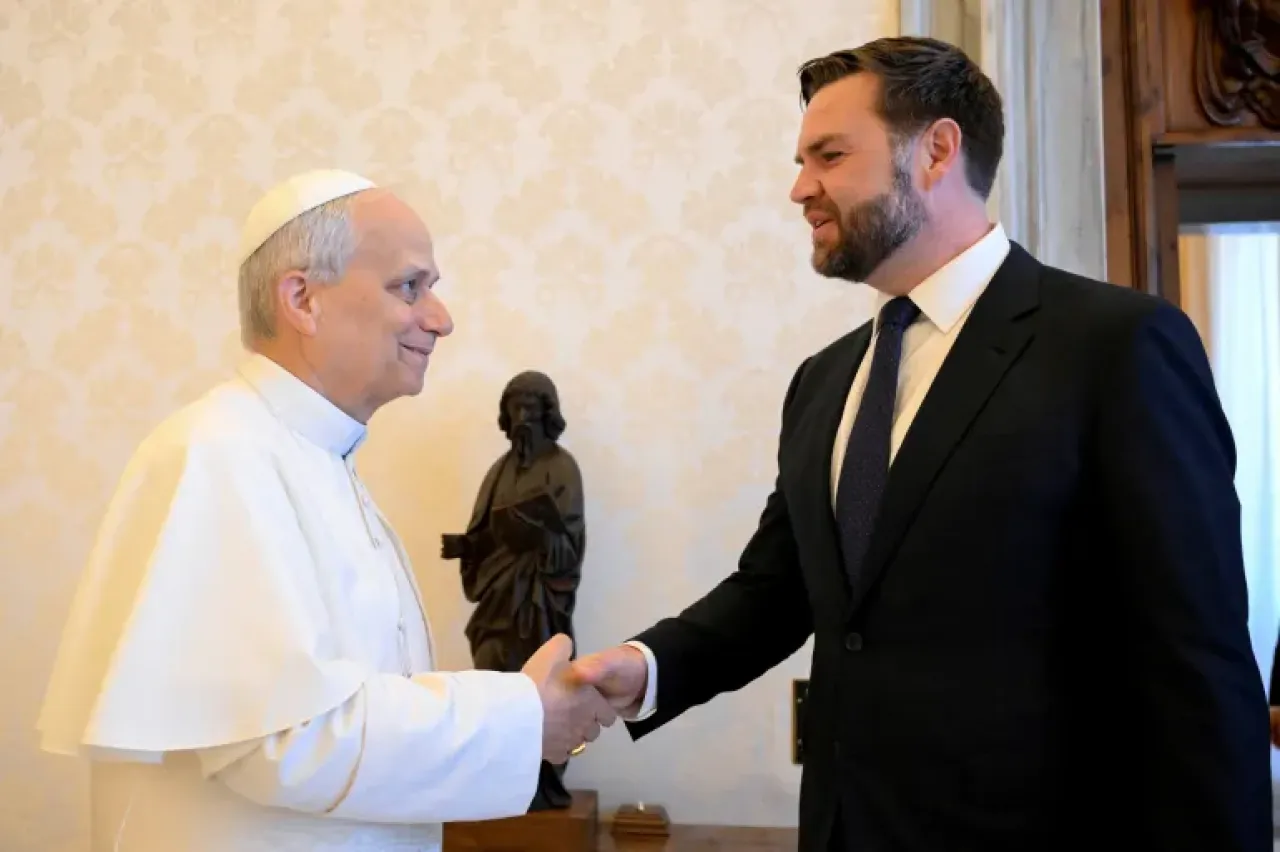
Khaberni - JD Vance, the Vice President of the United States, believes that the decline of Christianity in American society has weakened the moral controls that he sees as enabling economic and social freedom, a view that raises concerns about expanding government power to define what is beneficial for society, according to an American writer.
New York Times writer David French says that Vance adopts a different view of freedom based on giving the state a greater role in imposing a certain vision of virtue and the common good, but he clarifies that freedom does not mean the absence of responsibility, as it does not grant the government the right to determine whether an individual is "good enough" to deserve his freedom.
The writer revisits the traditional conservative vision before President Donald Trump's era, which favored expanding freedom of speech, religious freedom, economic activity, and educational choices, believing that the government is not qualified to plan a complex economy or decide the best future for every citizen.
French believes that Vance reverses this logic, arguing that the economic freedom advocated by conservatives in the past was possible because of strong "Christian barriers" in society.
He quotes him saying that economist Milton Friedman’s ideas seemed more appropriate in the nineteen-eighties because America then had strong Christian institutions that set moral controls for society.
Economy without Ethics
French points out that Vance sees the decline of Christianity as having left a moral vacuum filled by economic ideas, with Americans dealing with value issues as if they have economic scientific answers. However, the writer considers this approach overly simplistic, affirming that economics does not replace ethics, but helps in testing the outcomes of policies.
He gives an example with the housing crisis, where providing safe and affordable housing may be an ethical goal, but economic analysis helps in determining whether policies like rent control are achieving the desired outcome or leading to adverse effects. The same applies to manufacturing and tariff policies, where maintaining a strong industrial base may be a strategic goal, but tariffs might make products more costly and restrict job growth.
The writer says that Vance goes further in criticizing consumption, considering millions of cheap goods as not worth an American industrial job, and he criticizes the strength of the dollar as it contributes to American consumption of imports. French sees this viewpoint as paradoxical, as the devices and consumer goods described by Vance as non-essential have improved the lives of millions of Americans.
"The Common Good" and Freedom
French warns that Vance's ideas are based on a controversial stream in Catholic political theology known as "integralism," which grants the state a strong role in protecting what is called the common good. But the problem, in his opinion, begins when the authority's definition of the common good conflicts with individual freedom.
The writer says that this orientation appears in various aspects of the new right: freedom of speech becomes a core value when it serves its supporters, but becomes questionable when used by opponents; opposition to socialism wanes when the Trump administration intervenes in the ownership of major companies; and religious freedom might lose its shine when it involves the rights of Muslims.
French sees that Vance may find a wide audience among Americans who are angry, especially when he links his rhetoric to religion and nostalgia for an ideal past, and blames the secular elites for the decline of religion, factories, and society. However, the writer warns that this rhetoric could turn authoritarian tendencies into a project that some might see as having a religious cover.
The writer concludes that Vance's rise represents an attempt to fill the void left by Trump within the Republican Party, after Trump's populism weakened the traditional Republican ideology.
He explains that the core of the dispute relates to who owns the right to determine what is good for society: the individual or the state. For him, the function of the government is not to deprive its opponents of freedom, but to protect the freedom of all citizens, because the state itself is not wiser or more upright than the individuals it governs.