Khaberni - With the United States closing the door on negotiations in the face of Iran’s adherence to its terms and positions, it appears that the situation might slide into escalation. Iranian sources have revealed that Tehran is considering the possibility of targeting American military sites in Europe should President Donald Trump escalate the war.
Two sources familiar with decision-making circles in Iran told the Financial Times that the Iranian forces assessed the option of striking American military assets in Southeastern European countries, such as Bulgaria, which agreed last month to use the Bezmer airbase to refuel American planes.
It is worth noting that Washington had previously accused Tehran of launching several missiles towards the Diego Garcia military base joint with the United Kingdom in the Indian Ocean, which is about four thousand kilometers away, although none reached their target.
Turkey also announced last March that NATO air defense systems intercepted a number of ballistic missiles launched from Iran, while the British airbase in Akrotiri, Cyprus, was attacked by a drone in the same month. Western officials then suspected that it was an Iranian drone launched by Tehran's allied forces in the region, and not directly by Iran.
Message to Europe
The two sources added that the Iranian attack that targeted an American base in Jordan last month, killing three American soldiers, was the most precise long-range attack Iran has carried out to date.
One of the sources also saw this as "also a message to Europe that it could be targeted by missiles, and therefore should realize where it must stand in this war." He added: "Any major mistake, such as targeting our infrastructure, could push the war beyond the region and reach Europe."
According to the sources, the nature of Iran's response will depend on Washington’s next steps. One of them said that the Iranian regime is preparing a plan to expand the scope of the war if Trump carries out his previous threats to target Iranian infrastructure.
Meanwhile, the second source added that Iran "will not set any limits to its response in the event of an American attack."
One of the sources mentioned that Cyprus, where a British base was attacked by a drone in March, is also among the potential targets for any retaliatory response should American military operations resume.
Undersea Cables
In this regard, the sources indicated that Iranian forces also considered the option of targeting submarine optical fiber cables in the Strait of Hormuz in the event of further escalation.
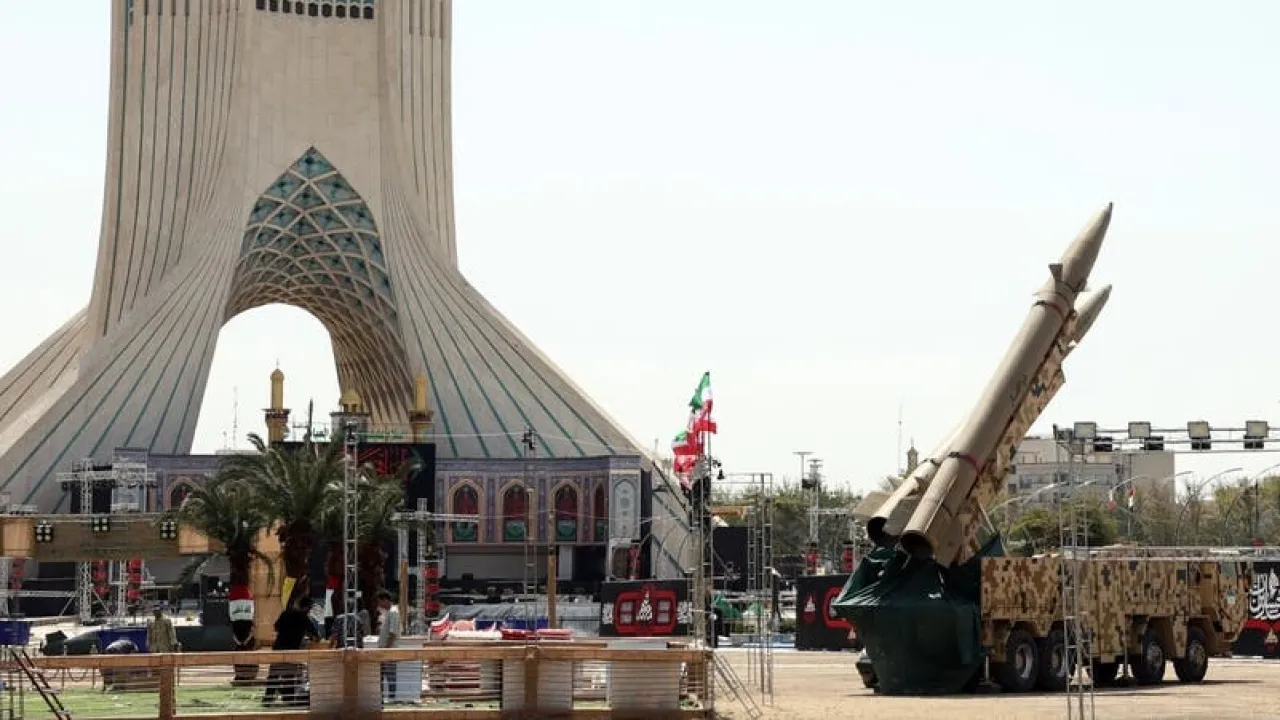
On his part, Sidharth Kaushal, a researcher at the Royal United Services Institute (RUSI) in London, described the threat posed by Iranian missiles to targets in Europe and elsewhere as "real, yet limited." He explained that Iran could use medium-range ballistic missiles against American assets in southern and southeastern Europe, such as Shahab series missiles, although these missiles would struggle to inflict significant damage on very distant targets.
Nevertheless, these threats reflect the hardline mood prevailing in Tehran, where many within the regime now consider the resumption of war as a matter of time. Especially after negotiations aimed at reopening the Strait of Hormuz faltered, while last week, the Iranian leader Mojtaba Khamenei promoted figures from the hardline current to high-security and military positions.
The Revolutionary Guard and other military leaders have warned that any comprehensive new confrontation would not be limited to targeting American bases and oil facilities and infrastructure in the Middle East but could extend to geographically farther targets.
Many hardliners believe that the United States is not a reliable partner to carry out any agreement, and that Tehran should impose a greater cost on Washington to ensure its commitment to any final settlement. Among them is Mohsen Rezaei, the former commander of the Revolutionary Guard, whom Khamenei last week appointed as the secretary of the Supreme National Security Council of Iran.
Conversely, some Iranian officials fear that Tehran might be overescalating.