Khaberni - In response to increasingly hardline Iranian positions as talks aimed at ending the war falter, it appears that the administration of U.S. President Donald Trump is turning to communication with a broader spectrum of countries that might be able to pressure Tehran or push it to ease its stances.
While discussions continue between Iran and Oman, and also between Iran, Pakistan, Turkey, and Qatar at an unexpected pace, the U.S. administration quietly expanded its circle of contacts to include European parties that might seem unexpected, according to the Associated Press.
As U.S. Secretary of State Mark Rubio met this week with his Austrian counterpart in Washington on Tuesday.
He also made a phone call to the Greek Foreign Minister on Wednesday.
These meetings were not notable in themselves, as they came within the framework of normal relations between the United States and two close European allies. Also, the official statements issued by the U.S. State Department were general and concise and did not mention Iran by name.
However, it later emerged that the Austrian and Greek foreign ministers spoke on Thursday with Iranian Foreign Minister Abbas Araghchi, shortly after their talks with Rubio.
This evidently new course of action came as an attempt to break the deadlock in negotiations.
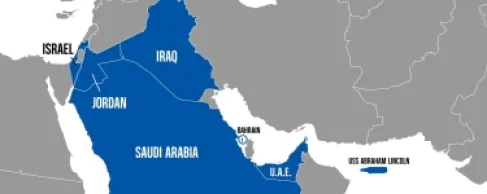
This move showed how far the actual closure of the Strait of Hormuz had pushed countries that were neutral in the conflict to use their diplomatic influence with Washington and Tehran to try to launch a pathway that leads to a lasting settlement.
In this context, a European diplomat familiar with the issue, who spoke on condition of anonymity, stated that the coincidence of these U.S.-European contacts "was not mere chance".
Meanwhile, Mona Yacoubian, Director of Middle East Programs at the Center for Strategic and International Studies (CSIS), cautioned that efforts by Greece, Austria, or any other country not being a primary intermediary might not yield concrete results. She said: The contacts with both sides might encourage Iran and the United States to return to the negotiation table, but that does not rise to the level of mediation, which is a very complex process requiring the building of trust between the mediator and the parties.
She also clarified that mediation is not something any country "can simply engage in without preliminaries".
Austria and Greece may not seem obvious choices to help with the Iranian file, yet Vienna holds special importance as the headquarters of the International Atomic Energy Agency, which will play a pivotal role in any settlement concerning the Iranian nuclear program. The country also hosted the final negotiations that led to the 2015 nuclear deal.
Greece, being a prominent maritime nation, has significant interests in maritime navigation through the Strait of Hormuz and the Red Sea.
Statements from the foreign ministries of Austria, Greece, and Iran showed that the Iranian file was central to the discussions with the Iranian side. The Greek Foreign Ministry stated that Minister George Gerapetritis received a briefing from Araghchi on "regional developments, especially the ongoing talks around the Strait of Hormuz", emphasizing the importance of freedom of navigation and maritime security.
Meanwhile, the Austrian Foreign Ministry offered to host any future talks on Iran, stating that Minister Beate Meinl-Reisinger emphasized to Araghchi the "urgent need to restore stability in the region through serious diplomatic efforts". She confirmed that "there is no military solution, a diplomatic solution is still possible", adding that her country's priority is "to protect freedom of navigation through the Strait of Hormuz."