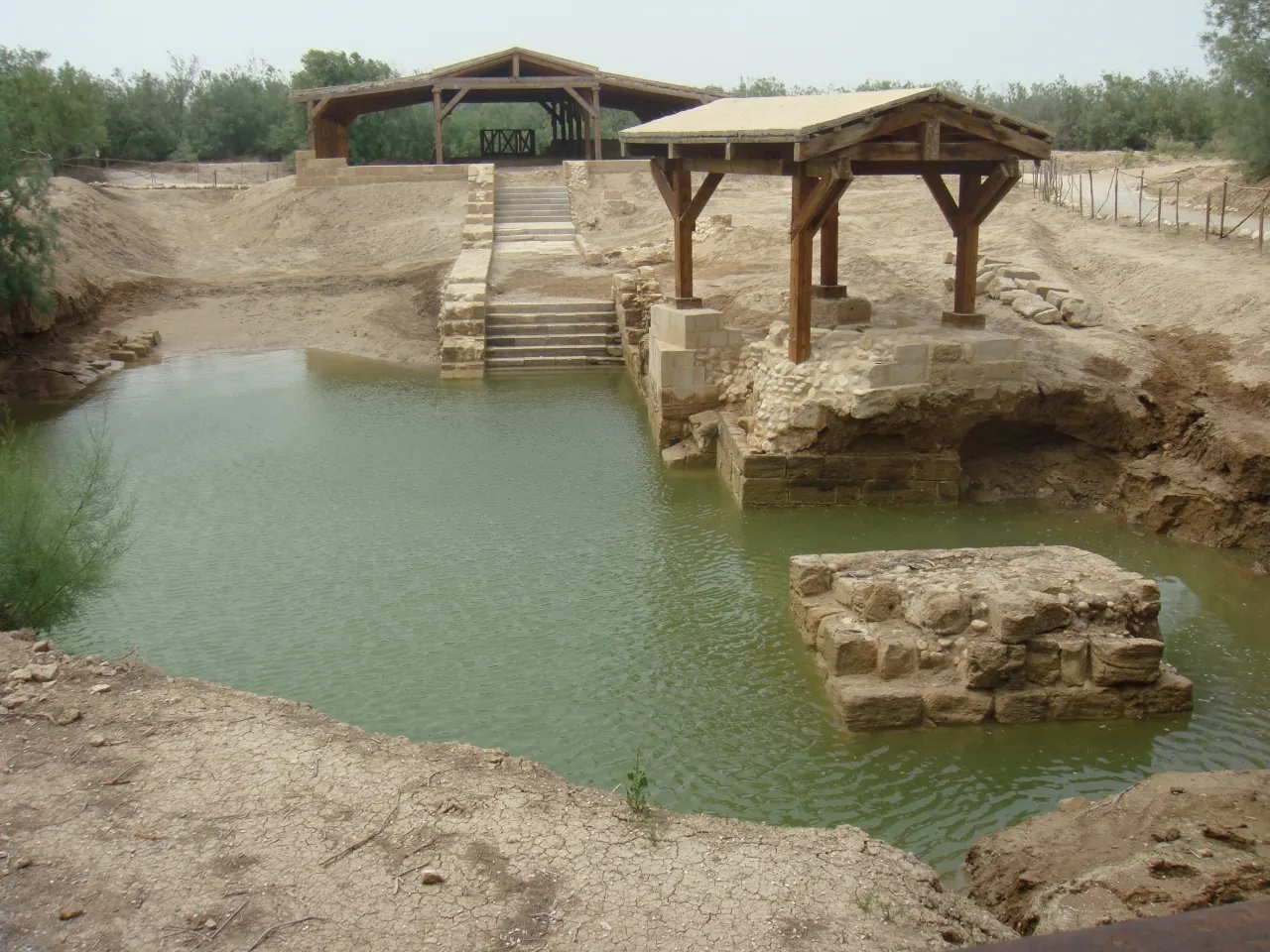
Khaberni - The Chairman of the Board of Trustees of the Foundation for the Development of Lands adjacent to the Baptism Site, Tharwat Al-Musalaha, said on Wednesday that the development project for lands near the Baptism Site began in 2022 by preparing the master plan for the site, followed by seeking funding for the projects and preparing the necessary studies and designs.
Al-Musalaha added that the projects being implemented in the lands adjacent to the Baptism Site represent the first real kickoff and preparation for welcoming pilgrims from around the world to the Baptism Site in 2030, embodying the first steps after forming the National Supreme Committee for preparing for the celebration of the Baptism of Jesus Christ in 2030, according to the Kingdom.
Al-Musalaha added that the formation of the Supreme National Committee by high-level individuals chaired by the Prime Minister reflects the importance of preparation for this celebration.
He explained that the infrastructure project will provide all required infrastructure works for the site, in service of subsequent projects, including the village, the museum, the hotel, and others.
He noted that the cost of the infrastructure project amounts to 27 million dollars, stating that work will begin in the current month of August, aiming for the infrastructure to be ready within two years, by mid-2028.
Al-Musalaha said that the second project involves creating a pilgrim or visitor village, a village that includes important landmarks and services providing places for rest, shopping, and dining for visitors and pilgrims, as well as a hotel, health services, recreational facilities, and commercial outlets.
He clarified that the cost of the village project is around 40 million dollars, and it is expected to be completed by the end of 2028.
He added that work in the village will begin in the first quarter of 2027, noting that its implementation will coincide with the infrastructure project, and that work on the museum project will begin during the same period.
Al-Musalaha explained that the last expected project to be completed is the museum, which is expected to be completed in the first quarter of 2029.
He elaborated that the museum will be a cultural and heritage experience showcasing the baptism story and the story of the Baptism of Jesus Christ in a modern way, using technology and modern means, making it a world-class museum landmark.
He pointed out that the estimated cost of the museum is 50 million dollars.
He mentioned that the visitor or pilgrim experience will start from the lands adjacent to the Baptism Site, where they will visit the village and the museum, get to know the baptism story through the museum display, before moving to the Baptism Site to witness the experience in reality, visit the churches, perform the rituals, and then return to the village to rest, shop, and dine.
Regarding the carrying capacity of the village, Al-Musalaha said that the first phase aims to accommodate about one million visitors annually.
He emphasized the importance of studying the site's carrying capacity, to determine the site's ability to accommodate the number of visitors.
He explained that work is currently underway to study the general carrying capacity of the Baptism Site, including the baptism site and the churches, while also working on upgrading the site's infrastructure to allow increasing tourist numbers.
He noted that these efforts are part of the preparations to receive large numbers of tourists and pilgrims after the 2030 celebration, targeting to reach millions of visitors in the subsequent years, particularly in 2032 and 2033.
Al-Musalaha affirmed that the design of the village and museum will take into account the spirituality, the heritage and historical character, and the civilization of the Baptism Site.
He clarified that the foundation launched about 7 or 8 months ago an international architectural competition to design the museum, participated by global companies, and won by a specialized architectural firm as part of a coalition with a local company.
He said that the particularity of the site and its spirituality and nature require consideration in the design of the museum and village, whether in terms of the architectural facades, heights, sustainability, environmental conservation, or vegetation cover.
He referred to the Green Corridor project underway as part of these efforts, aiming to preserve the vegetation cover by replacing invasive plants with native ones that have existed on the site for centuries.
Al-Musalaha affirmed that the design of the village and museum will take into account the nature and spirituality of the place, thereby preserving these unique characteristics and revitalizing the site's nature in accordance with what it was over the past decades and centuries.
Prime Minister Jaafar Hassan has mandated all government and official institutions, including government-owned companies, to strictly restrict communications and activities related to the celebration of Jesus Christ's Baptism to be conducted exclusively through the high-level National Committee, which serves as the sole national reference for this purpose.
The directive states that, in light of forming the National Committee to prepare for celebrating the Baptism of Jesus Christ in 2030, headed by the Prime Minister, it will be responsible for setting the general policies and directions and supervising the planning and preparation for executing the celebrations. Therefore, all ministries, governmental departments, public institutions, universities, municipalities, Greater Amman Municipality, and government-owned companies should not engage in any communications or activities concerning the celebration outside the framework of the National Committee.
The directive also highlights the significance of the celebration, which will contribute to enhancing the global standing of the Kingdom as a destination for religious tourism as the land of Baptism and a message of peace, emphasizing the importance of aligning efforts of national entities and local and international partners to adopt strategic plans and projects and oversee their implementation.
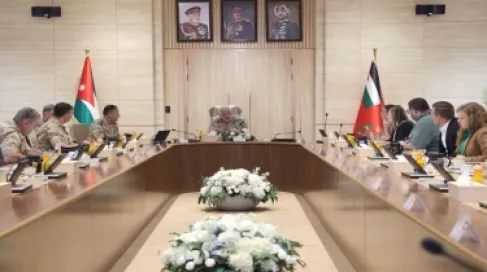
The Prime Minister chaired the first meeting of the high-level National Committee for the preparation for celebrating the second millennium of Jesus Christ's Baptism in 2030 on Monday. The committee includes ministers, religious and community leaders, and representatives from relevant entities.
4 Agreements
On Wednesday, at the Prime Minister's office, agreements were signed to implement the primary projects within the national project for the development of lands adjacent to the Baptism Site of Jesus Christ (the Baptism Site), as part of the preparations for commemorating the second millennium of Jesus Christ's Baptism in 2030, under the patronage of Prime Minister Jaafar Hassan.
The signing of these agreements follows the first meeting of the high-level National Committee for the preparation for the celebration of the second millennium of Jesus Christ's Baptism, chaired by the Prime Minister, in fulfillment of the royal directives to adopt and support this national initiative, which will enhance Jordan's status as the homeland of Jesus Christ's Baptism and a global destination for Christian pilgrimage.
The agreements cover the implementation of a package of projects with a total cost of around 120 million dollars in the lands adjacent to the Baptism Site, which extend over an area of 1400 dunams. These include preparing special designs for the Baptism Museum of Jesus Christ costing 50 million dollars, designs for building a comprehensive village for pilgrims and visitors costing about 40 million dollars, in addition to implementing infrastructure works costing 27 million dollars, and constructing the Green Corridor at an estimated cost of 3 million dollars.
These projects result from cooperation between the government, national institutions, the private sector, and international partners, within a comprehensive vision that balances preserving the sanctity of the site and its religious and human legacy, enhancing the experience of pilgrims and visitors, and supporting tourism and economic development in the region.
The project of the Baptism Museum of Jesus Christ, which will be established on an area of 5500 square meters, aims to provide a global cultural experience that narrates the story of the Baptism Site and its religious and historical dimensions, through modern architectural design, interpretative content, and specialized exhibitions implemented by local and international companies.
The projects also include creating a comprehensive village for pilgrims and visitors, extending the experience of visiting the Baptism Site, and including reception squares, a visitor center, a hotel, restaurants, commercial outlets, a church, and service facilities, enriching the Christian pilgrimage journey and providing visitors with a more comprehensive and deeper experience in understanding the story of the site and its religious and cultural heritage.
The Royal Society for the Conservation of Nature will prepare designs for the Green Corridor, contributing to the protection of biodiversity, enhancing the vegetation cover, and establishing environmental pathways and walking routes, in line with UNESCO's recommendations for preserving the Baptism Site of Jesus Christ (the Baptism Site), listed as a World Heritage Site.
The infrastructure works include constructing main roads, water systems, desalination and irrigation systems, electric and solar power networks, and street lighting, along with implementing various support services necessary for serving the site and visitors.
According to the project timetable, preliminary works for the museum and comprehensive village for pilgrims and visitors will begin at the end of the first quarter of 2027, with major construction works starting at the end of the second quarter of the same year, with the projects expected to be completed during the first quarter of 2029.