Khaberni - With the rising temperatures and the spread of mosquitoes in the summer, many people resort to downloading apps that claim the ability to repel mosquitoes by emitting sounds or waves at certain frequencies through the phone's speaker, but do these apps actually work?
So far, there is no reliable scientific evidence that proves that mosquito repellent apps relying on ultrasonic waves or sounds provide effective protection against mosquito bites, leading many experts to question their usefulness.
This is supported by a recent study published in 2024, in which researchers tested ultrasonic mosquito repellent devices on two different types of mosquitoes and compared their results without the use of any device. The results showed no statistically significant differences in the number of mosquitoes that approached or touched the subjects, indicating that these devices did not provide effective protection compared to not using them.
How do these apps claim to work?
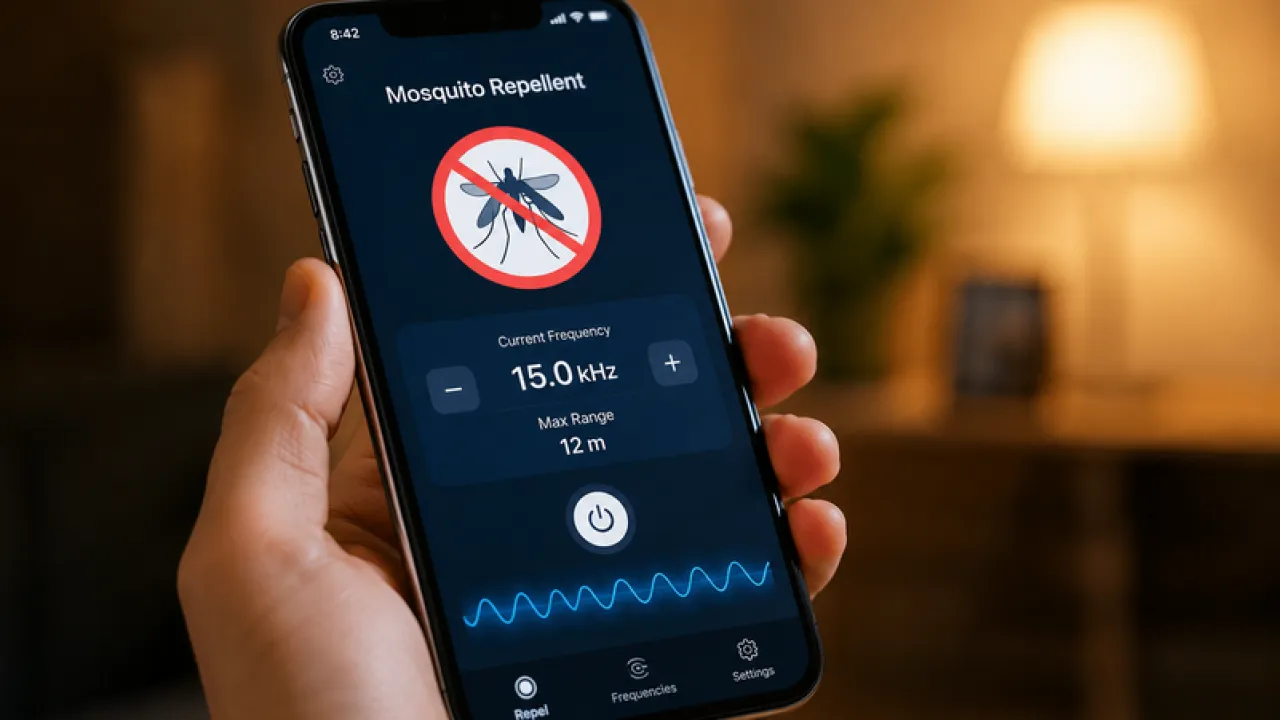
Most mosquito repellent apps rely on playing high-frequency sounds that are said to annoy mosquitoes and push them away, and mimic the sound of male mosquitoes, as it is assumed that females avoid males after mating, or they imitate sounds of natural mosquito predators like dragonflies, according to reports and descriptions of some of these applications in app stores.
Some apps allow users to manually change frequencies in hopes of finding the "right" frequency to repel mosquitoes.
Why don’t scientists believe in this idea?
Despite the popularity of these apps over the years, scientific studies have not found convincing evidence that ultrasonic waves are capable of keeping mosquitoes away in realistic conditions.
And this is due to several reasons:
- There are no frequencies proven to be effective with all types of mosquitoes, as each species responds differently to sonic stimuli.
- Even if some insects respond to certain sounds within the lab, this does not guarantee the idea’s success in everyday use.
Even if a frequency capable of affecting some types of mosquitoes is found, most smartphones are unable to produce ultrasonic waves strong enough.
This is because speakers in phones are small and primarily designed for playing music and calls, not for emitting high-intensity frequencies, which greatly limits their ability to execute the concept of these apps.
Experts note that even if some users believe the app has succeeded in repelling mosquitoes, it may be coincidence due to other factors.
These influencing factors include: changing wind directions, a decrease in the number of mosquitoes in the area, and mosquitoes moving to another attraction.
Therefore, experts believe that personal experiences cannot be considered evidence of an app's effectiveness.
Why do these apps still remain popular?
The spread of these apps is due to the ease of downloading them from app stores and their reliance on a concept that seems logical to many users, which is using the phone as a means to repel mosquitoes without the need for pesticides or additional devices.
As there is no easy way for users to measure the app’s effect, some may believe it has succeeded in repelling mosquitoes, although experts indicate that other factors might be the reason for the reduction in insect numbers in the area.