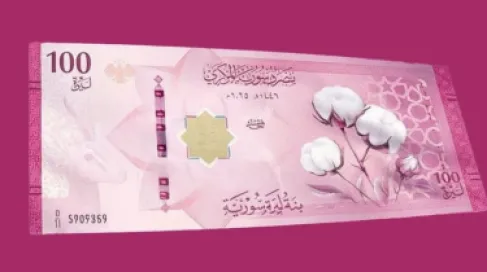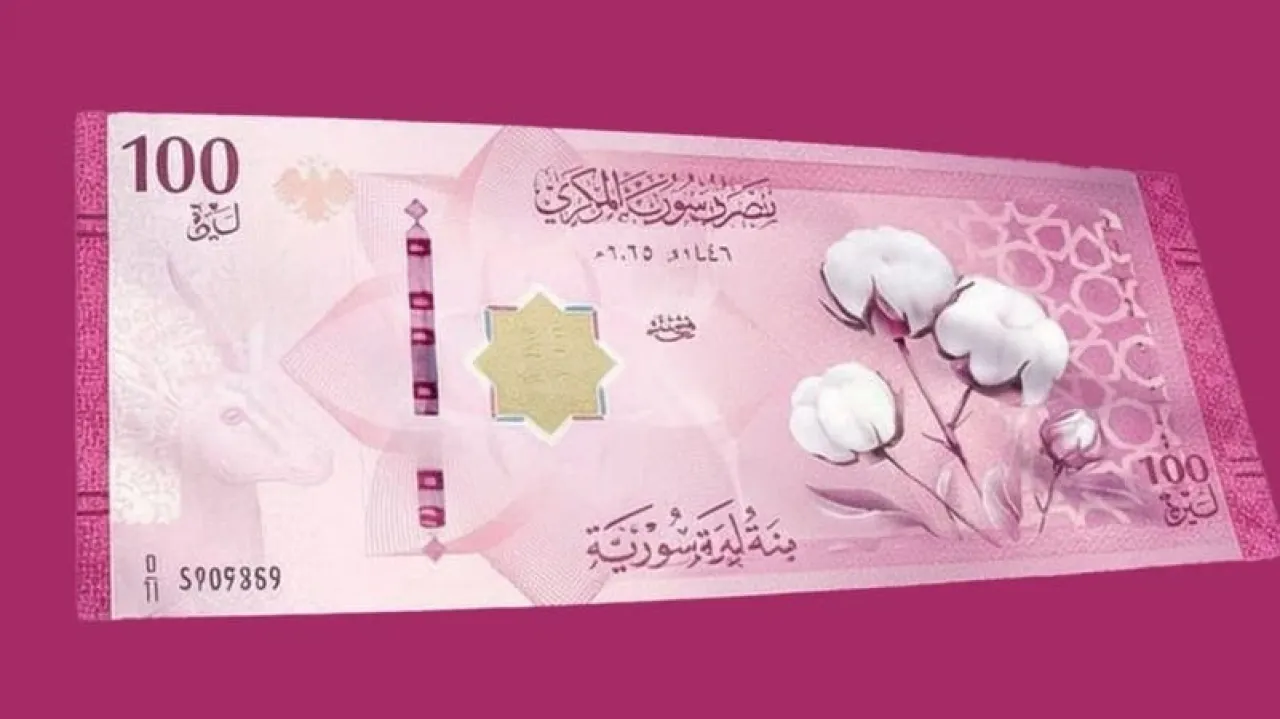
Khaberni - The Central Bank of Syria announced today, Sunday, the availability of withdrawing the old Syrian currency and settling its value with the new Syrian currency for only one week, starting from today, August 2, until Thursday, August 6, 2026, through all public and private banks and branches of the Syrian Postal Corporation in all Syrian provinces, without any commissions, fees, taxes, or expenses.
The Central Bank of Syria said that after this period, the process of withdrawing the old Syrian currency will continue for five years exclusively at the bank in Damascus, through submitting withdrawal requests via the bank's official website designated for the withdrawal process and scheduling appointments.
The Central Bank of Syria announced on July 26 that the deadline for exchanging old banknotes expired on July 30, 2026, after achieving a high completion rate in the replacement process, according to the Syrian Arab News Agency (SANA).
Syria has officially bid farewell to the old pound era, which featured images of the deposed Syrian president Bashar al-Assad and his father Hafez al-Assad, as Syrians seek to rid themselves of the remnants of the al-Assad family's reign, which lasted more than half a century.
The image of Hafez al-Assad, who ruled Syria from 1971 until his death in 2000, was featured on the 1000-pound note, but with the currency's devaluation, another note worth 2000 pounds was issued, featuring Bashar al-Assad, who ruled Syria from 2000 until December 2024.
Fatwa on selling the old pound
The Supreme Fatwa Council in Syria stated in a statement last Thursday that it is not permissible to sell the old Syrian currency for less or more than its value as long as its replacement is possible.
In response to an inquiry regarding the Sharia ruling on selling or exchanging the Syrian currency that has gone out of circulation, as long as its replacement is possible at banks or the Central Bank of Syria, for less than its value or more than it, such as someone exchanging ten thousand old Syrian pounds for ninety new Syrian pounds instead of a hundred, the council emphasized that it is not permissible to sell or exchange this currency for less than its value or more than it, as long as its replacement is possible at banks or the Central Bank of Syria, because it is still considered money, and exchanging it in this manner results in usury.