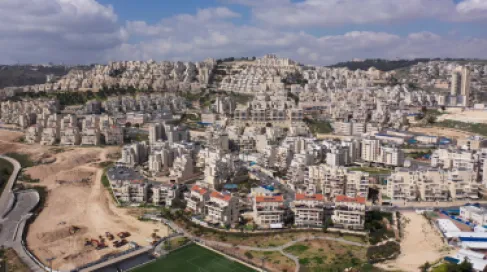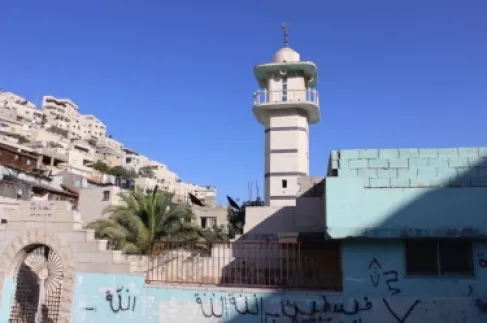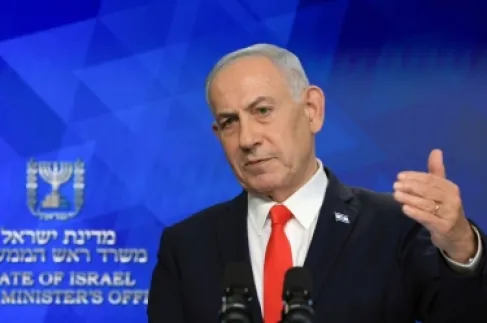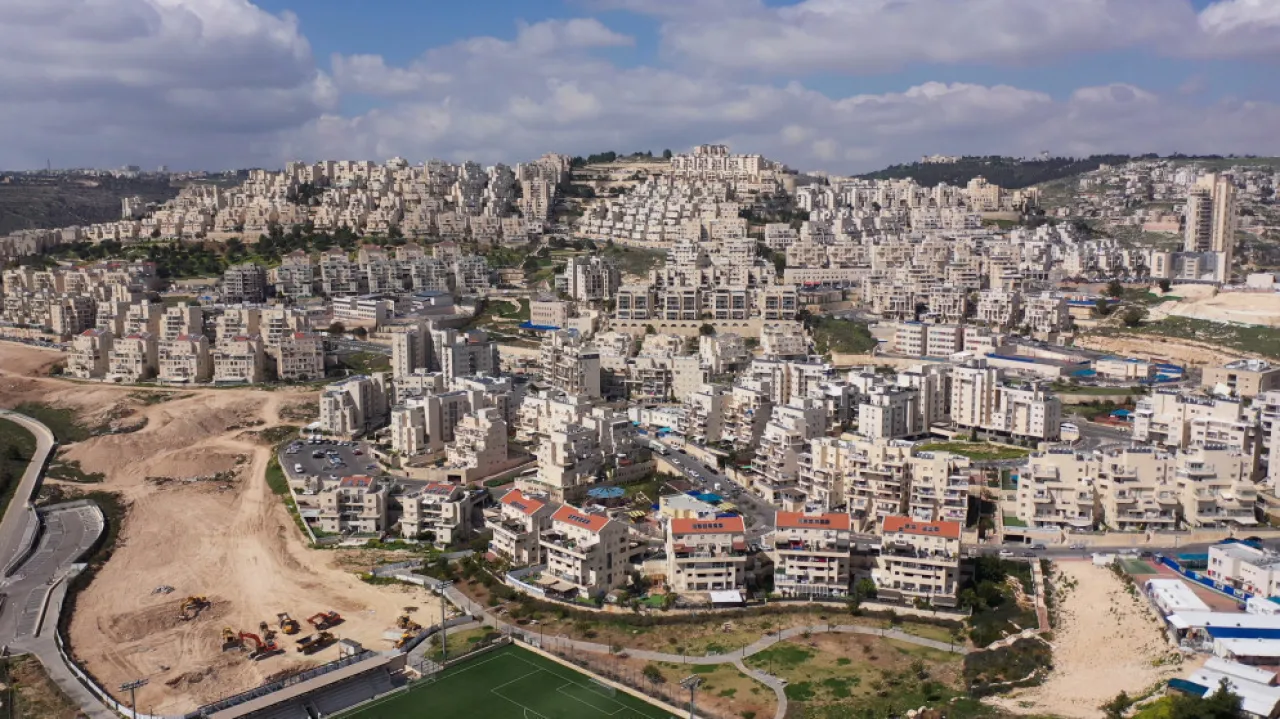
Khaberni - The Jerusalem governorate warned of the implications of the approval by the so-called Israeli Security and Political Cabinet (the Cabinet), on Thursday, of a plan to establish 13 new settlements within what is called the "Benjamin Settlement Council".
It considered that this decision comes within a policy aimed at expanding settlements, imposing new geographical realities in the middle of the occupied West Bank, and isolating the city of Jerusalem from its Palestinian extension.
The governorate, in a statement issued on Thursday, confirmed that observing the Israeli political scene reveals a solid reality; as the election cycle of the occupation approaches, Palestinian geography is exploited and Palestinian blood is violated to become fodder for Israeli electoral bids. It pointed out that the acceleration of settlement projects and land confiscation recently is nothing but a direct reflection of this policy, which the occupation government seeks to tighten control over the land, appease the extreme fascist right, and gain its support at the polls at the expense of Palestinian rights.
Israeli data indicates that the first phase of the project will begin in the coming months and will include the establishment of between four and six new settlements, while a number of existing pastoral outposts will be turned into permanent settlements after being formally authorized, allowing them to access infrastructure and government funding.
The plan focuses on two main axes; the first extends in the areas located northwest of the Jerusalem governorate and west of the Ramallah and al-Bireh governorate, along Route 60 bypass which cuts through the West Bank, while the second axis targets the eastern slopes of Ramallah and al-Bireh governorate towards the Palestinian Jordan Valley, enhancing connectivity between the settlement blocs established in the middle of the West Bank and the eastern areas.
The project is part of what is called the "Benjamin Settlement Council," which is one of the largest settlement councils in the occupied West Bank, as its settlements and outposts span vast areas of the territories of the Jerusalem and Ramallah and al-Bireh governorates, reaching the western slopes of the Jordan Valley and serving as one of the major tools for Israeli settlement expansion in the middle of the West Bank.
The statements issued by Israeli officials confirm that the project is not only about expansion of settlements but also about imposing new geographical facts through consolidating control over main roads and strategic heights, connecting settlement blocs to each other, limiting the geographical continuity of the Palestinians between the middle of the West Bank and the Jordan Valley, and entrenching Israeli control over the areas classified as (C).
The Jerusalem governorate emphasized that these schemes represent a serious escalation in the Israeli settlement project and fall within a systematic policy to fragment the West Bank, isolate Jerusalem from its Palestinian surroundings, and undermine the chances of establishing a geographically contiguous Palestinian state, in flagrant violation of international law and international legitimacy resolutions.