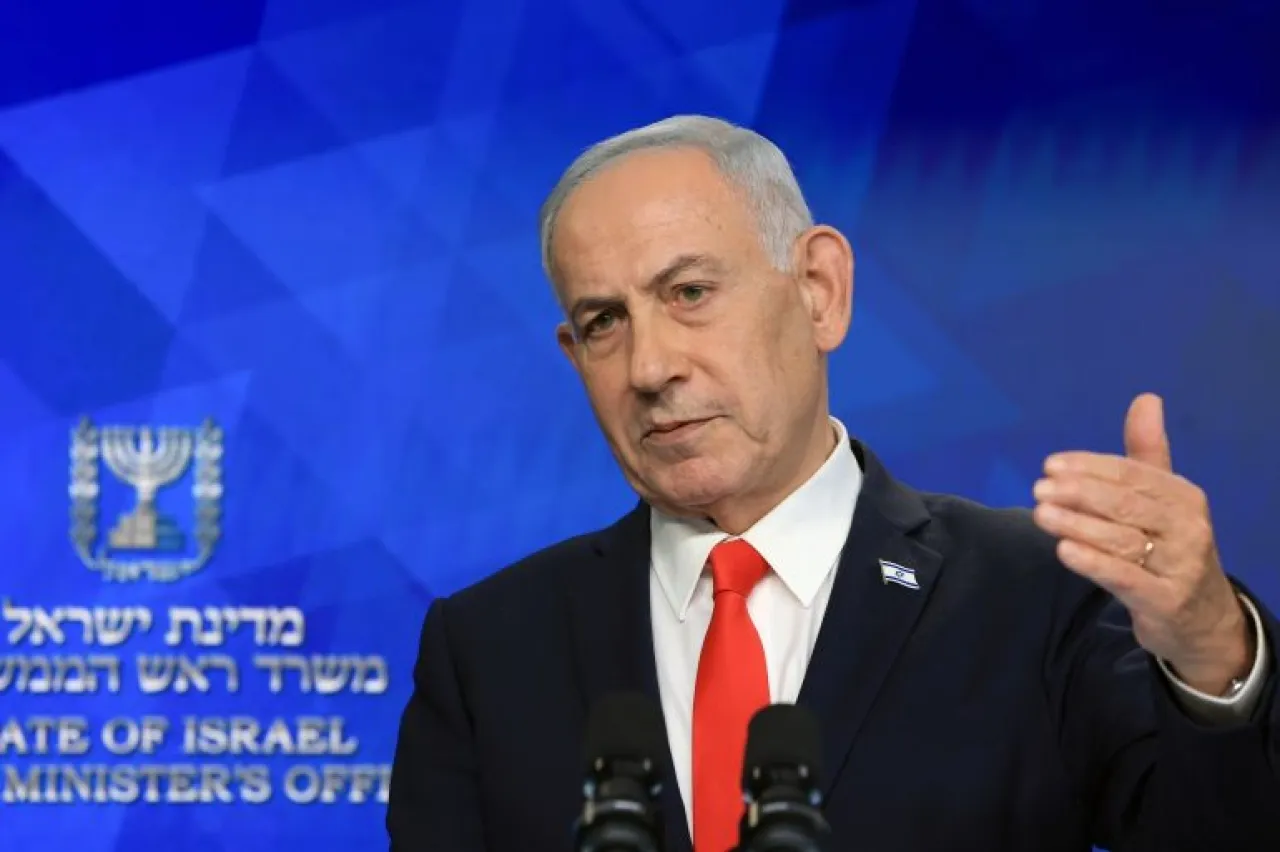
Khaberni - The popularity of the Likud party led by Israeli Prime Minister Benjamin Netanyahu has decreased to 21 seats, according to a survey published by Israel's Channel 13, on Wednesday. The survey also showed a decline in public confidence in Netanyahu's ability to lead an expanded government, about three months before the expected election date.
According to the survey, Likud remains the largest party, ahead of the "Yeshar" party led by former Israeli army chief of staff Gadi Eisenkot, which came in second with 20 seats, leaving the third place to the "Jewish Home" party led by Naftali Bennett with 17 seats.
The poll results showed that the "Democrats" led by Yair Golan obtained 11 seats, "Israel Beiteinu" 10 seats, and "Shas" 9 seats, while "Yahadut HaTorah" (United Torah Judaism) and "Otzma Yehudit" (Jewish Power) each won 8 seats.
6 Arab seats
While the Arab "Hadash-Ta'al" alliance won 6 seats, ahead of the "Religious Zionism" party and the "Ra'am" party, each of which won 5 seats in the poll, the "Blue and White", "Balad", and "Reservists" parties failed to reach the electoral threshold to enter the Knesset.
According to the poll results, the parties are divided into three main blocs: the current governing coalition with 51 seats, the opposition with 58 seats, and the Arab parties with 11 seats.
Channel 13 presented a complex scenario that included a merger that combines 10 seats between "Hadash", "Ta'al", and "Balad", and a joint alliance comprising 5 seats between "Benny Gantz" (leader of the State Camp party), "Sima Rothman" from the "Religious Zionism" party, and "Yoaz Hendel" leader of the "Reservists" party, plus the establishment of a new party comprising Gilad Erdan (former Israeli ambassador to the United Nations), former Minister Ayelet Shaked, and prominent politician Yuli Edelstein, gaining 4 seats.
Opposition to forming an expanded national government
Based on the proposed scenario, the number of Likud seats would decrease from 21 to 18, while "Yeshar" would drop from 20 seats to 19, and the "Jewish Bloc" party would decrease to 14 seats, leading to a change in the sizes of the political blocs to 47 seats for the governing coalition, 50 seats for the opposition, 14 for the Arab parties, and 9 for the new parties.
According to the survey, undecided voters make up 26% of the public, among them 12% are unsure of their choice, and 8% plan to vote for parties that do not exceed the electoral threshold, while 51% of those surveyed oppose the "expanded national government" that Netanyahu has expressed a desire to form, compared to 29% who support this move.
Israeli pessimism
Regarding the most suitable politician to lead a broad national unity government, 44% of the public preferred Eisenkot, compared to 40% who gave their votes to Netanyahu.
Regarding the Israeli war on the Gaza Strip, the survey results revealed Israeli public pessimism, with only 25% of public opinion viewing Israel as victorious in the war, while 15% believed that the Islamic Resistance Movement (Hamas) was victorious, compared to 49% who hesitated in finalizing their opinion.