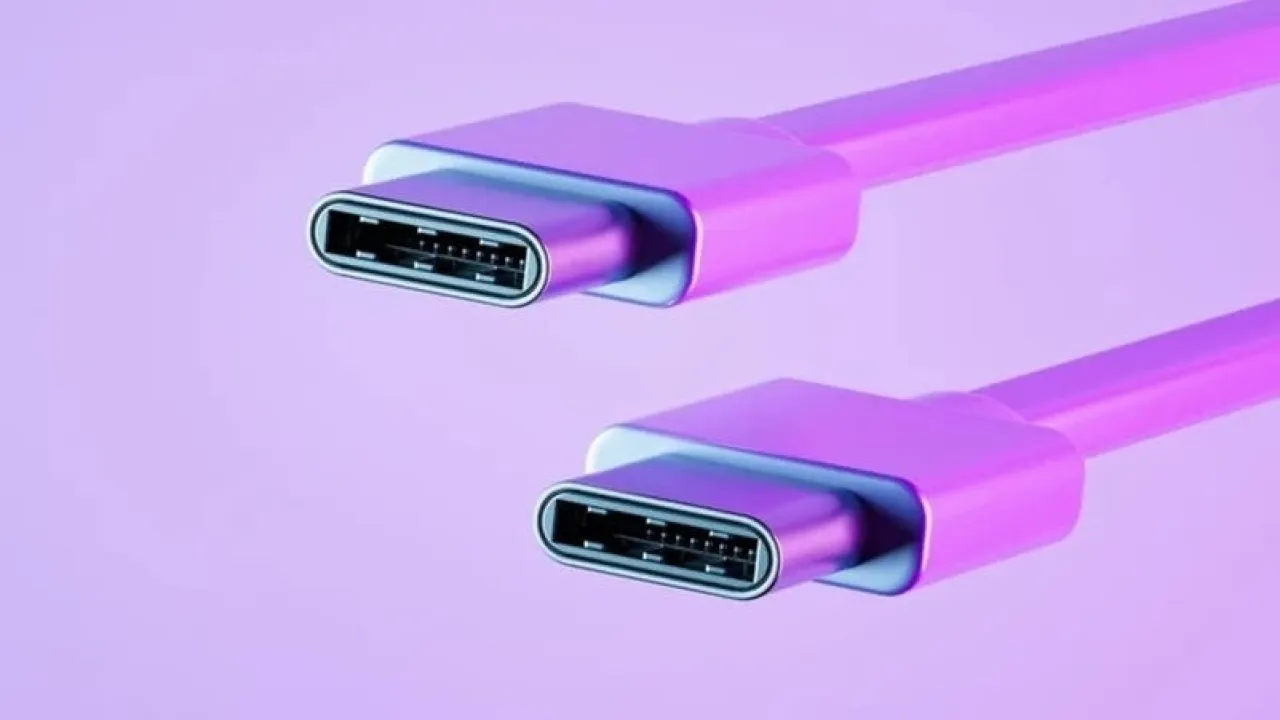
Khaberni - USB-C has become the most widespread standard in the world of electronic devices, to the point that it has transformed into the universal charging port in many countries, especially after European legislation that forced companies, including "Apple," to adopt it in iPhones and other devices.
However, despite this prevalence, many users still believe that all USB-C ports are identical, which is a misconception that can lead to confusion when trying to charge a laptop.
The reality is that having a USB-C port does not necessarily mean it supports laptop charging, according to a report published by "slashgear" and reviewed by "Arabiya Business".
USB-C is not just a charging port
USB-C has significant capabilities that have made it the most versatile port to date, as it can:
- Transfer data at speeds up to 80 gigabits per second via USB4.
- Provide power up to 240 watts thanks to the USB Power Delivery 3.1 standard.
- Transfer audio and video to external displays.
- Support DisplayPort Alt Mode technology.
- Work with technologies like Thunderbolt.
But the support for these features depends on how the manufacturer has implemented the port within the device, not on the design of the port itself.
Why doesn't every USB-C port charge a laptop?
For a USB-C port to be able to charge a laptop, it must support the USB Power Delivery (USB PD) standard. If the port is designated for data transfer only or for outputting the image to an external display, it will not be able to receive the necessary power to charge the device.
The same applies to Thunderbolt, as using it through a USB-C port does not mean that every USB-C port automatically supports Thunderbolt.
How has USB Power Delivery technology evolved?
The USB Power Delivery (USB PD) standard was first introduced in 2012 with USB-A and USB-B ports and provided a maximum power of 15 watts.
With the emergence of USB-C in 2014, the capacity increased to 100 watts through USB PD 2.0.
The latest version, USB PD 3.1, now supports voltages ranging from 5 to 48 volts, with a maximum capacity of up to 240 watts, which is sufficient to run and charge professional laptops.
The variety of standards is a major reason for confusion
Over the past few years, the USB-IF organization has introduced several versions of the USB standard, such as:
- USB 3.2 Gen 1.
- USB 3.2 Gen 2.
- USB 3.2 Gen 2x2.
- USB4.
- USB4 Version 2.0.
Also, Thunderbolt 4 and Thunderbolt 5 standards appeared that use the same USB-C port.
This similarity has made it difficult to understand the true potential of any port just by looking at it.
Even though USB-IF has designed logos and symbols to help identify port and cable capabilities, companies are not obligated to use them, so you may not find any mark to clarify port specifications.
Always check your device's specifications
Companies and experts advise checking the official specifications of the device to understand the functions of each USB-C port.
For example:
- Some Chromebooks come with two USB-C ports that support both charging and image output simultaneously.
- While MacBook Air 2025 includes two Thunderbolt 4 ports alongside a MagSafe 3 port, they can transfer data at a speed of 40 gigabits per second and support charging up to 100 watts, in addition to connecting external displays, even though there are no marks indicating this on the device.
The cable is just as important as the port
Even if a USB-C port supports charging, using an inappropriate cable can prevent reaching the maximum speed or capacity.
Not all USB-C cables are equal, as they vary in their ability to transmit data and power.
It is also advised to avoid using old USB-A to USB-C cables, as some do not contain the required protective components, which could affect the safety of the charging process.
Therefore, experts recommend using USB-IF certified cables and ensuring they are compatible with device specifications for the best performance and highest safety standards.