Khaberni - The Dutch capital, Amsterdam, witnessed one of the fiercest thunderstorms the country has seen in recent years, after a violent storm accompanied by heavy rain and unprecedented electrical activity swept through the city and wide areas of the Netherlands, resulting in the recording of more than 300,000 lightning bolts within 24 hours, according to the Royal Dutch Meteorological Institute (KNMI).
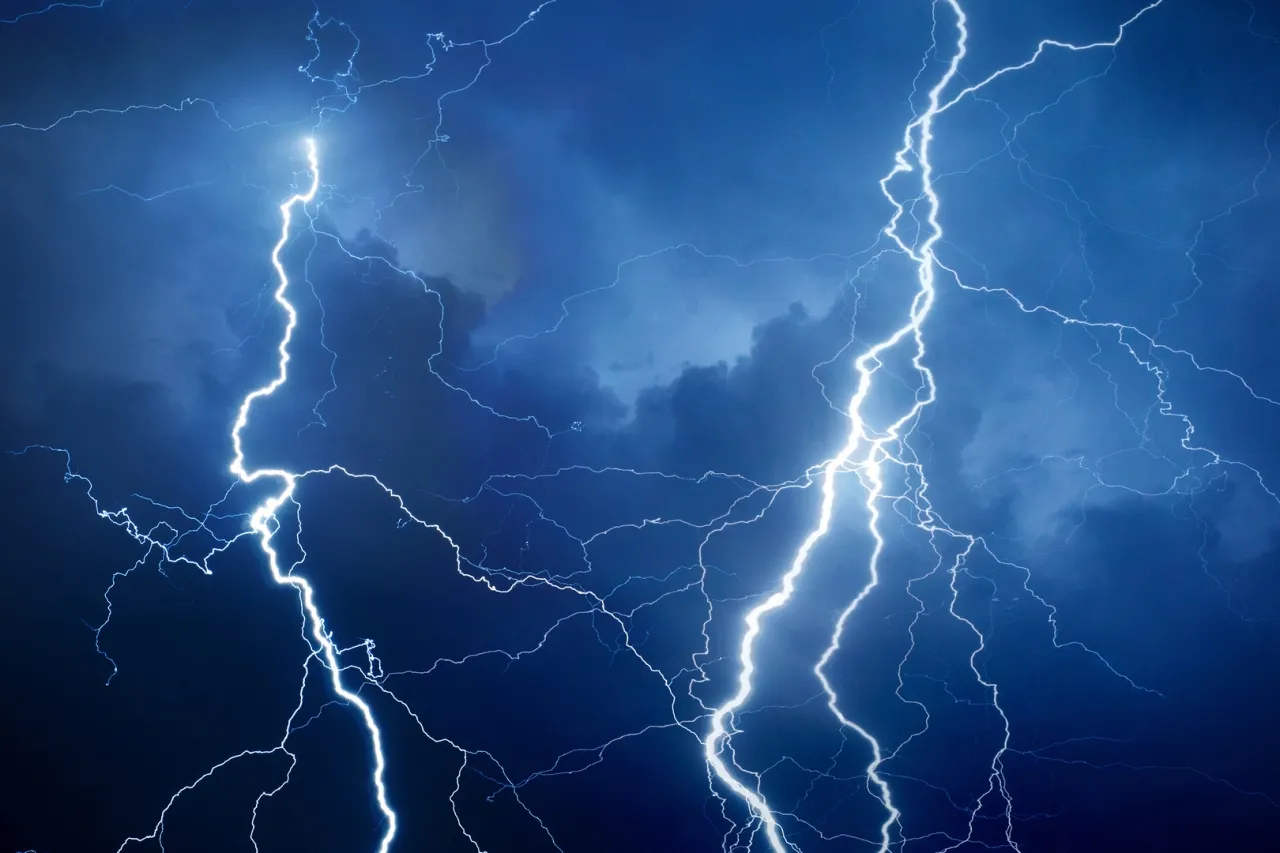
The flashes of lightning illuminated the skies of Amsterdam for hours on end, in an exceptional scene captured by hundreds of video clips that quickly spread across social media platforms, where the sky appeared to glow violet due to the immense density of the bolts.
Residents of the city reported that the flashes of lightning continued for about four hours without stopping, a phenomenon described by weather experts as rare in terms of its intensity and scope.
The Royal Dutch Meteorological Institute reported that the peak of the storm saw about 30,000 lightning strikes within just 30 minutes hitting the Netherlands and northern Germany, which is equivalent to about 17 strikes per second, confirming that this rate reflects an electrical activity that the region has not witnessed in years.
Meteorological experts explained that thunderstorms form when warm, moist air rises rapidly to the cooler upper layers of the atmosphere, leading to the formation of dense cumulonimbus clouds that produce lightning, thunder, and heavy rain, and sometimes hail.
They noted that the intense heatwave that hit large parts of Europe in recent days has directly contributed to the increase in the severity of this phenomenon.
The Netherlands recently recorded its first red level warning (Code Red) due to temperatures rising to more than 30 degrees Celsius for several consecutive days, while temperatures approached 40 degrees Celsius in some areas.
When a cold air mass pushed toward the country, it collided with the warm, moist air, leading to a state of severe atmospheric instability, contributing to the outbreak of this violent storm. Following this, authorities issued an orange warning (Code Orange) due to the harsh weather conditions.
The effects of the storm were not limited to stunning natural scenes but extended to material damage and losses in several areas, as the lightning caused scattered fires, including a fire in the village of Torenwerd in the Groningen province, according to local reports.
The Dutch railway network also experienced widespread disruption due to the damage to infrastructure, as fallen trees and obstacles caused by the storm disrupted several train lines, leading to delays in trips and reduced services in multiple routes, while emergency teams worked on removing debris and gradually restoring the network.
Climate experts warn that the increasing heatwaves and rising temperatures in Europe could contribute to an increase in the frequency of extreme weather phenomena, including violent thunderstorms and heavy rainfall, which intensifies concerns about the growing impacts of climate change on the continent in the coming years.