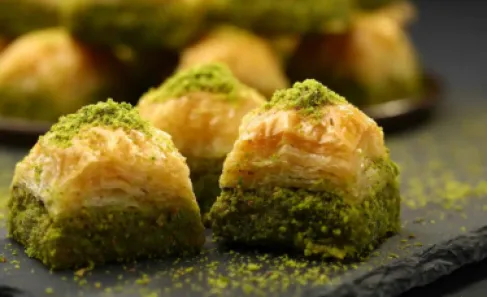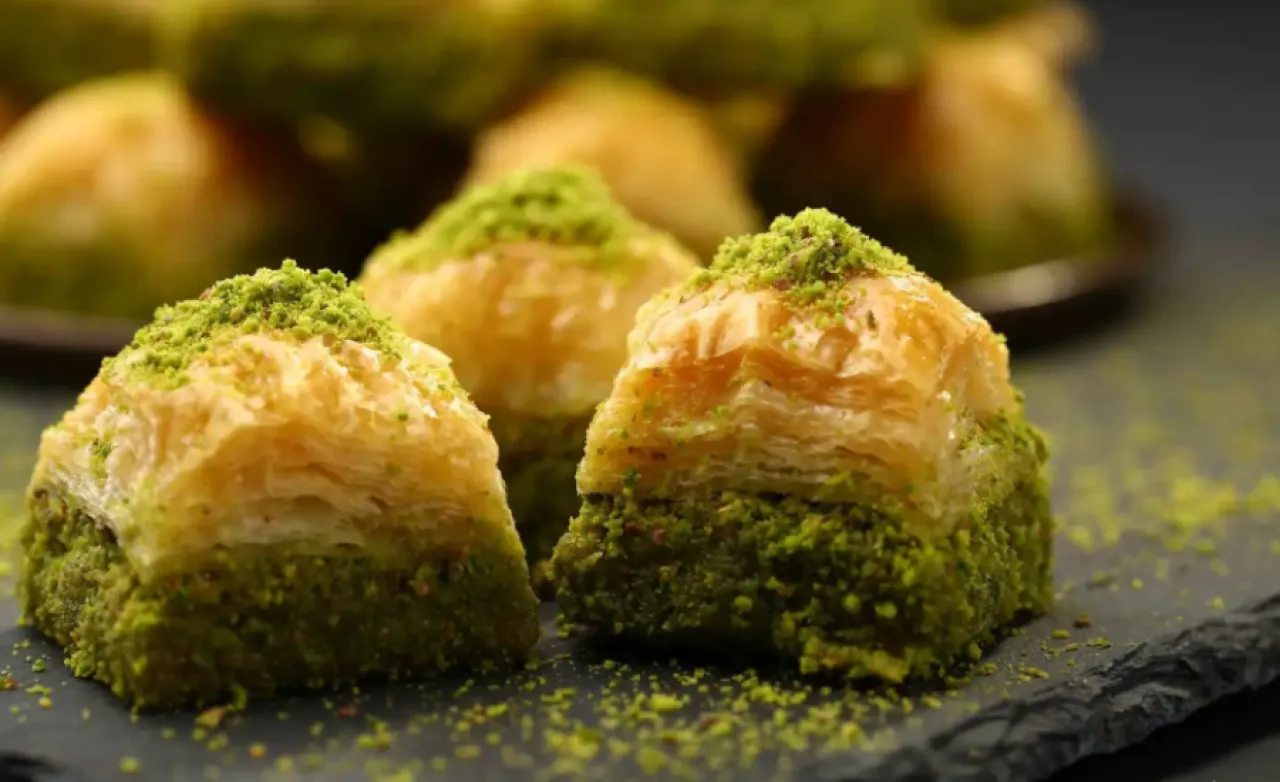
Khaberni - The "Türkiye" newspaper reported that Turkey and Azerbaijan have submitted a joint application to the United Nations Educational, Scientific and Cultural Organization (UNESCO) to include baklava in the Representative List of the Intangible Cultural Heritage of Humanity.
The newspaper stated that "Turkey and Azerbaijan united on the issue of baklava, the dessert which Greece is striving hard to claim for itself, hoping that this strategic joint move will put an end to the ongoing dispute about the origin of this renowned sweet."
According to the newspaper, this move comes as part of the two countries' efforts to register the dessert under its known names, "Baklava" in Turkey and "Pakhlava" in Azerbaijan, with the aim of preventing other countries in the region, like Greece, which claim the history of baklava as their own.
In this regard, Turkey, in cooperation with Azerbaijan, has prepared a joint dossier and submitted an official application to list baklava in the "Representative List of the Intangible Cultural Heritage of Humanity" under the names "Baklava" and "Pakhlava."
The newspaper mentioned that the final decision on the application will be taken during the 21st session of the International Intergovernmental Committee of UNESCO, scheduled to be held in the city of Xiamen, China, from November 30 to December 5.
Although Syria has not yet submitted an application to list baklava under its name in the UNESCO list, the cities of Aleppo and Damascus possess a rich heritage that historically places them at the heart of this sweet's global production.
It is known that baklava originated and evolved over a wide geographic area that extended through the Levant, Anatolia, and the Balkans, making it a shared cultural heritage of the peoples who lived in this region.
Historical sources indicate that confectioners in the Levant, especially in Damascus and Aleppo, played a pivotal role in developing and transferring techniques for making very thin doughs (phyllo) used in modern baklava production, to the extent that some of the leading baklava makers in Turkey learned the fundamentals of this craft in the Levant