Khaberni - The arrest campaign launched by the Iraqi authorities against dozens of officials with charges related to corruption and encroachment on public money has brought the anti-corruption file back into the political scene in the country, amid internal anticipation about whether these measures represent the beginning of a new phase of accountability, or if they will remain confined to a limited scope.
Iraqi analysts and observers, in their discussion with "Sky News Arabia", believe that the campaign represents a real test for the seriousness of the Iraqi state in combating corruption, which is one of the most prominent challenges that faced the country's institutions over the past two decades. The real value of these actions will be represented by the authorities' ability to complete the investigations, refer the accused to the judiciary, and recover public funds.
The analysts considered the continuation and expansion of the campaign to include various levels of administration and state institutions will enhance the Iraqi public's confidence in the anti-corruption efforts, while if it stops at certain limits or exempts influential figures, it may renew doubts about its effectiveness and viability, especially in light of the repeated public demands for reforming the anti-corruption system and establishing the principle of accountability.
What happened in Iraq?
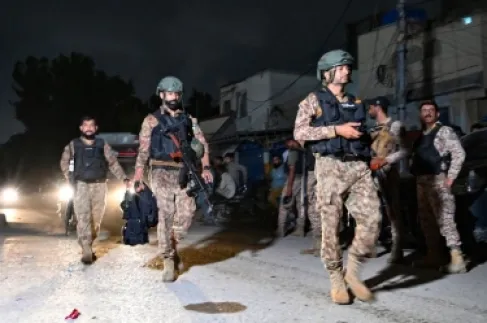
Early Sunday, the Iraqi authorities announced the execution of arrest warrants against 47 officials, including a number of current and former members of parliament, in a step considered one of the largest judicial persecution campaigns related to corruption cases in recent times.
The Federal Integrity Commission, in an official statement about the operation, stated that it had commenced executing the judicial arrest warrants issued against a number of defendants accused of encroaching on public money, pointing out that these actions were the result of coordination and integration between judicial, executive, and legislative authorities, after continued operations of monitoring and auditing.
The Authority emphasized that all procedures are carried out according to the law and under judicial supervision, stating that its work is based on institutional support from the Presidency of the Higher Judicial Council, the Prime Minister's Office, and the Presidency of the House of Representatives, ensuring the pursuit of the accused without other considerations.
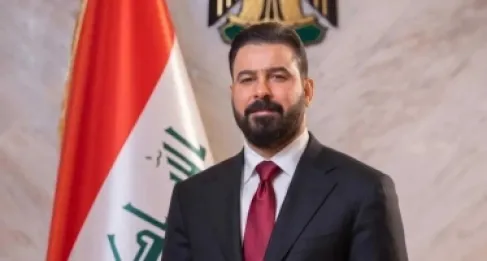
The fight against corruption was among the most prominent pledges made by Prime Minister Ali Al-Zaidi since assuming his position, while the authorities confirm that the current campaign is a continuous path targeting the prosecution of those involved in corruption cases and enhancing accountability within state institutions.
This campaign follows a series of actions taken by the authorities in recent weeks, including the confiscation of more than 85 million dollars in a corruption case linked to the former Deputy Minister of Oil, Adnan Al-Jamili, alongside the detention of other officials based on investigation proceedings, as well as the seizure of dozens of properties, luxury cars, and quantities of gold, reflecting the expanding scope of pursuing the involved and recovering public funds.
What does the campaign mean?
From Baghdad, the head of the Center for Political Thinking, Dr. Ihsan Al-Shammari, told "Sky News Arabia" that the current campaign represents a "turning point" in the fight against corruption in Iraq, as it targeted high-profile figures, including heads of political blocs and members of parliament, with about 47 people arrested, and there are indications that the campaign might expand in the upcoming period.
He added that "Iraq has never before seen an arrest campaign of this magnitude targeting figures at this level, which reflects unprecedented seriousness by the Higher Judicial Council, the Integrity Commission, and the Iraqi government in addressing the corruption file, which previous governments had been hesitant to deal with using this mechanism, and it also reflects the growing ability of the state to enforce the law against the influence of political parties."
Al-Shammari noted that "the campaign, if it ends with judicial convictions of the accused, could lead to a restructuring of the political power balance, especially since a number of the detainees belong to influential political blocs, which may negatively affect the voter's confidence in them and impact their chances in upcoming electoral events," estimating that the Iraqi scene would see a different political map if the proceedings continue to include more influential political figures.
In terms of the future of Iraq's anti-corruption campaign, Al-Shammari saw that "Prime Minister Ali Al-Zaidi no longer has the option of backing down from it, in light of the broad public support it has received, and his drive to restore the Iraqis' trust in the government and prove a different approach from previous governments in handling the corruption file."
He explained that the support the government receives from the Higher Judicial Council, along with the actions taken by the Integrity Commission, provide an institutional cover that allows the continuation of the campaign, considering that "what is happening is the beginning of a broader path that could extend to other corruption files and more influential figures, though he expects the government to face resistance from some of the political forces affected," yet he doubted that these pressures would pose an obstacle to the continuation of the campaign given the judicial and popular support it enjoys.
Why now?
In turn, Professor of Political Science at Suleimaniyah University, Miran Hussein, told "Sky News Arabia" that "the recent arrest campaign reflects a clear direction by Prime Minister Ali Al-Zaidi to pursue those involved in corruption cases," noting that "the initial outcome, which included a number of members of parliament and officials, represents an indication of the beginning of a practical move in this file."