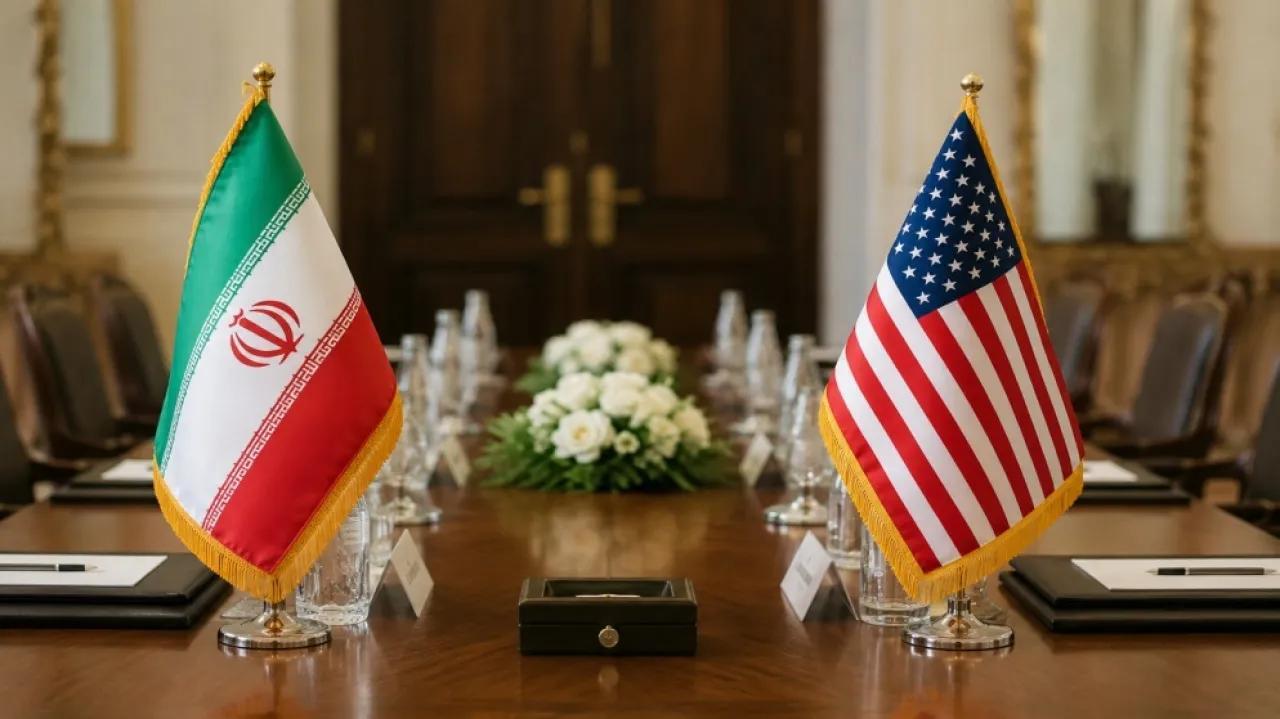
Khaberni - A member of the office for the preservation and publication of the works of the Supreme Leader of Iran told state television that Iran did not participate in the technical talks scheduled for today, Sunday, due to the latest attacks on the Islamic Republic and the non-fulfillment of the conditions of the memorandum of understanding signed with the United States.
Mehdi Fezaeli added, "For example, one of the reasons is to verify whether we can access the funds that had their freeze lifted; if there is no access, this means that this condition has not been met."
The Iranian Foreign Minister, Abbas Araqchi, warned on Sunday that any violation of the arrangements of the memorandum of understanding signed between the Islamic Republic and the United States concerning the Strait of Hormuz "will increase tensions" in the Middle East, after the exchange of attacks between them for the second consecutive night, threatening to undermine efforts to reach a final settlement of the war in the region.
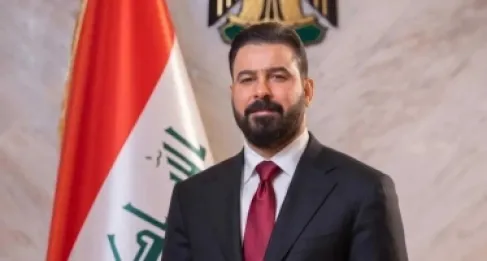
From Baghdad, which he reached on Sunday, Araqchi confirmed during a joint press conference with his Iraqi counterpart, Fuad Hussein, that "any attempt to adopt new arrangements or separate from what the Islamic Republic of Iran is doing, will only complicate the situation and delay the reopening of the Strait of Hormuz and will increase tensions, as we saw during the last two nights," calling on all parties to "adhere to the memorandum of understanding and not allow it to deviate from its course."
Araqchi's statements came the day after renewed confrontations in the region on the background of the issue of controlling the Strait of Hormuz, the strategic waterway for global energy supplies, which Iran banned navigation in since the beginning of the US-Israeli war on it on February 28, shocking global markets.
Tehran insists on controlling the movement through the strait, which usually sees a fifth of the world's production of oil and liquefied natural gas passing through it. Navigation in the strait was not under its control before the war.
The strait is located in Iranian and Omani territorial waters, but according to customary international law, neither country can prevent passage or impose transit fees.
Nevertheless, Iran has prevented most ships from using the Strait of Hormuz during the war, which has given it a major tool for economic pressure that it seems unwilling to give up.
With the gradual resumption of navigation through the strait after Washington and Tehran signed a memorandum of understanding between them, the Revolutionary Guard warned on Thursday that any crossing of the strait is linked to obtaining permission from Iran and through the route it has determined, threatening to take "appropriate measures" against ships that violate this.
The Guard also reported that Oman and the International Maritime Organization announced a new passage without consulting Tehran, warning ships against using it and confirming that "the only permitted routes for crossing the Strait of Hormuz are those determined by the Islamic Republic of Iran."
- Nightly confrontations -
For the second night, confrontations took place between the two sides, and the United States Central Command (CENTCOM) announced targeting ten Iranian sites including "military surveillance infrastructure, communication systems, air defense sites, drone storage facilities, and capabilities for laying maritime mines."
In a statement, it mentioned that the strikes came in response to an Iranian drone attack on an oil tanker flying the Panamanian flag as it passed near the Strait of Hormuz, "laden with more than two million barrels of crude oil."
For its part, Tehran condemned these strikes, affirming "its firm determination to defend its sovereignty" against "US military aggression," according to a statement issued by the foreign ministry.
In response, the Revolutionary Guard launched strikes on Kuwait and Bahrain early Sunday, warning that "any new US aggression under any pretext will be met with a crushing response."
In a statement, it reported targeting "eight important military infrastructure sites of the US military at Ali Al Salem base in Kuwait and the Fifth Naval Fleet at Salman Port in Bahrain, and destroying them."
Kuwait condemned "the repeated sinful Iranian aggressions" against it as "undermining" efforts made to definitively stop the war in the Middle East, while Bahrain announced it had thwarted "a number of treacherous Iranian aerial attacks."
- "Will cease to exist" -
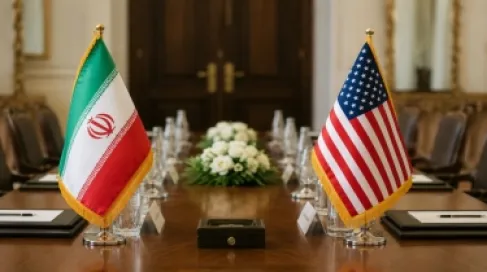
The United States carried out strikes on Friday, stating that they came in response to a previous Iranian attack targeting the "Ever Lovely" ship. Iran responded by targeting Gulf countries, confirming the hitting of American targets, noting that this was the first exchange of strikes since the two countries signed a memorandum of understanding on June 17, which established a ceasefire and allowed for 60-day negotiations seeking a final settlement.
The memorandum stipulates that Iran takes the necessary measures to ensure the safe passage of commercial ships through the Strait of Hormuz.
However, the Revolutionary Guard renewed its threats to ships in a statement on Sunday, confirming that "the Islamabad memorandum of understanding stipulates that arrangements for monitoring and regulating navigation in the Strait of Hormuz fall under the responsibility of the Islamic Republic," and threatening that "ships violating this will be dealt with more firmly than before."
Meanwhile, US President Donald Trump warned via his platform "Truth Social" that Iran "will cease to exist" if the United States finds itself forced to resume the war, accusing Tehran of violating the ceasefire.
For his part, Mohammad Mokhber, an advisor to Iran's Supreme Leader Mojtaba Khamenei, posted on X platform that "as long as the Strait of Hormuz is under our complete management (...) it is wrong to test what is tested."
While most of the reciprocal strikes recorded no casualties, the Qatari Ministry of Interior announced "the death of a Qatari citizen due to injuries sustained from shrapnel resulting from military operations in the region, after the loss of a boat carrying him and another injured person."
The boat, which was lost on Saturday, was found on Sunday.
- "Will not be applied" -
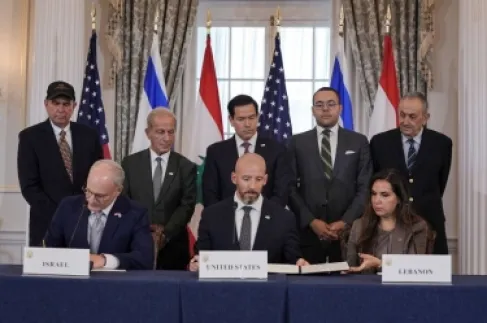
On the Lebanese front, Israel launched air strikes on the south on Sunday according to Lebanese official media, two days after a framework agreement between the countries was concluded under American sponsorship, which a Hezbollah deputy described as "will not be applied," warning of "internal conflict."
For his part, the Israeli military announced the death of one of its soldiers in battles in the town of Deir Sirian in southern Lebanon.
Hezbollah's representative, Hassan Fadlallah, reiterated the party's rejection of the "agreement of humiliation and disgrace signed by the authority," confirming that it "will not see the light of day and will not be applied," because it will lead to "chaos and transfer the conflict from being with the enemy to becoming an internal conflict."
The Speaker of the Iranian Shura Council, Mohammad Baqer Qalibaf, emphasized in a phone call with the Speaker of the Lebanese Parliament, Nabih Berri, that "our goal is to put an end to the war in Lebanon, the return of the displaced, the ending of the occupation, and the removal of the Zionist entity from Lebanese territories."
The Iranian Foreign Ministry spokesman, Ismail Baghaei, stressed on Sunday that "ending the war and Israeli military operations" in Lebanon, and Israeli withdrawal from the country are "a necessary condition for reaching a final and sustainable agreement to establish stability in the region."
Lebanese President Michel Aoun announced in a call with his American counterpart late Saturday night that his country "will assume its responsibility" in implementing the agreement reached with Israel.
Israeli Prime Minister Benjamin Netanyahu confirmed on Saturday "Israel's right to maintain a security zone inside Lebanon as long as necessary to protect our security," while Defense Minister Yisrael Katz announced that the military had received orders to prepare for a "long stay" in the areas it occupies in southern Lebanon.
The war in the Middle East extended to Lebanon on March 2 with Hezbollah launching rockets at Israel in response to the killing of Iran's Supreme Leader Ali Khamenei in the first US-Israeli strikes on Iran. Israel responded with a widespread campaign of air raids and a ground invasion, resulting in more than four thousand deaths, according to Lebanese authorities.