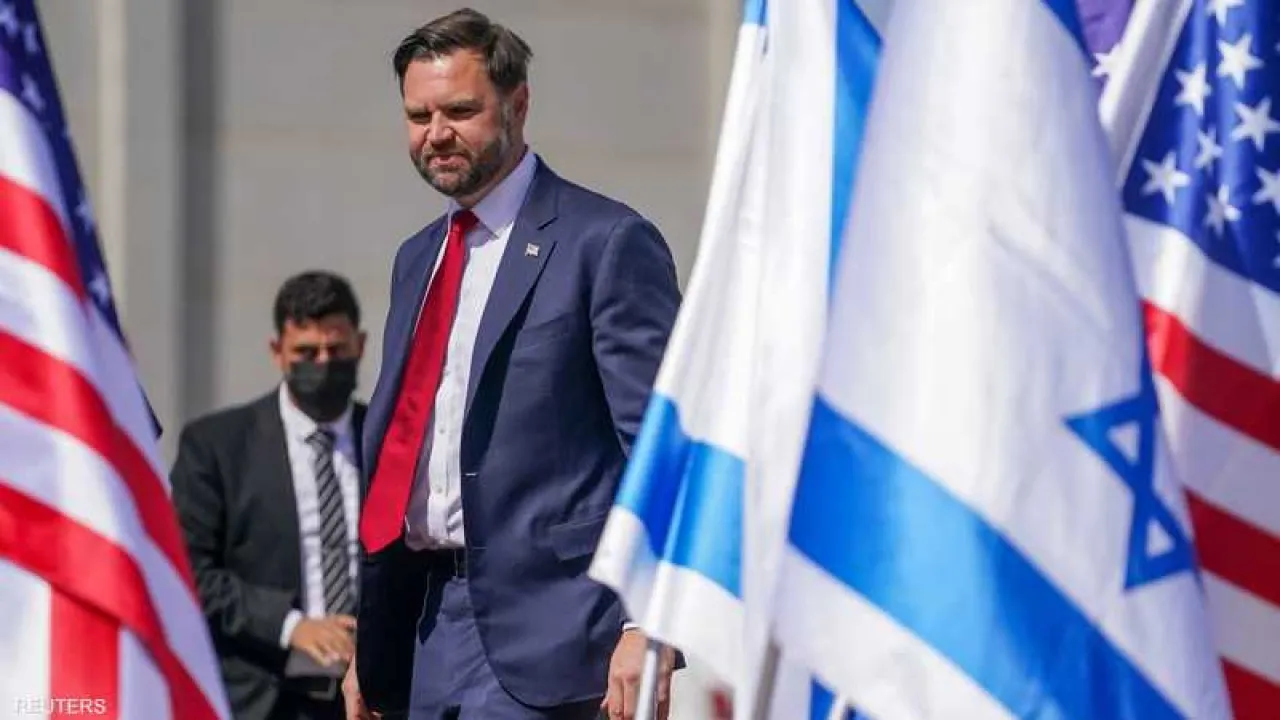
Politico magazine -citing informed American and Israeli sources and officials- revealed that the government of Israeli Prime Minister Benjamin Netanyahu does not trust JD Vance, the Vice President of the United States, considering him one of the main proponents of reaching an agreement with Iran, and has pushed toward reducing the U.S. engagement with Israel.
The magazine pointed out that Vance has consistently emphasized over the years that American and Israeli interests are not always identical, and that the United States should not be dragged into a confrontation with Iran on behalf of Israel, a stance that has raised reservations within Israeli policymaking circles.
According to a source familiar with the interactions between the two governments, Israel has long preferred direct communication with President Trump and Secretary of State Marco Rubio instead of Vance, considering his reserved positions on the U.S.-Israeli relationship as a marginal trend within the administration.
However, the pivotal role he played in the negotiations with Iran and the resulting agreement showed that his influence inside the White House was greater than Tel Aviv had believed.
"We should not fight on behalf of Israel"
Politico quoted an informed source saying Vance's recent statements "shocked the Israelis," and were considered in Israeli official circles "one of the lowest points in the course of relations between the two countries."
According to associates of the Vice President, these statements reflect a growing conviction within the administration that popular support for Israel is declining among sectors of the American electorate, including within the young Republican base, necessitating a different political approach to the relationship with Tel Aviv.
The U.S. Vice President had levied sharp criticisms at members of the Israeli government who attacked the memorandum of understanding reached with Iran, saying that President Donald Trump is "the only president currently sympathetic to Israel."
Vance said if he were in the position of any member of the Israeli government, he would not have "attacked the only strong ally I have in the entire world," noting that "two-thirds of the weapons that protected them in recent months were made and funded by the United States."
In contrast, a person close to Vance said that the Vice President "simply reflects Trump's positions," confirming that the American president has become more critical of Netanyahu, both in his public statements and in private discussions.
"We thought we were the exception."
Politico, quoting 7 informed American and Israeli officials and sources, stated that Israel's crisis with the U.S. administration "is much bigger than JD Vance," indicating that the Vice President now embodies a new reality in Washington where Israel no longer enjoys an exceptional status above other U.S. allies.
An Israeli political advisor, according to Politico, said Tel Aviv had bet on maintaining its exception from the requirements of "America First" with Trump’s return to the White House, but he admitted that this perception was a mistake, adding: "We were naive to think we would remain a special exception within this policy."
The worst is yet to come
Politico pointed out the increasing indicators of a cooling relations between the two sides, noting that Israeli Prime Minister Benjamin Netanyahu visited Washington five times during 2025, while he has made only one visit this year, with no announced plans for a new visit, concurrent with a noticeable slowdown in phone communications between the governments.
An informed source stated that phone communications between the U.S. and Israeli governments have noticeably declined recently, warning that bilateral relations may deteriorate further.
He added: "We do not yet believe we have reached the worst possible stage, and what is coming may be worse."
In contrast, the White House spokesperson asserted that President Trump and his deputy Vance share the same stance towards Israel, emphasizing that "Israel has always been a great ally of the United States." She added that Trump "had no equal in his support for Israel and his push for peace," praising the Israeli military partnership during the operation "the Epic Fury" against Iran.
Sources and officials, American and Israeli, who spoke to the magazine predicted that the gap in disagreements between Washington and Tel Aviv would widen in the coming months, amidst increasing divergence in interests and priorities between the two sides.