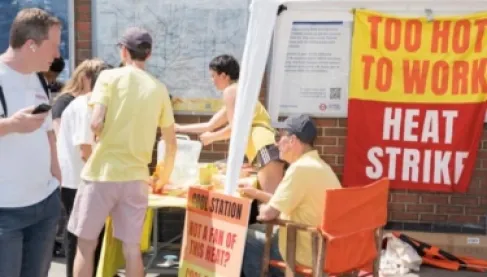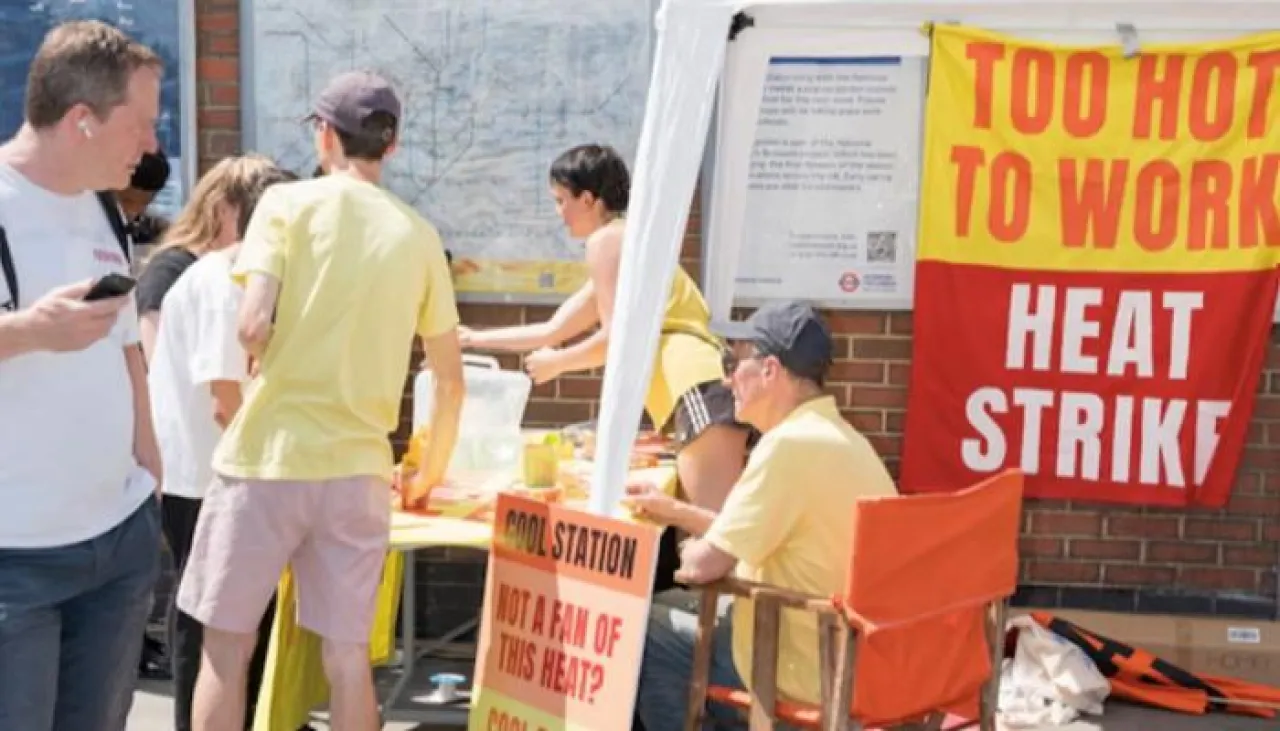
Khaberni - European economies are paying a steep price for the record heatwaves striking the continent, which have transformed high temperatures from a climate crisis into a direct threat to growth and productivity.
According to a report published by the British newspaper The Guardian, the record heatwaves in Europe are no longer just a transient seasonal phenomenon, but have become a direct threat to economic productivity and growth, with increasing warnings from economists that rising temperatures will lead to a slowdown in European economies unless governments invest in modernizing buildings, infrastructure, and preparing workplaces to adapt to climate change.
In Britain, and most Western European countries, companies and workers face significant challenges that include higher temperatures inside offices, disruption of transport, school closures, and exposure of workers in construction and agriculture to risks of dehydration, heatstroke, and injuries linked to heat stress.
Economists believe that the high temperatures are no longer just an environmental issue, but have become an increasing economic burden that threatens workers' productivity and undermines growth rates, especially in sectors that rely on fieldwork or those where it is difficult to provide air-conditioned work environments.
Losses in Productivity
The report, quoting the chief climate economist at Oxford Economics, Robert Marks, states that temperatures reaching the high thirties or early forties Celsius lead to significant productivity losses, as well as disrupting work in construction, agriculture, manufacturing, retail, hospitality, and other activities where it is difficult to protect workers from harsh climatic conditions.
He noted that these sectors represent about 27% of economic activity in the United Kingdom, with the percentage rising to an average of 35% in Western European countries. He explained that a heatwave lasting just four days could reduce quarterly labor productivity growth by about 1.5 percentage points in Britain, with losses reaching two percentage points in the rest of Western Europe.
The International Labour Organization estimates that, by 2030, the agriculture and construction sectors will be most exposed to losses in working hours in Western, Northern, and Southern Europe, due to the continuous rise in temperatures and recurrence of heatwaves.
Structural Risks
In the same context, a study conducted by the German insurance group Allianz concluded that extreme heat has become a "structural economic risk" for Europe, noting that France, Italy, and Spain are among the European economies most exposed to losses from heat stress, as productivity falls sharply when temperatures exceed 30 degrees Celsius, at a time when energy costs necessary for cooling buildings and machines rise.
According to the study's scenario, France could lose about 240 billion dollars in economic output between 2026 and 2030, while losses in Italy could reach 147 billion dollars, and Spain 120 billion dollars, equating to a cumulative loss of about 7% of the gross domestic product.
Katarina Outermol, head of Thematic Research and Policy at Allianz and one of the study's authors, stated that heatwaves are no longer an exception but have become a permanent trend, confirming that the cost is borne by everyone, whether workers, companies, or taxpayers, and that countries investing in adaptation will be less exposed to losses than those that delay taking action.
Revisiting Labor Laws
The heatwave has reignited the debate about labor laws in Britain, where current regulations stipulate a minimum workplace temperature of 16 degrees Celsius inside offices and 13 degrees for physically demanding work, but they do not set a maximum temperature limit, as there are workplaces like kitchens and foundries where the temperatures are permanently high. The British Health and Safety Executive only requires employers to maintain a "reasonable" temperature inside workplaces.
The authority advises employers to reschedule working hours to cooler periods, increase rest periods, provide free cold drinking water, and allow workers to remove personal protective equipment during breaks.
In Italy, authorities in the Lazio region, which includes the capital Rome, issued a decree banning construction workers and delivery drivers from working between twelve thirty and four in the afternoon during peak heat, while some British cities have indirectly implemented similar measures, with garbage collection teams starting their work at four in the morning to avoid high temperatures.
Some companies have also been forced to temporarily suspend their activities, as an independent brewery in Berkshire halted production operations after temperatures inside the factory exceeded 40 degrees Celsius, considering that continuing work under those conditions poses a risk to the safety of the workers.
Remote Work
Conversely, many office employees have benefited from the possibility of working remotely, while workers in healthcare, transportation, bakeries, stores, and other sectors are still required to attend their workplaces, which has revived the discussion about unequal job opportunities in flexible employment.
The legislation differs across Europe in dealing with high temperatures; France has introduced new regulations requiring companies to adjust work schedules, provide drinking water, and reduce workplace exposure to sunlight, while Germany requires employers to take measures to cool workplaces when temperatures exceed 30 degrees Celsius, with more stringent rules applied when they reach 35 degrees.
Meanwhile, Spain goes further by granting workers who are unable to reach their workplaces due to climate conditions up to four days of paid leave, and allows companies to temporarily suspend employment contracts if circumstances dictate.