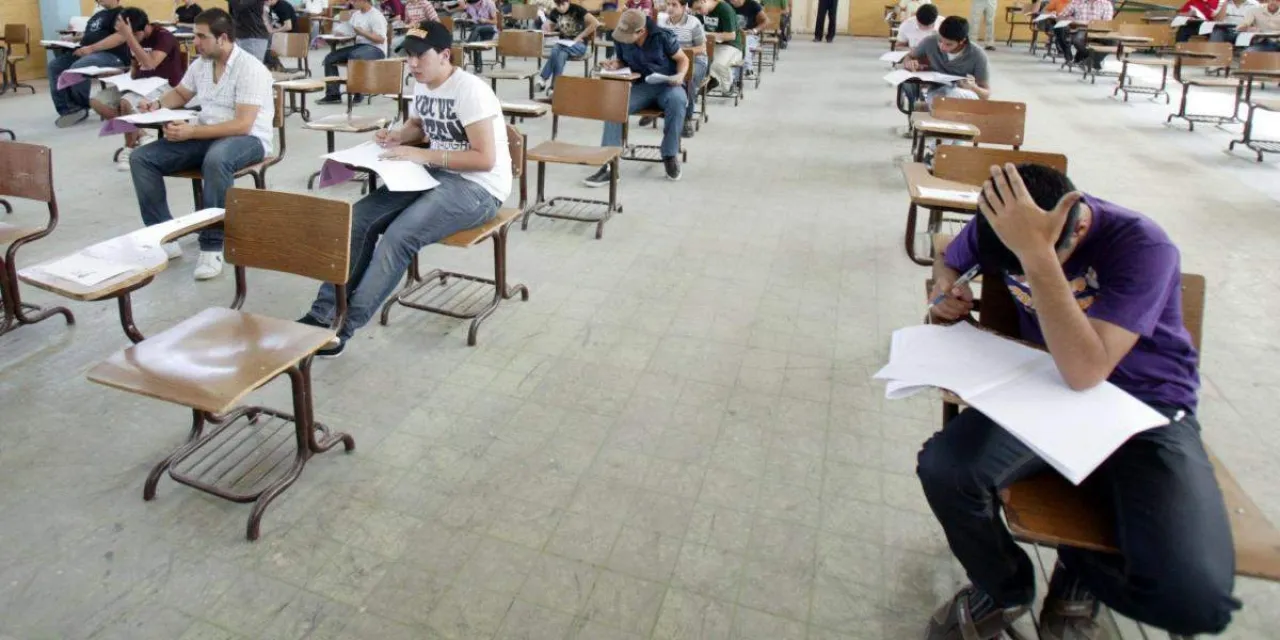
Khaberni - A sense of satisfaction prevailed among students of the General Secondary Education Certificate (Tawjihi), following the conclusion of the Islamic education subject exam, which was held on Thursday as part of the first session of the general exam round for the year 2026 for twelfth grade students (Generation 2008).
The students described the exam as easy and straightforward, confirming that the questions were derived from the prescribed school textbook content and took into account individual differences, with no significant remarks about the style of questions or distribution of marks, indicating that it matched the expected levels and was free of complexity.
A number of students mentioned that the anxiety they had before reviewing the exam papers diminished immediately after seeing the questions, confirming that the questions were from the school textbook and considered individual differences, which reflected on the positive atmosphere after they exited the examination halls.
On his part, Professor of Islamic Sciences Khaldoun Al-Sarafandi said that the exam was "moderate leaning towards easy," noting that it considered individual differences and included several repeated ideas and questions from exams of previous years.
He added that the presence of some precise paragraphs is normal in an exam consisting of 50 questions, but they were not highly difficult, confirming that the exam was devoid of any strange ideas or questions outside the prescribed curriculum, and that a well-prepared student could answer all the questions and achieve a high score, noting that the time allowed was suitable for the nature of the questions.
The first session of the exams for the General Secondary Education Certificate "general exam" for the year 2026 began on Thursday and will continue until Saturday, July 18.
For the Islamic education subject exam in the first session, 126,679 candidates from various academic fields registered, while the total number of candidates for the exam this year reached 196,029, including 140,972 regular students and 55,057 new candidates and repeaters through private study.
The exams are held in 790 examination centers comprising 1,899 halls, in addition to 42 reserve halls, and include reform and rehabilitation centers, juvenile centers, the King Hussein Cancer Center, as well as arrangements for students with disabilities.