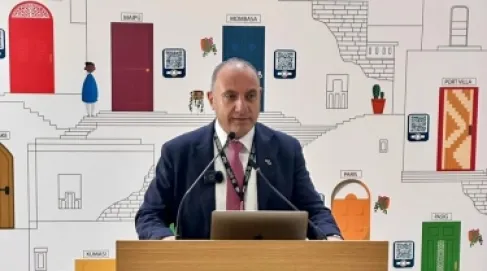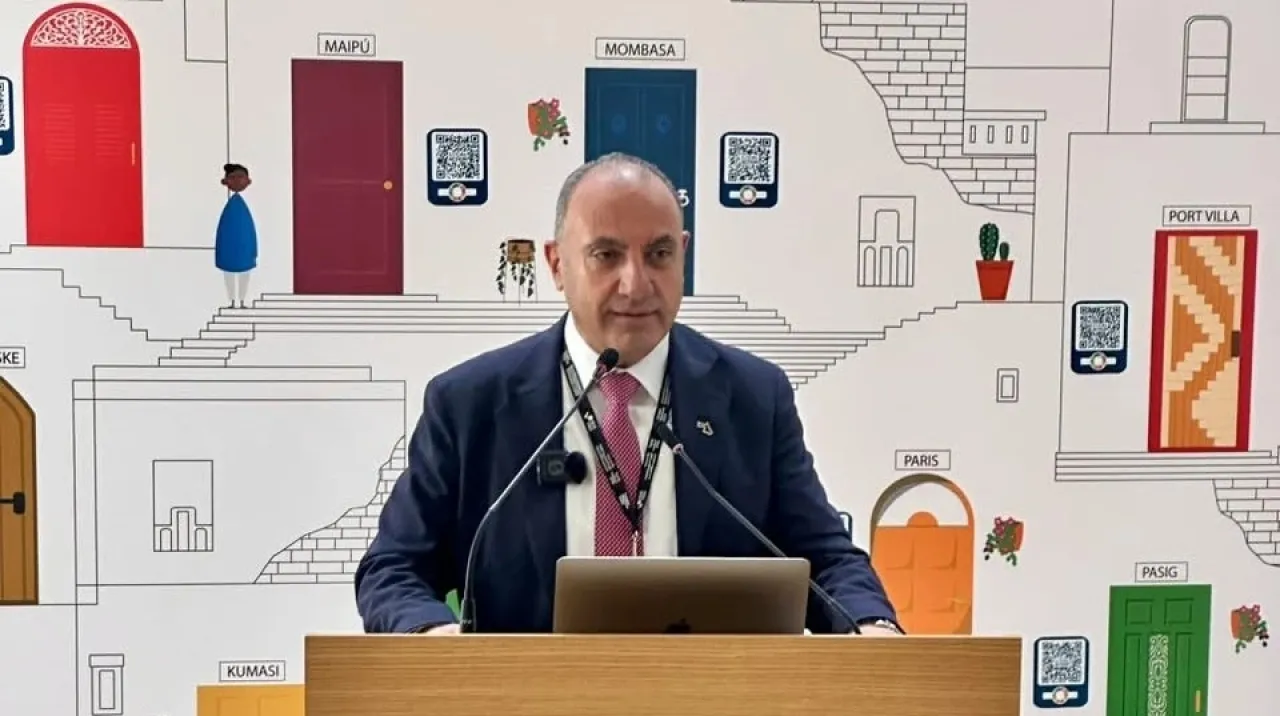
Khaberni - Dr. Yousef Al-Shawarbeh, the head of the Greater Amman Municipality committee, confirmed that the municipality's experience in employing digital transformation serves as a practical tool for improving public services, enhancing transparency, and expanding the base of community participation.
According to a statement from the municipality today, Wednesday, following Al-Shawarbeh's participation in the eighth session of the United Cities and Local Governments (UCLG) conference and the World Summit of Local and Regional Leaders held in Tangier, Morocco, under the slogan «The New Generation of Inclusive Local Public Services».
Al-Shawarbeh added, during his speech in the session on digitizing local public services "Digital tools to enhance efficiency and transparency and citizen access to service", that since 2017, the municipality started a comprehensive institutional digital transformation program, worked on reengineering internal procedures before automation, developing technical infrastructure, and gradually linking services to the electronic payment system, and activating remote service delivery channels.
He explained that in 2021, the municipality achieved a milestone by launching all its services electronically, making it the first institution in the Kingdom to announce the complete transformation of its services into digital services.
He added that the municipality now offers 154 electronic services, including 18 services that are entirely end-to-end without any paper intervention, in addition to 6 electronic systems for document archiving and 4 services using artificial intelligence technologies, as well as developing an integrated system for licenses, permits, and field inspections, connected to geographic information systems and urban data, which supports data-driven institutional decision-making and generally enhances urban management efficiency.
Al-Shawarbeh said that Amman Municipality has expanded into the concept of a smart city through the launch of the Amman Smart City strategy in 2024, which focuses on smart mobility, digital governance, and data-based urban management. One of the most prominent outcomes of this step was the launch of Jordan's first contactless electronic payment system, operating on the Bus Rapid Transit (BRT) and Amman buses lines, alongside real-time traffic monitoring tools, automated parking management systems, and electric vehicle charging stations.
He pointed out that the municipality developed the "Amman Listens" platform, a collaborative digital platform based on interactive maps that allow citizens to recognize and interact directly with the services available in their geographical vicinity, making it an actual tool for organizing municipal decision priorities based on citizens' observations and needs, especially during emergencies and crises.
He noted that the municipality is working on simplifying digital service interfaces and reducing procedural complexity, based on the notion that ease of use is a fundamental condition for inclusiveness. It also links digital transformation efforts to a broader path concerning capacity building and lifelong learning, which aligns with Amman's membership in UNESCO's global network of learning cities.
He explained that this digital transformation has reflected on the level of institutional efficiency, where paper procedures, operational costs, and the number of required field visits to complete transactions have decreased, thus saving citizens' time and effort.
He pointed out that these efforts have reflected in tangible international results, as Amman became the first capital in the world to obtain the BSI Kitemark certificate according to the international standard 37106 ISO 150 for smart and sustainable cities, and it continued its progress in the IMD global smart cities index.