Khaberni - In a step that reflects the accelerated shift in American defense priorities towards the Indo-Pacific region, the US Air Force has begun a wide-scale modernization and expansion program at Joint Base Elmendorf-Richardson in Alaska.
The project, aimed according to Military Watch Magazine, at transforming Joint Base Elmendorf-Richardson into a major hub for advanced fighter operations and extensive combat training, includes:
Replacing old infrastructure dating back to the 1950s with modern aircraft hangars
Advanced facilities for maintenance, operations, and training
New support facilities capable of accommodating large numbers of advanced fighters for the coming decades.
The project came to the forefront during a Senate Armed Services Committee hearing in the spring of 2026, when Senator Dan Sullivan promoted the "Rehabilitation of Fighter's Town" initiative at the base, a plan included by the US administration in the defense budget request with investments ranging between 6.9 and 7 billion dollars, making it one of the largest military infrastructure projects in Alaska's history.
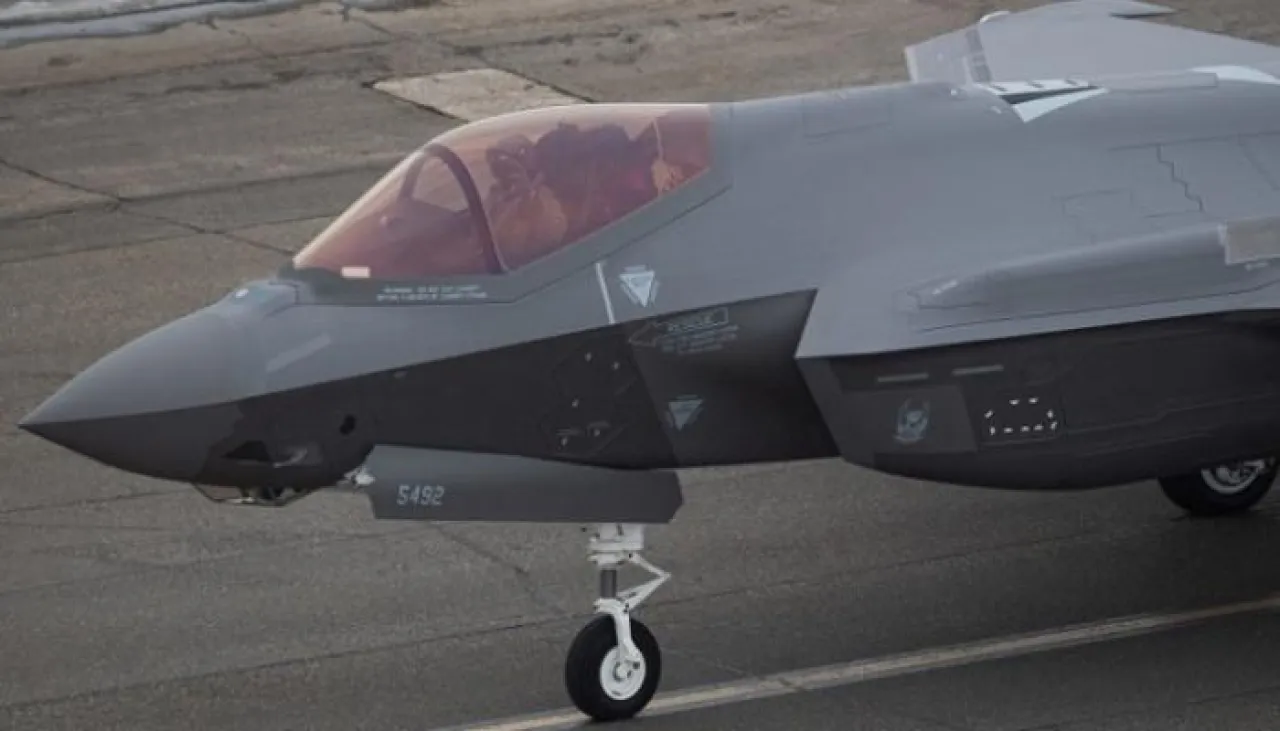
The project is rooted in the increasing strategic importance of the state, which already hosts one of the largest assemblies of fifth-generation fighters in the world, including the "F-22" and "F-35".
These capabilities, alongside the Alaskan Joint Pacific Air Combat Training Complex, provide a unique environment for conducting advanced combat training that simulates modern warfare scenarios, with rapid deployment capabilities in the Arctic and Pacific operational theaters.
In this context, expanding the air combat training complex is a key aspect of the American plan, as the Air Force seeks to increase the airspace allocated for training, allowing more complex and realistic maneuvers involving fifth-generation fighters, refueling aircraft, strategic bombers, drones, as well as allied air forces.
These trainings aim to simulate the potential combat environment in the Pacific region, which has become the main stage for military competition between Washington and Beijing.
This approach is part of a broader American strategy to bolster military presence in the Arctic and Asia-Pacific region, where air bases in Alaska play a dual role in supporting the American military deployment in the region and enhancing national air defense capabilities.
The significance of this role has increased in the face of rising Russian military activity near Alaska's airspace, along with growing Chinese movements in the region, which were manifested in 2024 through the first Chinese bomber patrol near the territory using "H-6" bombers launched from bases within Russian territory.
Washington closely monitors the rapid developments in military aviation programs in both China and Russia, the only two countries currently continuing large-scale production of strategic bombers.
Particular attention is directed at China, which is expected to begin deploying its first intercontinental stealth bomber at the start of the 2030s, after it made its debut during flight tests in late 2025.
At the same time, questions are increasing within American military and strategic circles regarding Washington's ability to maintain its long-term aerial superiority in the face of China.
While the United States possesses the majority of its most advanced fighters in the Pacific region, Beijing has made significant progress in sixth-generation fighter programs, becoming the only country to reach the actual flight-testing stage of these programs.
Increasing estimates suggest that China may introduce two new sixth-generation fighters into service in the early 2030s, while the entry of the future American "F-47" fighter is likely to be delayed until the 2040s.
American "F-35" fighter development programs face ongoing technical and time challenges, after delays in upgrading them to "Block 4" standards postponed achieving their full operational capabilities by several additional years.
In light of these facts, "Fighter's Town" in Alaska is more than just a military infrastructure project; it represents part of a broader American strategy for repositioning air power in response to the escalating challenges posed by military competition with China, securing an advanced foothold in one of the most sensitive regions in the global geopolitical landscape.