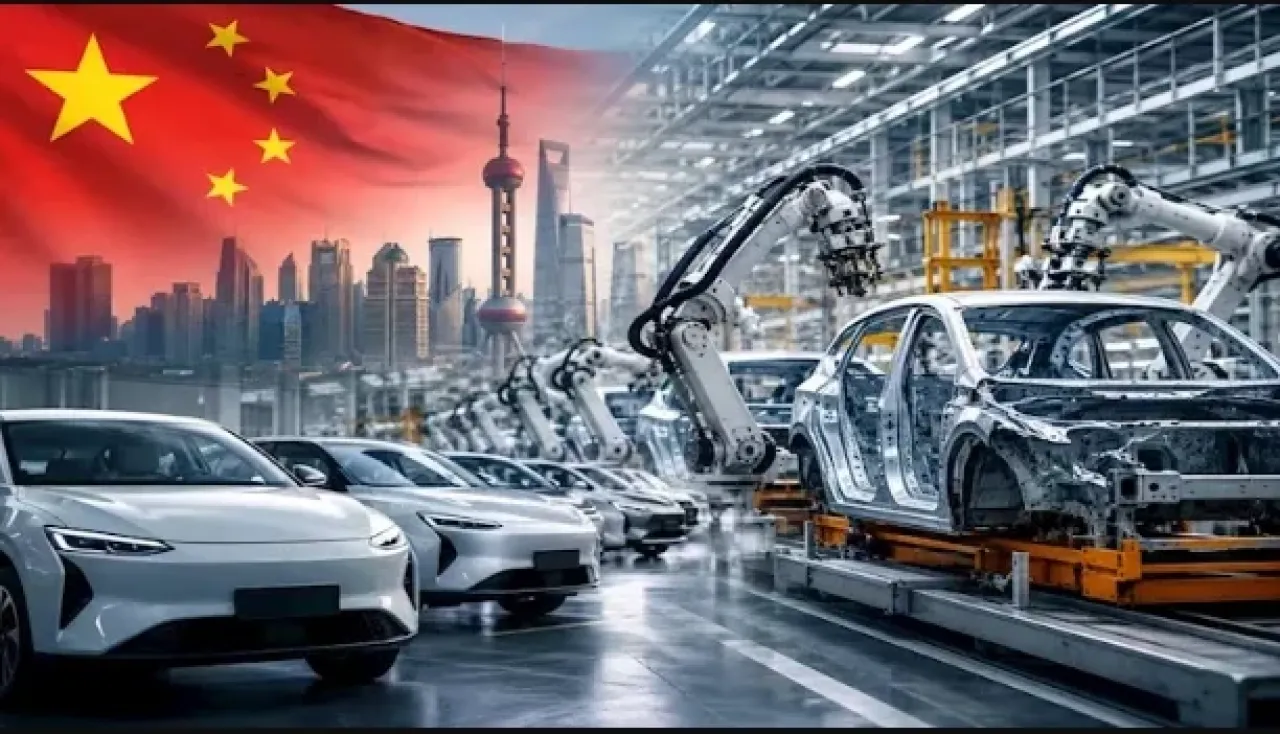
Khaberni - In a step that reflects the profound transformations occurring in the global automotive industry, the Chinese Ministry of Industry and Information Technology announced the withdrawal of production licenses for 8 local car companies, as part of a broad plan to restructure the sector and enhance the capability of companies to keep pace with the accelerating technological revolution in the automotive world.
The decision came after periodic reviews conducted by the Chinese authorities for companies that had obtained manufacturing licenses, where it was found that several companies no longer met the approved technical and environmental requirements, while some factories had stopped production for long periods amidst declining competitiveness in a market undergoing unprecedented changes.
8 companies lose the right to manufacture cars in China
The list of companies whose licenses were canceled include FAW Xiali, Brilliance Auto, Zotye Auto, Leopaard, Lifan, Hawtai, BAIC Yinxiang, and Haima, which have played varying roles in the Chinese market over the past years before facing increasing financial, marketing, and technical challenges.
By virtue of the decision, these companies lost their legal right to manufacture new cars in China, which means the permanent closure of their production lines, while some assets and industrial facilities will move to other companies as part of a restructuring plan aimed at improving the efficiency of the sector and reducing the number of companies unable to compete.
Data indicate that among the main reasons for the decision are weak investment in research and development, reliance on assembling cars rather than developing proprietary technologies and platforms, and the inability to keep pace with modern emissions standards and technology, which has become a basic requirement for continuing in the Chinese market.
Electric cars are reshaping the competition map
The decision reflects the magnitude of change occurring in the car industry in China, especially with the strong rise of major companies that have managed to strengthen their positions thanks to substantial investments in technology and innovation, led by BYD and Geely, which have become key players in the electric car market and smart systems.
On the other hand, the companies covered by the decision faced accumulated difficulties represented in declining sales, loss of market shares, and inability to keep up with the rapid shift to electric vehicles and smart driving technologies.
The decision also carries important messages for foreign markets importing Chinese cars, as it confirms Beijing’s direction towards supporting strong brands capable of sustaining in the long term, which may lead many dealers and importers to reevaluate their strategies and focus on companies that possess advanced research and development capabilities and clear future plans.
Among the most notable companies affected by the decision is Zotye Auto, globally known for its SR9 model, media-dubbed as the "Chinese Macan" because of the significant resemblance between its design and the design of the Porsche Macan. The cancellation of the company's license is a new indicator of the Chinese industry's shift towards innovation and technical development rather than relying on mimicking designs of global brands.
Observers believe that this step represents a new stage in the journey of the Chinese automotive industry, as China seeks to establish its position as one of the major global powers in the electric car and advanced technology sector, by enhancing companies capable of innovation and global expansion, and getting rid of entities that are no longer able to meet the requirements of the next phase.